Comparison
Composite toe vs steel toe boots
Published
Short answer
Composite toe and steel toe boots can carry the same ASTM F2413 I/75 C/75 rating, so neither is automatically safer on the label. Steel caps are thinner and usually cost less. Composite caps are non-metallic, so they do not conduct cold or heat and will not set off metal detectors, and they are often lighter. Pick composite for cold work, security checkpoints and electrical sites; pick steel when a slim toe profile and price matter more.
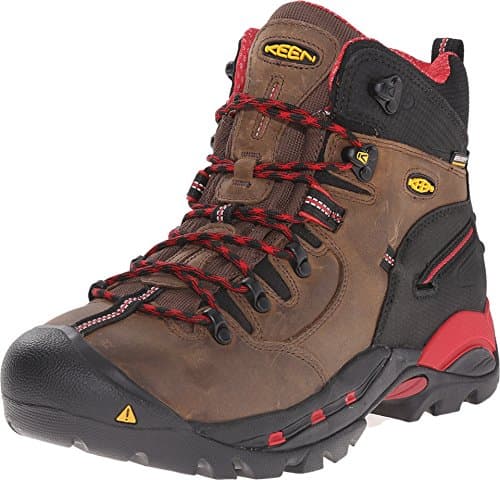
KEEN Utility
KEEN Utility Pittsburgh 6-inch: asymmetrical steel toe
See price on Amazon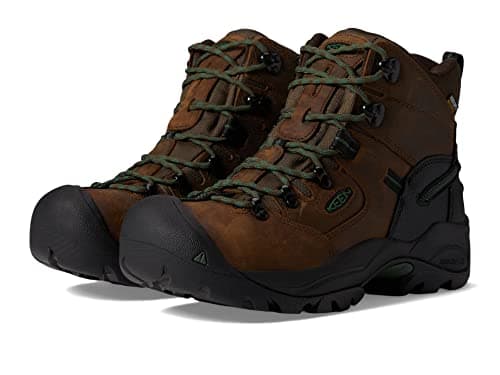
KEEN Utility
KEEN Utility Pittsburgh Energy 6" carbon toe, ReGEN midsole
See price on Amazon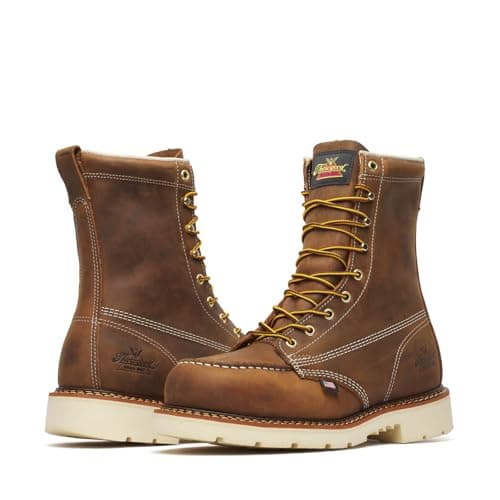
Thorogood
Thorogood American Heritage 8 in. steel toe with heel
See price on Amazon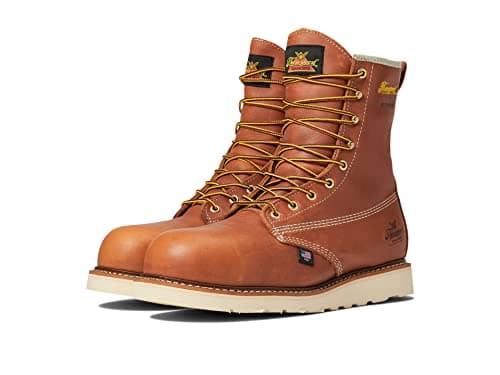
Thorogood
Thorogood American Heritage 8-inch: composite toe, waterproof, EH
See price on Amazon
- KEEN Utility Pittsburgh 6-inch: asymmetrical steel toe
- Safety toe
- Steel, F2413 I/75 C/75
- Waterproof
- -
- KEEN Utility Pittsburgh Energy 6" carbon toe, ReGEN midsole
- Safety toe
- Carbon-fiber composite
- Waterproof
- Yes, KEEN.DRY
- Thorogood American Heritage 8 in. steel toe with heel
- Safety toe
- Steel, ASTM F2413-18
- Waterproof
- Not stated
- Thorogood American Heritage 8-inch: composite toe, waterproof, EH
- Safety toe
- Composite
- Waterproof
- Yes, gusseted tongue
| Pick | Safety toe | Waterproof | Price | Link |
|---|---|---|---|---|
| KEEN Utility Pittsburgh 6-inch: asymmetrical steel toe | Steel, F2413 I/75 C/75 | - | - | Amazon |
| KEEN Utility Pittsburgh Energy 6" carbon toe, ReGEN midsole | Carbon-fiber composite | Yes, KEEN.DRY | - | Amazon |
| Thorogood American Heritage 8 in. steel toe with heel | Steel, ASTM F2413-18 | Not stated | - | Amazon |
| Thorogood American Heritage 8-inch: composite toe, waterproof, EH | Composite | Yes, gusseted tongue | - | Amazon |
Facts are taken from each Amazon listing. Prices are checked daily and shown with their date.
Verdict
Buy the KEEN Utility Pittsburgh Energy or the Thorogood American Heritage 8" Waterproof Composite Toe if you work in the cold, pass metal detectors or want a non-metallic cap. Buy the KEEN Utility Pittsburgh 6" Steel Toe or the Thorogood American Heritage 8" Steel Toe if you want a slimmer toe and the same I/75 C/75 protection.
This page is for anyone choosing a safety toe and stuck between steel and composite. The question most people search is whether one protects better than the other. Both cap types are tested to the same ASTM F2413 impact and compression classes, so the real differences are weight, how the cap handles temperature, metal detectors, toe box shape and cost. Below we cover how the two caps differ, what the label actually tells you, and two matched pairs of boots, one steel and one composite from the same model family, so you can see the trade-off in real listings.
What steel and composite toe caps are
A steel toe is a formed steel cap built into the front of the boot. Steel is strong for its thickness, so the cap can be fairly thin. That keeps the toe box slim, which some people like on ladders and in tight spaces. See how steel toe boots work for the basics.
A composite toe is a non-metallic cap made from materials such as carbon fiber, fiberglass, Kevlar or plastic blends. To reach the same protection class it is usually thicker than steel, so composite boots can look a little bulkier at the toe. The upside is no metal: the cap does not carry cold or heat into the toe area and does not trigger metal detectors. Our explainer on what composite toe boots are goes deeper.
Steel
Metalthin wall, heaviest
Alloy
Metalthin wall, lighter
Composite
Non-metalthicker wall, lighter
Same rating on the label
In the US, safety toe footwear is marked to ASTM F2413. A label line such as M I/75 C/75 means the toe cap passed the 75 foot-pound impact test and the 75 class compression test (2,500 pounds of force). A steel toe and a composite toe that both show I/75 C/75 met the same test. The cap material is not part of the rating.
The label also tells you about other protection, such as EH (electrical hazard) or PR (puncture resistance). Those are separate from the toe cap. Use our ASTM F2413 label decoder to read a tongue label line by line, or read ASTM F2413 markings explained.
Note.A boot that has taken a heavy impact or compression hit should be replaced, whatever the cap material. Damage inside the cap may not be visible.
Steel vs composite: the practical differences
Weight is the question people ask most. Steel toe boots are not as heavy as many expect, but the cap is denser than composite. KEEN Utility's listing for the Pittsburgh Energy says its carbon-fiber toe is 15% lighter than steel. Total boot weight still depends far more on the sole, shank and upper than on the cap alone, so a light steel toe boot can weigh less than a heavy composite one.
Cold is the second big factor. Steel conducts cold, so in winter the toe area can feel colder, especially when you stand still. Composite does not conduct temperature the same way. Danner's listing for the Vicious composite toe says the cap does not transmit heat or cold and will not set off metal detectors. For cold jobs also look at insulated work boots.
ASTM F2413 I/75 C/75
- Steel toe
- Available
- Composite toe
- Available
Cap thickness
- Steel toe
- Thinner
- Composite toe
- Usually thicker
Weight
- Steel toe
- Heavier cap
- Composite toe
- Often lighter cap
Cold and heat transfer
- Steel toe
- Conducts temperature
- Composite toe
- Does not conduct
Metal detectors
- Steel toe
- Sets them off
- Composite toe
- Does not set them off
Typical price
- Steel toe
- Often lower
- Composite toe
- Often higher
| Factor | Steel toe | Composite toe |
|---|---|---|
| ASTM F2413 I/75 C/75 | Available | Available |
| Cap thickness | Thinner | Usually thicker |
| Weight | Heavier cap | Often lighter cap |
| Cold and heat transfer | Conducts temperature | Does not conduct |
| Metal detectors | Sets them off | Does not set them off |
| Typical price | Often lower | Often higher |
Matched pairs: same boot, different cap
The cleanest way to compare cap types is to hold the rest of the boot constant. KEEN Utility sells the Pittsburgh 6" with a steel toe and the Pittsburgh Energy 6" with a carbon-fiber composite toe. Both listings state ASTM F2413 I/75 C/75 and both use the KEEN.DRY waterproof membrane. Thorogood's American Heritage 8" comes as a steel toe moc toe and as a waterproof composite toe; both listings state ASTM F2413-18 safety toe and EH ratings.
KEEN Utility Pittsburgh 6" Steel Toe
- Toe cap
- Steel, asymmetrical
- Height
- 6 in
- Waterproof
- Yes, KEEN.DRY membrane
- Listed ratings
- ASTM F2413 I/75 C/75
- Price at listing
- $199.95
KEEN Utility Pittsburgh Energy 6" Composite Toe
- Toe cap
- Carbon-fiber composite
- Height
- 6 in
- Waterproof
- Yes, KEEN.DRY membrane
- Listed ratings
- ASTM F2413 M I/75 C/75; F1677 Mark II slip
- Price at listing
- $190.00
Thorogood American Heritage 8" Steel Toe
- Toe cap
- Steel
- Height
- 8 in
- Waterproof
- Not stated
- Listed ratings
- ASTM F2413-18 safety toe and EH
- Price at listing
- $284.95
Thorogood American Heritage 8" Waterproof Composite Toe
- Toe cap
- Composite
- Height
- 8 in
- Waterproof
- Yes, gusseted tongue
- Listed ratings
- ASTM F2413-18 safety toe and EH
- Price at listing
- $304.95
| Boot | Toe cap | Height | Waterproof | Listed ratings | Price at listing |
|---|---|---|---|---|---|
| KEEN Utility Pittsburgh 6" Steel Toe | Steel, asymmetrical | 6 in | Yes, KEEN.DRY membrane | ASTM F2413 I/75 C/75 | $199.95 |
| KEEN Utility Pittsburgh Energy 6" Composite Toe | Carbon-fiber composite | 6 in | Yes, KEEN.DRY membrane | ASTM F2413 M I/75 C/75; F1677 Mark II slip | $190.00 |
| Thorogood American Heritage 8" Steel Toe | Steel | 8 in | Not stated | ASTM F2413-18 safety toe and EH | $284.95 |
| Thorogood American Heritage 8" Waterproof Composite Toe | Composite | 8 in | Yes, gusseted tongue | ASTM F2413-18 safety toe and EH | $304.95 |
Which cap fits which job
Whatever cap you pick, fit matters more than the material. A cap that presses on your toes will hurt all day no matter what it is made of. Read how work boots should fit and leave a thumb-width of room ahead of the toes. If a safety toe is new to you, steel toe boots hurting toes covers the common fit problems.
- Cold weather, outdoor winter work: composite, often with insulation.
- Airports, secure sites, plants with metal detectors: composite.
- Electrical work: either can be EH rated; many electricians prefer non-metallic toes. See should electricians wear steel toe boots.
- Tight budget, slim toe profile, general construction: steel. Browse steel toe work boots.
- Want metal strength with less weight: consider an alloy toe; see alloy toe vs steel toe.
Frequently asked questions
Is composite toe as safe as steel toe? For the toe test itself, yes when both carry the same ASTM F2413 I/75 C/75 marking. Both passed the same impact and compression classes. Check the label on the specific boot rather than assuming from the cap type.
Are steel toe boots heavy? The steel cap adds some weight compared with composite, but sole, shank, height and upper materials make a bigger difference to total weight. A lightweight 6 inch steel toe boot can weigh less than a tall composite toe logger.
Do composite toe boots set off metal detectors? The cap itself is non-metallic, so it will not. Other parts, such as a steel shank, metal eyelets or lace hooks, still might, so check the listing if you pass through detectors daily.
Which is better for cold weather? Composite, because it does not conduct cold the way steel does. Pair it with insulation if you work outside in winter.
What you need for this
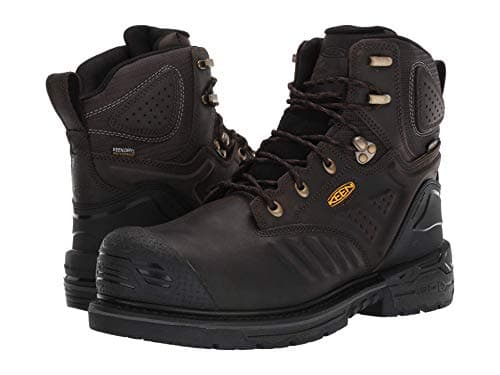 See price on AmazonAmazon
KEEN Utility Philadelphia 6-inch: carbon toe, 572 F outsole
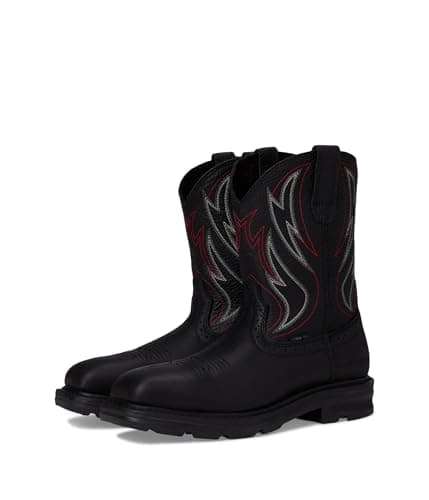 See price on AmazonAmazon
Sierra Shock Shield 10 in. steel toe, unlined
From Best steel toe work boots ranked on fit, build and resoleability
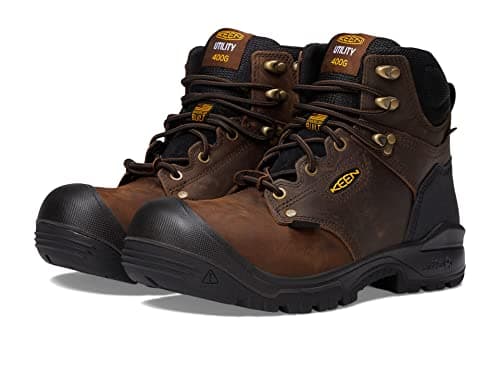 See price on AmazonAmazon
KEEN Utility Independence 6" 400G, rated to -40F
From Best insulated work boots for winter, by insulation weight
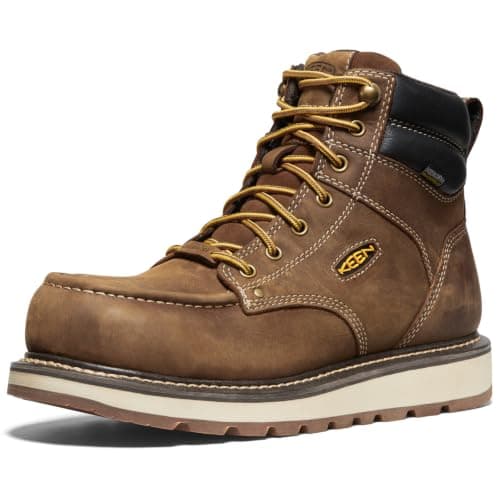 See price on AmazonAmazon
KEEN Utility Cincinnati 6-inch: carbon toe, Goodyear welt
From Best Keen Utility work boots: Cincinnati, San Jose, Philadelphia and more