Comparison
Alloy (aluminum) toe vs steel toe boots
Published
Short answer
An alloy toe is a safety cap made from aluminum or a similar light metal. A steel toe uses a steel cap. When both boots carry the same ASTM F2413 I/75 C/75 marking, they passed the same impact and compression tests. Alloy saves weight, steel is the traditional choice and often costs less. Pick on fit and weight, not on a guess about strength.
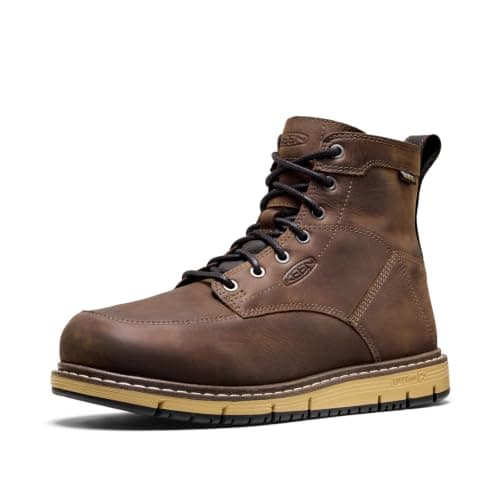
KEEN Utility
KEEN Utility San Jose 6-inch: aluminum toe, waterproof wedge
See price on Amazon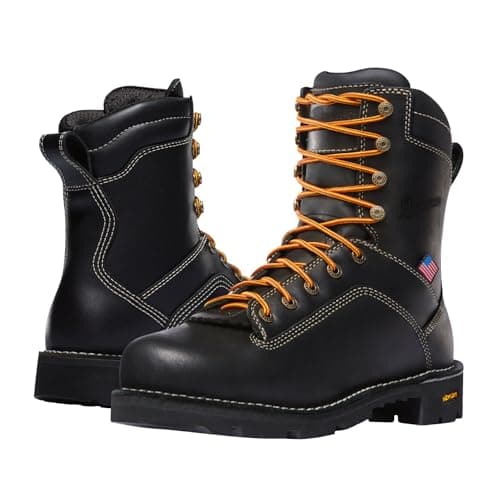
Danner
Danner Quarry USA 8-inch: GORE-TEX, alloy toe, Vibram
See price on Amazon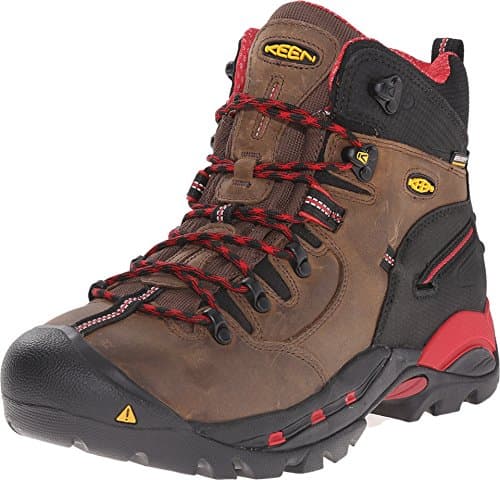
KEEN Utility
KEEN Utility Pittsburgh 6-inch: asymmetrical steel toe
See price on Amazon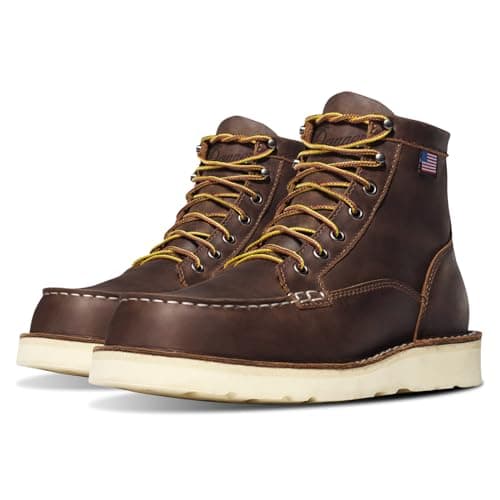
Danner
Danner Bull Run 6-inch: steel toe moc, stitch-down wedge
See price on Amazon
- KEEN Utility San Jose 6-inch: aluminum toe, waterproof wedge
- Safety toe
- Aluminum alloy, F2413 M I/75 C/75 EH
- EH rated
- Yes
- Outsole
- Siped wedge, F1677 Mark II and F2913
- Construction
- Not stated
- Danner Quarry USA 8-inch: GORE-TEX, alloy toe, Vibram
- Safety toe
- Alloy, ASTM F2413-11 I/75 C/75 EH
- EH rated
- -
- Outsole
- Vibram Quarry, oil and slip resistant
- Construction
- Stitchdown, recraftable
- KEEN Utility Pittsburgh 6-inch: asymmetrical steel toe
- Safety toe
- Steel, F2413 I/75 C/75
- EH rated
- Not stated
- Outsole
- Lug rubber, 90-degree heel
- Construction
- Not stated
- Danner Bull Run 6-inch: steel toe moc, stitch-down wedge
- Safety toe
- Steel, ASTM F2413-18 I/75 C/75 EH
- EH rated
- Yes
- Outsole
- Non-marking slip-resistant wedge
- Construction
- -
| Pick | Safety toe | EH rated | Outsole | Construction | Price | Link |
|---|---|---|---|---|---|---|
| KEEN Utility San Jose 6-inch: aluminum toe, waterproof wedge | Aluminum alloy, F2413 M I/75 C/75 EH | Yes | Siped wedge, F1677 Mark II and F2913 | Not stated | - | Amazon |
| Danner Quarry USA 8-inch: GORE-TEX, alloy toe, Vibram | Alloy, ASTM F2413-11 I/75 C/75 EH | - | Vibram Quarry, oil and slip resistant | Stitchdown, recraftable | - | Amazon |
| KEEN Utility Pittsburgh 6-inch: asymmetrical steel toe | Steel, F2413 I/75 C/75 | Not stated | Lug rubber, 90-degree heel | Not stated | - | Amazon |
| Danner Bull Run 6-inch: steel toe moc, stitch-down wedge | Steel, ASTM F2413-18 I/75 C/75 EH | Yes | Non-marking slip-resistant wedge | - | - | Amazon |
Facts are taken from each Amazon listing. Prices are checked daily and shown with their date.
Verdict
If you want a lighter metal toe for a walking-heavy job, the KEEN Utility San Jose Alloy Toe is the lighter, wedge-soled pick, and the Danner Quarry Alloy Toe suits rougher ground with its taller 8-inch shaft and Vibram heel outsole. If you prefer steel, the KEEN Utility Pittsburgh is the waterproof lug-sole option and the Danner Bull Run Steel Toe is the moc toe wedge choice for flat, smooth surfaces.
This page is for workers who have to wear a safety toe and are deciding between an alloy (aluminum) cap and a classic steel cap. It explains what each cap is made of, how they compare on weight, toe room and temperature, and what the label on the tongue actually guarantees. It also compares four real boots from our guides, two with alloy toes and two with steel toes, using only what their listings state. If you are also weighing a non-metallic cap, read our composite toe vs steel toe comparison too.
What an alloy toe and a steel toe actually are
A steel toe is a cap of formed steel built into the front of the boot, between the lining and the leather. It is the oldest kind of safety toe and still the most common in heavy industry. A steel cap is strong for its size, so it can be made with a fairly thin wall.
An alloy toe is a cap made from a lightweight metal, usually an aluminum alloy. Brands use the words alloy, aluminum and lightweight safety toe for the same idea. KEEN Utility, for example, calls the cap in its San Jose boot an aluminum alloy toe, and Irish Setter sells an Ashby boot listed as an aluminum toe.
Both are metal. That matters for two things: they both conduct heat and cold more than a composite cap, and they both can set off metal detectors. If you work in a building with walk-through detectors, neither alloy nor steel solves that. A composite or carbon toe does. See our composite toe boot picks if that is your situation.
Steel
Metalthin wall, heaviest
Alloy
Metalthin wall, lighter
Composite
Non-metalthicker wall, lighter
Same label, same minimum protection
In the US, safety toe work boots are tested to ASTM F2413. The marking I/75 means the toe cap passed the impact test in the 75 class, and C/75 means it passed the compression test in the 75 class. A boot that does not meet those levels should not carry that marking.
So an alloy toe boot marked I/75 C/75 and a steel toe boot marked I/75 C/75 met the same minimum standard. The label does not rank one above the other. It is a pass or fail floor. If your employer requires ASTM F2413 safety toes, both materials can satisfy that requirement as long as the label is on the boot.
Read the label before you buy. Our ASTM F2413 label decoder explains each line, and ASTM F2413 markings explained covers the extra codes such as EH, PR and Mt.
- 1Standard and year: ASTM F2413, 2018 revision
- 2M or F: men's or women's footwear
- 3I/75: toe impact, 75 foot-pounds
- 4C/75: toe compression, 2,500 pounds-force
- 5Mt/75: metatarsal guard
- 6EH: electrical hazard sole, secondary protection
- 7PR: puncture resistant plate
- 8SD: static dissipative, class in megohms
- 9Cd: conductive, never combined with EH
Note.A safety toe that has taken a heavy impact may be damaged even if it looks fine. Replace the boots after a serious hit to the toe.
Weight, room and feel: where they differ
Weight is the main reason to choose alloy. Aluminum is much lighter than steel, so an alloy cap usually trims weight at the front of the boot. KEEN's San Jose listing states that its aluminum alloy toes weigh 35% less than steel toes. Over a full shift with a lot of walking or climbing stairs, a lighter toe can make a difference you notice.
Toe room depends more on the cap shape and the last than on the metal. Many alloy caps are built thinner than composite caps, which lets a brand give you more interior room for the same outside size. Steel caps are also thin. KEEN, for instance, uses left and right asymmetrical caps on both its steel toe Pittsburgh and its alloy toe San Jose, which its listings say gives a roomier toe box.
Temperature is similar for both. Metal caps pull heat from your toes in the cold and can get warm on hot surfaces. If you work in a freezer or outdoors in winter, an insulated boot or a composite toe is the usual fix. Our insulated work boot guide covers that.
Material
- Alloy (aluminum) toe
- Aluminum alloy
- Steel toe
- Steel
Metal detector
- Alloy (aluminum) toe
- Can trigger it
- Steel toe
- Can trigger it
Relative weight
- Alloy (aluminum) toe
- Lighter
- Steel toe
- Heavier
Conducts cold and heat
- Alloy (aluminum) toe
- Yes
- Steel toe
- Yes
ASTM F2413 I/75 C/75 possible
- Alloy (aluminum) toe
- Yes
- Steel toe
- Yes
Typical use
- Alloy (aluminum) toe
- Walking-heavy jobs, lighter boots
- Steel toe
- Heavy industry, traditional boots
| Factor | Alloy (aluminum) toe | Steel toe |
|---|---|---|
| Material | Aluminum alloy | Steel |
| Metal detector | Can trigger it | Can trigger it |
| Relative weight | Lighter | Heavier |
| Conducts cold and heat | Yes | Yes |
| ASTM F2413 I/75 C/75 possible | Yes | Yes |
| Typical use | Walking-heavy jobs, lighter boots | Heavy industry, traditional boots |
Four boots compared from their listings
These four boots appear in our guides. Two use alloy caps and two use steel caps. Everything in the table comes from the product listings. Where a listing does not mention a feature, we mark it as not stated rather than guess.
The two KEEN Utility boots are a useful pair because they come from the same brand with the same asymmetrical toe idea, one in alloy and one in steel. The two Danner boots are both recraftable stitchdown builds, one a tall alloy toe Quarry and one a steel toe Bull Run moc toe.
KEEN Utility San Jose 6-inch Alloy Toe
- Toe
- Aluminum alloy, ASTM F2413 I/75 C/75
- Height
- 6 inch
- Waterproof
- Yes, KEEN.DRY membrane
- EH
- Yes
- Outsole
- Wedge, oil and slip resistant
Danner Quarry 8-inch Alloy Safety Toe
- Toe
- Alloy, ASTM F2413-11 I/75 C/75
- Height
- 8 inch
- Waterproof
- Yes, Gore-Tex
- EH
- Yes
- Outsole
- Vibram Quarry with heel
KEEN Utility Pittsburgh 6-inch Steel Toe
- Toe
- Steel, ASTM F2413 I/75 C/75
- Height
- 6 inch
- Waterproof
- Yes, KEEN.DRY membrane
- EH
- Not stated in listing
- Outsole
- Lug sole, 90 degree heel
Danner Bull Run 6-inch Steel Toe
- Toe
- Steel, ASTM F2413-18 I/75 C/75 EH
- Height
- 6 inch
- Waterproof
- Water-resistant oiled leather
- EH
- Yes
- Outsole
- Wedge, non-marking
| Boot | Toe | Height | Waterproof | EH | Outsole |
|---|---|---|---|---|---|
| KEEN Utility San Jose 6-inch Alloy Toe | Aluminum alloy, ASTM F2413 I/75 C/75 | 6 inch | Yes, KEEN.DRY membrane | Yes | Wedge, oil and slip resistant |
| Danner Quarry 8-inch Alloy Safety Toe | Alloy, ASTM F2413-11 I/75 C/75 | 8 inch | Yes, Gore-Tex | Yes | Vibram Quarry with heel |
| KEEN Utility Pittsburgh 6-inch Steel Toe | Steel, ASTM F2413 I/75 C/75 | 6 inch | Yes, KEEN.DRY membrane | Not stated in listing | Lug sole, 90 degree heel |
| Danner Bull Run 6-inch Steel Toe | Steel, ASTM F2413-18 I/75 C/75 EH | 6 inch | Water-resistant oiled leather | Yes | Wedge, non-marking |
Which toe fits which job
Choose alloy if you walk a lot, climb stairs and ladders all day, or simply want the lightest metal toe you can get. Warehouse, logistics, inspection and many trade jobs fit here. Our lightweight work boot guide leans heavily on alloy and composite caps for that reason.
Choose steel if you want the most traditional build, your workplace is used to steel toes, or the boot you like best simply comes in steel. Many classic moc toe and logger boots are offered with steel caps first. Steel is also common in boots with metatarsal guards.
Either way, fit comes first. A safety cap that presses on your toes will hurt no matter what it is made of. Leave about a thumb width of room ahead of your longest toe and make sure your toes do not touch the cap edge when you flex. Our guide on how work boots should fit walks through the checks.
- 1Toe room: about a thumb width ahead of the longest toe
- 2Toes clear the cap edge: no pressure when you stand or crouch
- 3Widest point at the ball: the ball of the foot sits where the boot is widest
- 4Minimal heel lift: a little lift is normal in new stiff boots
- Long walking shifts or lots of climbing: alloy
- Traditional heavy-duty boots, moc toes and loggers: steel is widely offered
- Walk-through metal detectors: neither, look at composite
- Very cold work: either with insulation, or switch to composite
Frequently asked questions
Is an alloy toe as safe as a steel toe? If both boots carry the ASTM F2413 I/75 C/75 marking, both passed the same impact and compression tests. The label sets the minimum. Check the tongue or shaft label rather than relying on the material name.
Do alloy toe boots set off metal detectors? They can. Aluminum is a metal, so alloy toes are not a fix for security checkpoints or plants with metal detectors. Composite and carbon fiber caps are the non-metallic options.
Are alloy toes roomier than steel toes? Not by rule. Room depends on the cap shape and the boot last. Alloy caps are often thinner than composite caps, and some brands use asymmetrical caps in both steel and alloy to add room. Try the exact boot.
Can alloy toe boots be EH rated? Yes. EH is about the sole and heel, not the cap material. Both the KEEN San Jose alloy toe and the Danner Quarry alloy toe listings state EH. See what EH rated means.
What you need for this
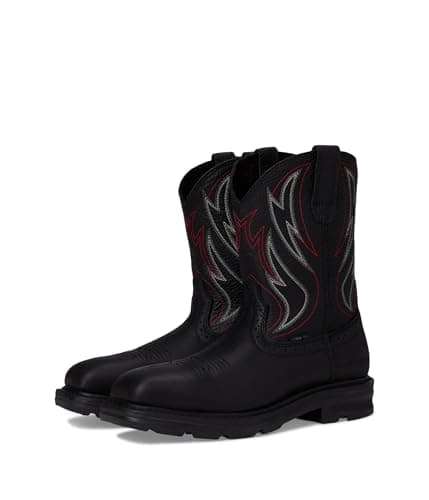 See price on AmazonAmazon
Sierra Shock Shield 10 in. steel toe, unlined
From Best steel toe work boots ranked on fit, build and resoleability
- See price on AmazonAmazon
KEEN Utility San Jose 6-inch: aluminum toe, waterproof wedge
From Best lightweight work boots that keep the safety rating
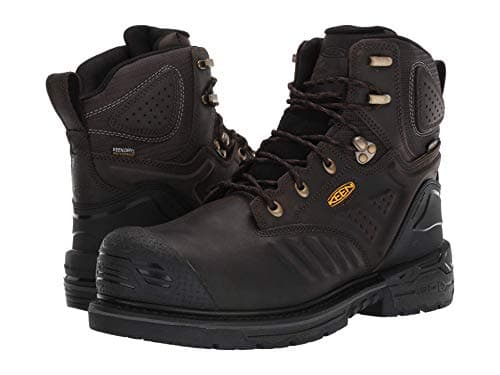 See price on AmazonAmazon
KEEN Utility Philadelphia 6-inch: carbon toe, 572 F outsole
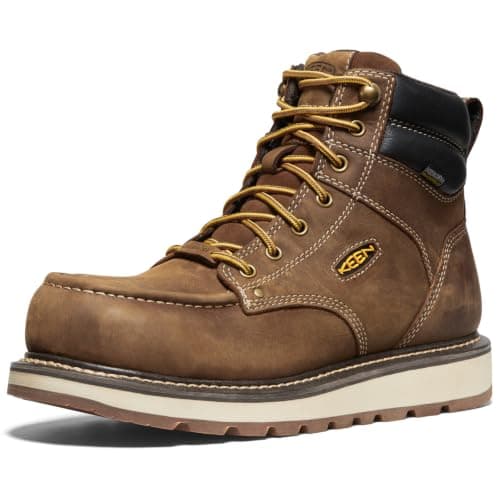 See price on AmazonAmazon
KEEN Utility Cincinnati 6-inch: carbon toe, Goodyear welt
From Best Keen Utility work boots: Cincinnati, San Jose, Philadelphia and more