Comparison
Work boots vs tactical boots
Published
Short answer
Tactical boots are built for speed, light weight and agility, with flexible soles and often fabric uppers. Many have no safety toe and no EH rating, so they may not pass a job site footwear rule. Work boots are built for protection and durability, often with an ASTM F2413 safety toe, EH rating and slip and oil resistant outsoles. If you want tactical feel on a job site, look for a lightweight, rated work boot instead.
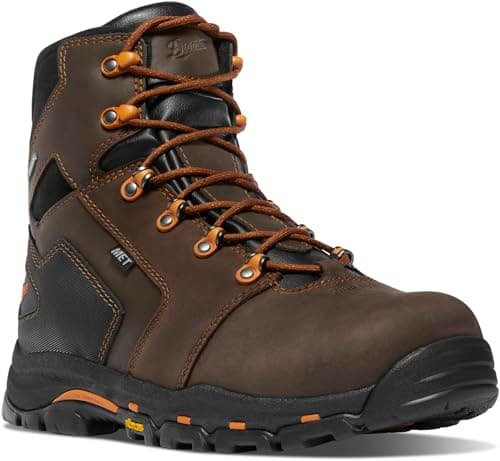
Danner
Danner Vicious 6-inch: composite toe, F2413-18 I/75 C/75 EH
See price on Amazon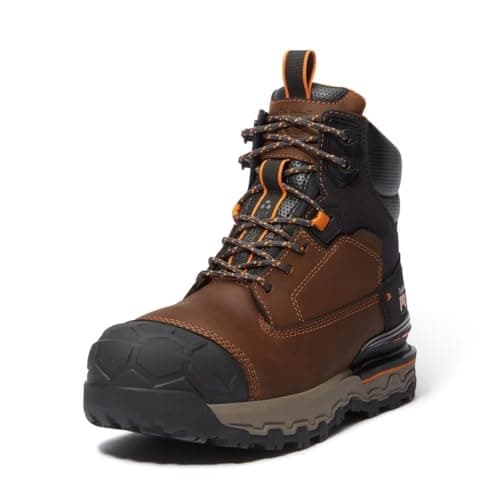
Timberland PRO
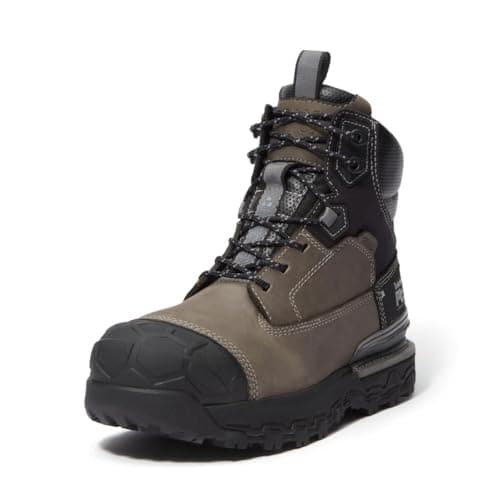
Timberland PRO Boondock Ultralight 6" composite toe
See price on Amazon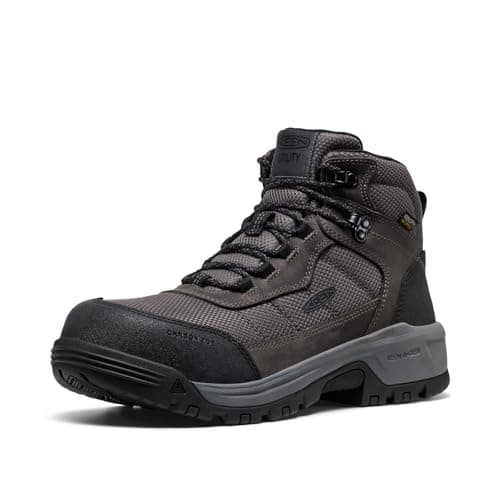
KEEN Utility
KEEN Utility Skokie mid: carbon toe hiker, met, EH
See price on Amazon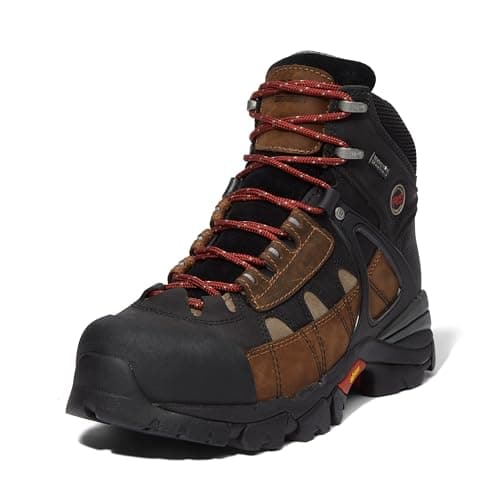
Timberland PRO
Timberland PRO Hyperion 6" alloy toe hiker
See price on Amazon
- Danner Vicious 6-inch: composite toe, F2413-18 I/75 C/75 EH
- Waterproof
- GORE-TEX lining
- Safety toe
- -
- Timberland PRO Boondock Ultralight 6" composite toe
- Waterproof
- Yes, ASTM F1671-07
- Safety toe
- Composite
- KEEN Utility Skokie mid: carbon toe hiker, met, EH
- Waterproof
- Yes
- Safety toe
- Carbon composite, F2413-18 M I/75 C/75 MT/75
- Timberland PRO Hyperion 6" alloy toe hiker
- Waterproof
- Yes, ASTM F1671-07
- Safety toe
- Alloy
| Pick | Waterproof | Safety toe | Price | Link |
|---|---|---|---|---|
| Danner Vicious 6-inch: composite toe, F2413-18 I/75 C/75 EH | GORE-TEX lining | - | - | Amazon |
| Timberland PRO Boondock Ultralight 6" composite toe | Yes, ASTM F1671-07 | Composite | - | Amazon |
| KEEN Utility Skokie mid: carbon toe hiker, met, EH | Yes | Carbon composite, F2413-18 M I/75 C/75 MT/75 | - | Amazon |
| Timberland PRO Hyperion 6" alloy toe hiker | Yes, ASTM F1671-07 | Alloy | - | Amazon |
Facts are taken from each Amazon listing. Prices are checked daily and shown with their date.
Verdict
For a site that needs a rated toe and EH, the Danner Vicious 6" Composite Toe and the KEEN Utility Skokie both list ASTM F2413 I/75 C/75 EH in a light, athletic style. The Timberland PRO Boondock Ultralight and Hyperion suit walkers who want a membrane and a rated toe; buy a tactical boot only for work with no footwear rule.
This page is for people who like the feel of tactical boots and wonder if they can wear them to work, and for anyone choosing between the two styles. We explain what each type is designed for, what labels to check, and why a tactical boot often falls short on a site with safety rules. Our boot catalog does not include tactical boot listings, so we do not quote specs for any tactical model. Instead we compare four lightweight, rated work boots that close much of the gap.
What tactical boots are built for
Tactical boots come from military, police and security use. The design goal is moving quickly over mixed ground for long periods. Common traits include lighter weight, flexible soles, nylon or fabric panels mixed with leather, side zips for fast on and off, and a sneaker or hiker feel. Some are waterproof and some have composite toes, but those features vary a lot by model.
Because the design priority is mobility, many tactical boots skip things a job site cares about: a rated safety toe, electrical hazard protection, heat-resistant outsoles, or puncture plates. Some do carry those ratings. You have to read the label on each boot.
What work boots are built for
Work boots are built around site hazards and long wear. Common features include an ASTM F2413 safety toe (steel, alloy or composite), EH protection, oil and slip resistant outsoles, stiffer shanks for ladders and digging, and full-grain leather uppers that stand up to abrasion. Many are welted or stitch-down so they can be resoled. See what makes a good work boot for a fuller checklist.
The trade-off is weight and stiffness. A heavy welted work boot can feel slow next to a tactical boot. The gap has narrowed: many brands now sell lightweight work boots with athletic-style midsoles and full safety ratings.
- 1Standard and year: ASTM F2413, 2018 revision
- 2M or F: men's or women's footwear
- 3I/75: toe impact, 75 foot-pounds
- 4C/75: toe compression, 2,500 pounds-force
- 5Mt/75: metatarsal guard
- 6EH: electrical hazard sole, secondary protection
- 7PR: puncture resistant plate
- 8SD: static dissipative, class in megohms
- 9Cd: conductive, never combined with EH
Labels decide whether a boot passes the site
On a site with a footwear rule, the question is not style but the label. Look inside the tongue or shaft for an ASTM F2413 line with I/75 C/75 for toe protection and EH if electrical hazards are present. A tactical boot with that label can be acceptable; a work boot without it is not. Our ASTM F2413 label decoder explains each marking, and what does EH rated mean covers electrical hazard protection.
Main goal
- Typical tactical boot
- Speed, light weight, agility
- Typical work boot
- Protection and durability
Safety toe
- Typical tactical boot
- Often none; some composite
- Typical work boot
- Often steel, alloy or composite
EH rating
- Typical tactical boot
- Often not listed
- Typical work boot
- Common
Upper
- Typical tactical boot
- Leather and nylon mix
- Typical work boot
- Mostly full-grain leather
Outsole
- Typical tactical boot
- Flexible, multi-surface
- Typical work boot
- Oil and slip resistant, some heat resistant
Resoling
- Typical tactical boot
- Rare
- Typical work boot
- Common on welted builds
| Factor | Typical tactical boot | Typical work boot |
|---|---|---|
| Main goal | Speed, light weight, agility | Protection and durability |
| Safety toe | Often none; some composite | Often steel, alloy or composite |
| EH rating | Often not listed | Common |
| Upper | Leather and nylon mix | Mostly full-grain leather |
| Outsole | Flexible, multi-surface | Oil and slip resistant, some heat resistant |
| Resoling | Rare | Common on welted builds |
Lightweight rated work boots compared
These four listings are work boots with athletic or hiker styling, which is what most people want from a tactical boot on a job site. Weight figures are not stated in the listings, so we compare only what is stated. Tactical boot specs are not confirmed in our catalog, so none appear here.
Danner Vicious 6" Composite Toe
- Toe
- Composite
- Listed ratings
- ASTM F2413-18 M I/75 C/75 EH
- Waterproof
- Gore-Tex
- Outsole and midsole
- Vibram, 90-degree heel, EVA midsole
- Price at listing
- $269.95
Timberland PRO Boondock Ultralight 6"
- Toe
- Composite
- Listed ratings
- ASTM F2413-18 I and C
- Waterproof
- Membrane, ASTM F1671-07
- Outsole and midsole
- TPU outsole, HoverSpring foam
- Price at listing
- $190.00
KEEN Utility Skokie Mid Composite Toe
- Toe
- Carbon composite
- Listed ratings
- ASTM F2413-18 M I/75 C/75 MT/75 EH
- Waterproof
- Yes
- Outsole and midsole
- Oil and chemical resistant, D471-06
- Price at listing
- $164.95
Timberland PRO Hyperion 6" XL Alloy Toe
- Toe
- Alloy
- Listed ratings
- ASTM F2413-18 I and C
- Waterproof
- Membrane, ASTM F1671-07
- Outsole and midsole
- Vibram rubber
- Price at listing
- $154.95
| Boot | Toe | Listed ratings | Waterproof | Outsole and midsole | Price at listing |
|---|---|---|---|---|---|
| Danner Vicious 6" Composite Toe | Composite | ASTM F2413-18 M I/75 C/75 EH | Gore-Tex | Vibram, 90-degree heel, EVA midsole | $269.95 |
| Timberland PRO Boondock Ultralight 6" | Composite | ASTM F2413-18 I and C | Membrane, ASTM F1671-07 | TPU outsole, HoverSpring foam | $190.00 |
| KEEN Utility Skokie Mid Composite Toe | Carbon composite | ASTM F2413-18 M I/75 C/75 MT/75 EH | Yes | Oil and chemical resistant, D471-06 | $164.95 |
| Timberland PRO Hyperion 6" XL Alloy Toe | Alloy | ASTM F2413-18 I and C | Membrane, ASTM F1671-07 | Vibram rubber | $154.95 |
Which one to choose
If you came here because work boots feel heavy, also read work boots vs hiking boots and check most comfortable work boots.
- Job site with a footwear rule: a rated work boot, or a tactical boot only if its label shows the required ratings.
- Electrical work: EH rated boots only; see work boots for electricians.
- Warehouse and logistics with lots of walking: a lightweight safety toe boot; see safety toe boots for warehouse work.
- Security, patrol, hiking-heavy roles with no rule: a tactical boot can be a good fit.
- Heavy construction, demolition, hot surfaces: a full work boot, often with puncture or heat-resistant soles.
Note.Your employer's hazard assessment sets the requirement. Bring the boot or a photo of the label if you are unsure it will pass.
Frequently asked questions
Can I wear tactical boots for construction work? Only if the boot carries the ratings your site requires, usually an ASTM F2413 safety toe and often EH. Many tactical boots do not, so check the label before you buy.
Are tactical boots lighter than work boots? Usually, because they use more fabric and lighter soles. Lightweight work boots with composite or alloy toes close much of that gap.
Do tactical boots have steel toes? Some have composite or steel toes, but many have none. Read the listing and the label for the ASTM F2413 marking.
Are tactical boots waterproof? Some are and some are not. Look for a named membrane or a clear waterproof claim. See waterproof vs water resistant work boots.
What you need for this
 See price on AmazonAmazon
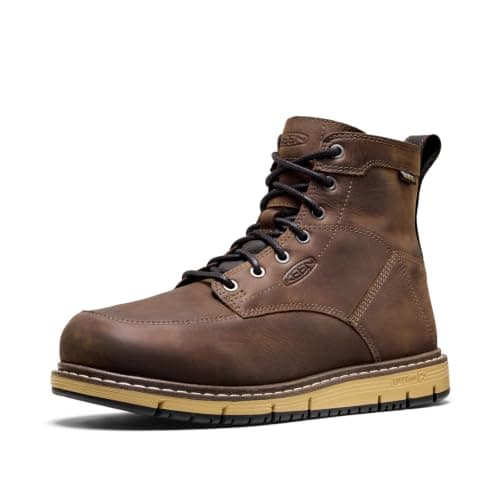
KEEN Utility San Jose 6-inch: aluminum toe, waterproof wedge
From Best lightweight work boots that keep the safety rating
 See price on AmazonAmazon
Timberland PRO Boondock Ultralight 6-inch: composite toe
 See price on AmazonAmazon
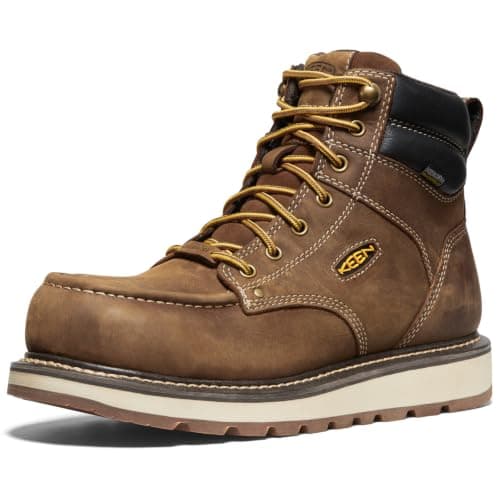
KEEN Utility Cincinnati 6-inch: carbon toe, Goodyear welt
From The most comfortable work boots, including safety toe picks
 See price on AmazonAmazon
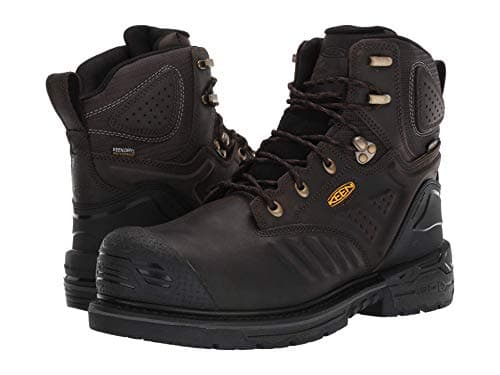
KEEN Utility Philadelphia 6-inch: carbon toe, 572 F outsole