Explainer
What does EH rated mean on work boots?
Published
Short answer
EH stands for electrical hazard. An EH rated boot has an outsole and heel that passed the ASTM electrical hazard test: 18,000 volts at 60 Hz for one minute with no more than 1.0 mA of current leakage, under dry conditions. It is secondary protection against accidental contact with live circuits, not a substitute for de-energizing and proper insulated gear.
Boots for this job
All 6 picks compared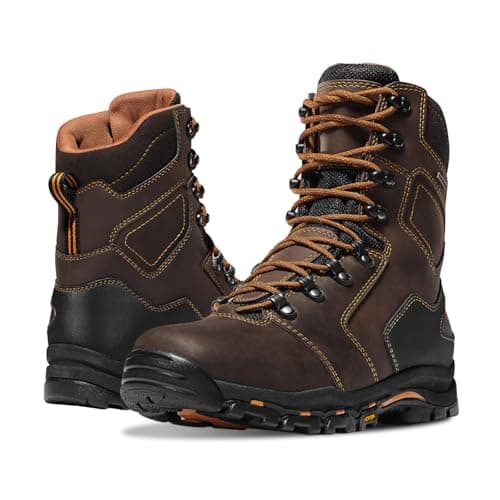
Danner Vicious 8-inch: composite toe, ASTM F2413-18 EH
See price on AmazonSee it on Amazon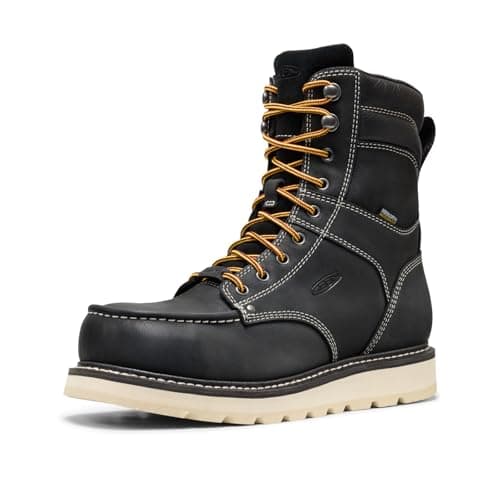
KEEN Utility Cincinnati 8-inch: carbon toe, EH, wedge sole
See price on AmazonSee it on Amazon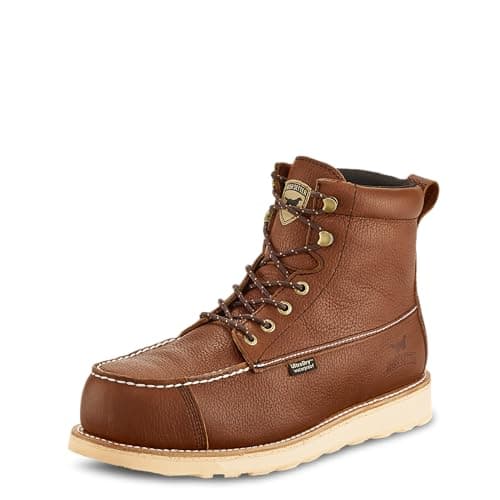
Irish Setter Wingshooter ST 6-inch: NMT toe, F2413-18 EH
See price on AmazonSee it on Amazon
If you are buying boots for a job site, a plant or any trade near live wiring, you will see EH on the label or listing over and over. This page is for workers and buyers who want to know what that mark actually promises. We cover where EH appears on the ASTM label, what the lab test does, why the rating only holds under the right conditions, how EH differs from SD and dielectric boots, and how to keep the protection working once the boots are on your feet.
Where the EH mark comes from
EH is one of the protective marks defined in ASTM F2413, the US performance standard for protective footwear with a safety toe cap. On a safety toe boot you will find it on the tongue or shaft label, usually on the line after the impact and compression ratings, for example ASTM F2413-18 M I/75 C/75 EH. Our ASTM F2413 label decoder explains each line if you want to check a specific boot.
Soft toe boots can carry an EH rating too. Footwear without a protective toe cap is covered by ASTM F2892, which uses the same idea of an electrical hazard tested outsole. That is why you will see soft toe work boots listed as meeting ASTM F2892 EH standards.
- 1Standard and year: ASTM F2413, 2018 revision
- 2M or F: men's or women's footwear
- 3I/75: toe impact, 75 foot-pounds
- 4C/75: toe compression, 2,500 pounds-force
- 5Mt/75: metatarsal guard
- 6EH: electrical hazard sole, secondary protection
- 7PR: puncture resistant plate
- 8SD: static dissipative, class in megohms
- 9Cd: conductive, never combined with EH
What the EH test actually measures
The test checks the sole and heel as an insulator. The boot is subjected to 18,000 volts at 60 Hz for one minute, and current leakage must stay at or below 1.0 milliampere. The test is done on new footwear in dry conditions. Passing means the bottom of the boot resisted that voltage at that moment, in the lab.
Nothing in the test covers the upper, the laces or what happens if water, mud or metal shavings bridge the insulating sole. It also says nothing about how the boot performs after months of wear. The rating describes the boot as it left the factory.
Voltage
- What the standard says
- 18,000 V at 60 Hz
Duration
- What the standard says
- 1 minute
Allowed leakage
- What the standard says
- No more than 1.0 mA
Conditions
- What the standard says
- Dry, new footwear
Part tested
- What the standard says
- Outsole and heel
Standard
- What the standard says
- ASTM F2413 (safety toe) or ASTM F2892 (soft toe)
| Item | What the standard says |
|---|---|
| Voltage | 18,000 V at 60 Hz |
| Duration | 1 minute |
| Allowed leakage | No more than 1.0 mA |
| Conditions | Dry, new footwear |
| Part tested | Outsole and heel |
| Standard | ASTM F2413 (safety toe) or ASTM F2892 (soft toe) |
What EH does not do
EH is described in the standard as secondary protection. It reduces the chance of a dangerous path through your feet if you accidentally contact a live circuit while standing on the ground. It is not designed to let you work on energized equipment, and it does not replace lockout and tagout, insulated tools, insulating mats or arc rated clothing.
- It does not protect you if the sole is wet, cracked or worn through.
- It does not protect you if a nail, screw or metal chip is embedded through the sole.
- It does not cover static control. That is what SD (static dissipative) boots do, and they work the opposite way.
- It is not the same as dielectric insulating footwear (DI), which is a separate, higher level of protection used in utility work.
Note.EH boots are a backup layer. Follow your employer's electrical safety program and never treat footwear as permission to work on live equipment.
Why wet or worn soles matter
Water is the biggest enemy of an EH rating. A soaked sole, a puddle that reaches the upper, or sweat soaked through the boot can create a path for current. The standard itself notes that the protection is reduced by wear and wet conditions.
Wear matters for the same reason. As lugs wear down the insulating rubber gets thinner, and cracks or cuts in the outsole open a direct path. Embedded metal debris is another common failure point on sites with nails and screws. Check soles regularly and replace boots when the outsole is worn smooth, split or punctured.
- 1
Look at the outsole for cuts, cracks and worn through spots.
- 2
Pull out any embedded nails, screws or metal shavings, then check whether they went through.
- 3
Check the heel and the sole edge where it meets the upper for separation.
- 4
Replace EH boots that have been punctured or have separated soles, even if they still feel fine.
EH, SD, conductive and dielectric compared
These marks are easy to mix up because they all deal with electricity. They do very different jobs, and some cannot be combined in the same boot.
EH and SD pull in opposite directions, so a single boot is not usually rated for both. If your site requires static control, an EH boot is the wrong tool. For a deeper look at line work footwear, see EH rated vs dielectric boots.
EH
- Purpose
- Sole resists current from accidental contact with live circuits
- Typical users
- Electricians, maintenance, general construction
SD
- Purpose
- Lets static charge drain slowly to ground within a set resistance range
- Typical users
- Electronics assembly, some manufacturing
Cd (conductive)
- Purpose
- Drains static quickly to ground
- Typical users
- Explosives and volatile environments
DI (dielectric)
- Purpose
- Insulating footwear tested to a higher standard than EH
- Typical users
- Utility and high voltage line work
| Mark | Purpose | Typical users |
|---|---|---|
| EH | Sole resists current from accidental contact with live circuits | Electricians, maintenance, general construction |
| SD | Lets static charge drain slowly to ground within a set resistance range | Electronics assembly, some manufacturing |
| Cd (conductive) | Drains static quickly to ground | Explosives and volatile environments |
| DI (dielectric) | Insulating footwear tested to a higher standard than EH | Utility and high voltage line work |
Choosing an EH boot
Most mainstream work boots from Thorogood, Keen Utility, Danner, Carolina and others are offered in EH rated versions, in both safety toe and soft toe. Steel, alloy and composite toe boots can all carry an EH rating, because the rating is about the sole, not the toe cap.
Start with the hazards on your site, then pick the toe type and build. If you work around panels and wiring every day, our guide to the best work boots for electricians narrows the list. If you want a non-metallic toe as well, see the best composite toe work boots.
Frequently asked questions
Can EH rated boots get wet? They can get wet, but the electrical protection is reduced while they are wet. The EH test is done in dry conditions, so treat soaked boots as having little or no electrical protection until they dry.
Does EH rated mean the boot is non-conductive? The sole and heel resisted the test voltage when new and dry. The boot as a whole is not certified as non-conductive, and metal parts like a steel toe or shank are not the point of the test.
Do EH ratings expire? There is no expiry date, but the protection depends on the condition of the sole. Worn, cut, punctured or separated soles lose protection, so replace boots once the outsole is damaged.
Is EH required by OSHA? OSHA 1910.136 requires protective footwear where employees' feet are exposed to electrical hazards, among other foot hazards. Your employer's hazard assessment decides which ratings your job needs.
What you need for this
- See price on AmazonAmazon
Danner Vicious 8-inch: composite toe, ASTM F2413-18 EH
From Best work boots for electricians: EH-rated, non-metallic toe picks
 See price on AmazonAmazon
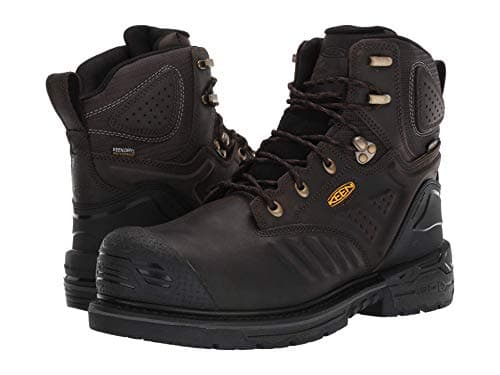
KEEN Utility Philadelphia 6-inch: carbon toe, 572 F outsole
 See price on AmazonAmazon
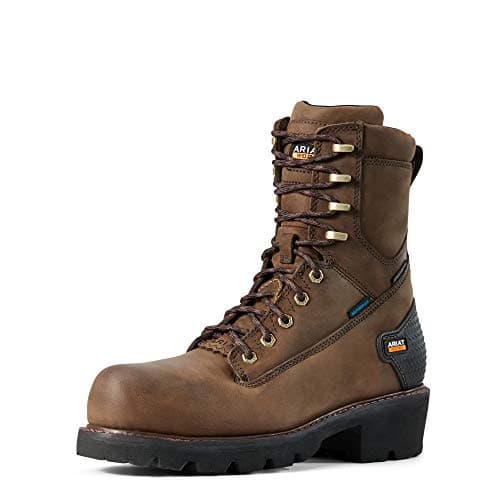
Ariat Powerline 8 in. H2O composite toe version