Comparison
EH-rated vs dielectric boots
Published
Short answer
EH-rated boots are ordinary work boots with soles and heels tested under ASTM F2413 to give secondary protection if you accidentally step on a live circuit in dry conditions. Dielectric boots are insulating footwear, usually rubber, made and tested to a separate standard for work near energized equipment. EH is a backup layer. Dielectric footwear is protective equipment chosen as part of an electrical safety program.
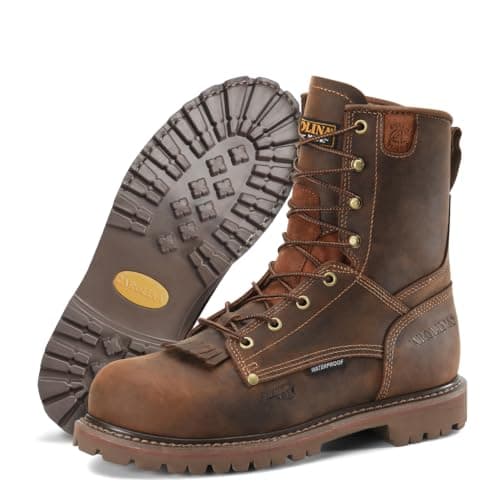
Carolina
Carolina 28 Series 8 in. composite toe, EH, kiltie
See price on Amazon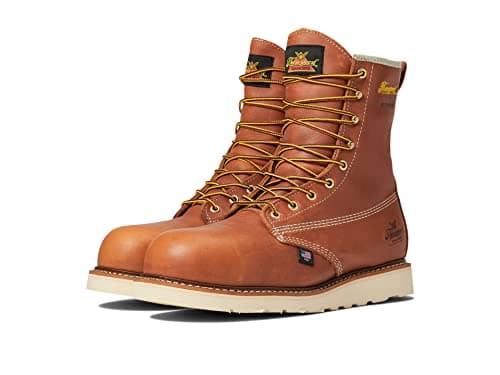
Thorogood
Thorogood American Heritage 8-inch: composite toe, waterproof, EH
See price on Amazon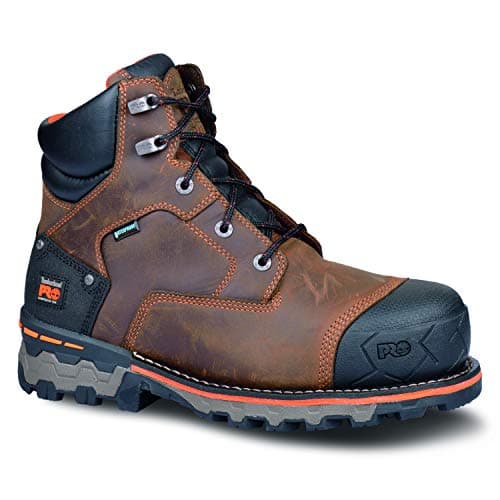
Timberland PRO
Timberland PRO Boondock 6-inch: composite toe, EH, wide size
See price on Amazon
- Carolina 28 Series 8 in. composite toe, EH, kiltie
- Height
- 8 in.
- Safety toe
- Composite
- Waterproof
- Yes, Scubaliner
- EH rating per listing
- -
- Thorogood American Heritage 8-inch: composite toe, waterproof, EH
- Height
- 8 inch
- Safety toe
- Composite
- Waterproof
- Yes, gusseted tongue
- EH rating per listing
- ASTM F2413-18 EH
- Timberland PRO Boondock 6-inch: composite toe, EH, wide size
- Height
- 6 inch
- Safety toe
- Composite (non-metallic)
- Waterproof
- Yes, membrane (ASTM F1671-07)
- EH rating per listing
- ASTM F2412-18a, F2413-18, F2892-18
| Pick | Height | Safety toe | Waterproof | EH rating per listing | Price | Link |
|---|---|---|---|---|---|---|
| Carolina 28 Series 8 in. composite toe, EH, kiltie | 8 in. | Composite | Yes, Scubaliner | - | - | Amazon |
| Thorogood American Heritage 8-inch: composite toe, waterproof, EH | 8 inch | Composite | Yes, gusseted tongue | ASTM F2413-18 EH | - | Amazon |
| Timberland PRO Boondock 6-inch: composite toe, EH, wide size | 6 inch | Composite (non-metallic) | Yes, membrane (ASTM F1671-07) | ASTM F2412-18a, F2413-18, F2892-18 | - | Amazon |
Facts are taken from each Amazon listing. Prices are checked daily and shown with their date.
Verdict
For everyday electrical work where EH footwear is required, the Thorogood American Heritage 8-inch Composite Toe suits those who want a welted, resoleable wedge boot, the Carolina 28 Series fits lug-sole outdoor work, and the Timberland PRO Boondock is the lighter 6-inch option. If your safety program calls for dielectric footwear, none of these is a substitute; buy the specific dielectric model it approves.
This page is for electricians, utility workers and anyone whose safety sheet mentions EH or dielectric footwear. People often use the two words as if they mean the same thing. They do not. Below we explain what each one is, the standards behind them, why EH protection fades with wear and wet conditions, and when an employer is likely to ask for dielectric footwear instead. We also compare three EH-rated boots from our guides using only their listings. None of the boots in our current guide lineup is listed as dielectric footwear, so we do not recommend a specific dielectric boot here.
What EH rated means
EH stands for electrical hazard. It is one of the extra performance codes a boot can carry under ASTM F2413, the US standard for protective footwear, with the test method in ASTM F2412. Some boots without a safety toe are rated under ASTM F2892, the standard for soft toe protective footwear, which uses the same EH idea.
EH-rated footwear is tested so that the sole and heel resist current flow at 18,000 volts for one minute in dry conditions. In plain terms, it is meant to reduce the chance of a shock passing through your feet to ground if you accidentally contact a live circuit while standing on a dry surface.
The key word is secondary. EH footwear is a backup, not your primary protection. Lockout, testing, proper tools and gloves come first. Our explainer on what EH rated means covers the label in more detail.
- 1Standard and year: ASTM F2413, 2018 revision
- 2M or F: men's or women's footwear
- 3I/75: toe impact, 75 foot-pounds
- 4C/75: toe compression, 2,500 pounds-force
- 5Mt/75: metatarsal guard
- 6EH: electrical hazard sole, secondary protection
- 7PR: puncture resistant plate
- 8SD: static dissipative, class in megohms
- 9Cd: conductive, never combined with EH
What dielectric boots are
Dielectric footwear is insulating footwear designed to protect against step and touch potential when working near energized equipment. It is usually a rubber boot or rubber overboot. In the US the main standards are ASTM F1117 for the footwear and ASTM F1116 for the test method.
Dielectric footwear is rated for much higher test voltages than an EH work boot and is treated as electrical protective equipment. That means it is selected for a specific task by the employer or safety program, kept clean, inspected before use and retested or replaced on a schedule the program sets.
Searches for dielectric wellington boots often turn up leather pull-on work boots with an EH rating. A leather wellington with EH is still an EH boot. Only footwear made and labeled to the dielectric standard is dielectric footwear. Check the label and the spec sheet, not just the product name.
Note.Electrical work can kill. Follow your employer's electrical safety program and the footwear it specifies. Do not treat any work boot as a substitute for de-energizing, testing and proper insulating gloves.
EH vs dielectric side by side
The table sums up how the two differ. The short version: EH is a feature of a normal work boot, while dielectric footwear is its own type of protective gear with its own standard and care rules.
Standard
- EH-rated work boot
- ASTM F2413 (or F2892 for soft toe), tested per F2412
- Dielectric footwear
- ASTM F1117, tested per F1116
Role
- EH-rated work boot
- Secondary protection
- Dielectric footwear
- Insulating protective equipment
Typical form
- EH-rated work boot
- Leather lace-up or pull-on work boot
- Dielectric footwear
- Rubber boot or overboot
Test condition
- EH-rated work boot
- Dry, new boot
- Dielectric footwear
- Higher voltage proof test
Effect of wet or worn soles
- EH-rated work boot
- Protection drops
- Dielectric footwear
- Must be kept intact and inspected
Who chooses it
- EH-rated work boot
- Often personal purchase
- Dielectric footwear
- Usually set by the safety program
| Factor | EH-rated work boot | Dielectric footwear |
|---|---|---|
| Standard | ASTM F2413 (or F2892 for soft toe), tested per F2412 | ASTM F1117, tested per F1116 |
| Role | Secondary protection | Insulating protective equipment |
| Typical form | Leather lace-up or pull-on work boot | Rubber boot or overboot |
| Test condition | Dry, new boot | Higher voltage proof test |
| Effect of wet or worn soles | Protection drops | Must be kept intact and inspected |
| Who chooses it | Often personal purchase | Usually set by the safety program |
Why EH protection fades
EH testing is done on new boots in dry conditions. In real use, a few things can reduce that protection. Wet soles and standing water give current an easier path. Worn-through outsoles, cuts, embedded nails or metal debris can create a conductive path. Conductive insoles or damage to the sole and heel also matter.
That is why EH boots should be inspected regularly and replaced when the outsole is worn down or cut. If your work puts you near energized equipment in wet conditions, talk to your safety lead about whether dielectric footwear or overboots are required.
- Keep EH boots dry when working near circuits where possible
- Check soles for cuts, nails and wear-through
- Do not add conductive insoles or metal hardware to the sole
- Replace boots that are badly worn, even if the uppers look fine
Three EH-rated boots compared from their listings
These three boots from our guides list EH protection. The table uses only listing facts. All three use non-metallic safety toes, which many electricians prefer. None of them is listed as dielectric footwear.
We do not have a dielectric boot listing in our current guides, so we cannot confirm specs for one here. If you need dielectric footwear, get the exact model your safety program approves and check that its label references the dielectric standard.
Carolina 28 Series 8-inch Composite Toe
- Toe
- Composite
- EH
- Yes, non-conductive rubber lug outsole
- Waterproof
- Yes, Scubaliner
- Other listed features
- Removable kiltie, AG7 footbed
Thorogood American Heritage 8-inch Composite Toe
- Toe
- Composite, ASTM F2413-18
- EH
- Yes, ASTM F2413-18
- Waterproof
- Yes, gusseted tongue
- Other listed features
- Goodyear storm welt, fiberglass shank, wedge outsole
Timberland PRO Boondock 6-inch Composite Toe
- Toe
- Composite, ASTM F2413-18 I and C
- EH
- Yes, ASTM F2413-18 and F2892-18
- Waterproof
- Yes, membrane
- Other listed features
- TPU outsole, anti-fatigue footbed
| Boot | Toe | EH | Waterproof | Other listed features |
|---|---|---|---|---|
| Carolina 28 Series 8-inch Composite Toe | Composite | Yes, non-conductive rubber lug outsole | Yes, Scubaliner | Removable kiltie, AG7 footbed |
| Thorogood American Heritage 8-inch Composite Toe | Composite, ASTM F2413-18 | Yes, ASTM F2413-18 | Yes, gusseted tongue | Goodyear storm welt, fiberglass shank, wedge outsole |
| Timberland PRO Boondock 6-inch Composite Toe | Composite, ASTM F2413-18 I and C | Yes, ASTM F2413-18 and F2892-18 | Yes, membrane | TPU outsole, anti-fatigue footbed |
Which one do you need
Most electricians, HVAC techs and maintenance workers wear EH-rated work boots as a daily layer of backup protection. If your job description or employer just says EH or electrical hazard footwear, an EH-rated boot with the right safety toe is what you are shopping for. Our electrician boot guide and lineman boot guide list options.
Dielectric footwear is for specific tasks with higher exposure, often set by a utility or industrial electrical safety program. If you are not sure, ask. Do not guess on electrical PPE. For whether the cap material matters, see should electricians wear steel toe boots.
Frequently asked questions
Is an EH-rated boot the same as a dielectric boot? No. EH is a secondary protection rating on a work boot under ASTM F2413 or F2892. Dielectric footwear is insulating protective equipment made and tested to a separate standard.
Can a steel toe boot be EH rated? Yes. EH protection comes from the sole and heel, which isolate the cap. Many steel toe boots carry EH. Some electricians still prefer non-metallic toes.
Does EH protection work when the boots are wet? EH testing is done dry. Wet soles, water on the floor and worn outsoles all reduce protection. Treat EH as backup only.
Are dielectric wellington boots leather? Leather pull-on boots sold as EH-rated are EH boots, not dielectric footwear. Dielectric footwear is typically rubber and is labeled to the dielectric standard.
What you need for this
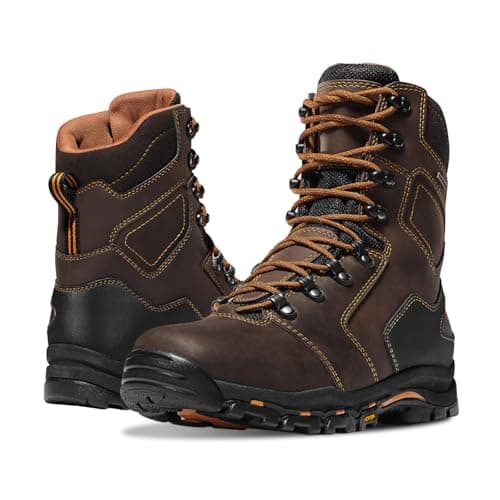 See price on AmazonAmazon
Danner Vicious 8-inch: composite toe, ASTM F2413-18 EH
From Best work boots for electricians: EH-rated, non-metallic toe picks
 See price on AmazonAmazon
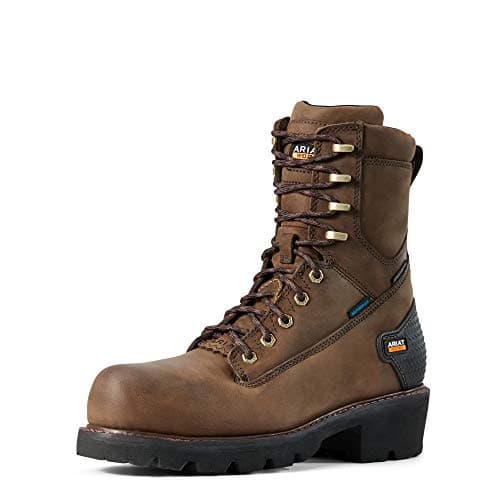
Ariat Powerline 8 in. H2O composite toe version
 See price on AmazonAmazon
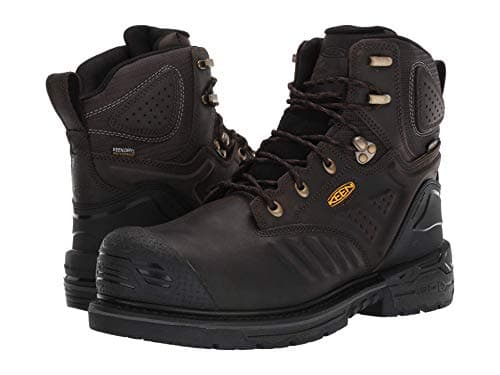
KEEN Utility Philadelphia 6-inch: carbon toe, 572 F outsole