Explainer
ASTM F2413 boot markings explained
Published
Short answer
ASTM F2413 is the US performance standard for safety toe footwear. The label inside the tongue or shaft lists the standard and revision year, the gender (M or F), the impact and compression ratings for the toe cap (I/75 and C/75), and any extra protections the boot passed, such as Mt for metatarsal, EH for electrical hazard, SD for static dissipative, PR for puncture resistance, Cd for conductive and CS for chain saw cut resistance.
Boots for this job
All 7 picks compared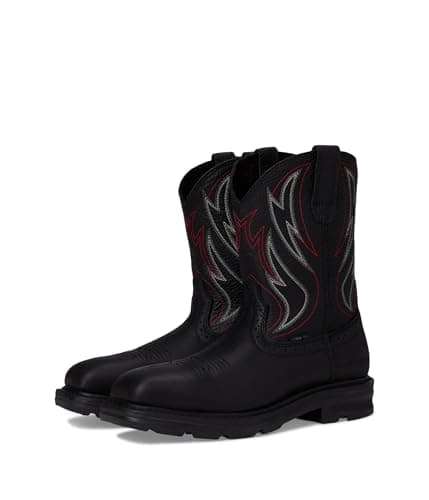
Ariat Sierra Shock Shield 10" steel toe, Goodyear welt
See price on AmazonSee it on Amazon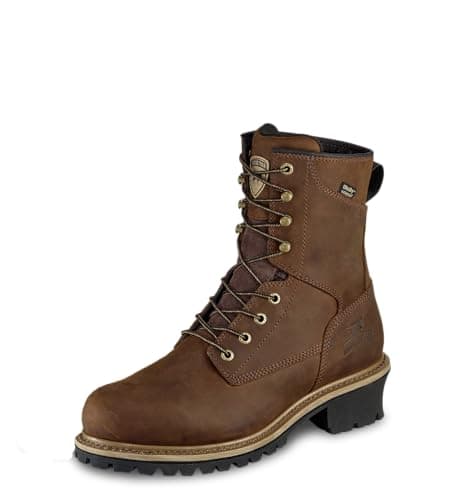
Irish Setter Mesabi 8" steel toe logger, 475F sole
See price on AmazonSee it on Amazon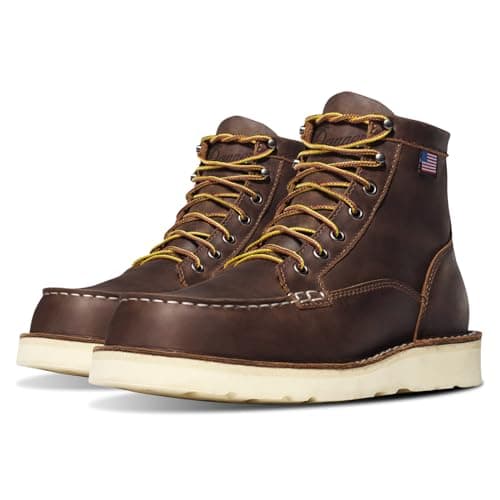
Danner Bull Run 6" steel toe, recraftable stitch-down
See price on AmazonSee it on Amazon
If your employer, safety manager or job site asks for "ASTM F2413 boots", the proof is a small printed label, usually on the underside of the tongue or inside the shaft. This page walks through that label line by line so you can tell what a boot was tested for before you buy it or show up to work in it. It is for anyone buying safety toe boots for a job: warehouse, construction, electrical, steel and utility work. You can also type your own label into our ASTM F2413 label decoder for a plain-English readout.
Where to find the ASTM label on a boot
Most makers print or stitch the ASTM marking on a cloth or leather tag under the tongue. Pull-on boots and wellingtons often carry it inside the shaft instead. Some boxes repeat the marking, but the label on the boot itself is what a safety manager will look at. If a boot is sold as a safety toe boot and you cannot find an ASTM F2413 marking anywhere on it, ask the seller before you rely on it for work.
The markings follow a set layout. The first line names the standard and the year of the revision. The second line shows gender and the toe cap ratings. Any further lines list the extra hazards the boot was tested against. Only the protections printed on the label apply. A boot does not get EH or PR protection just because a product page mentions it in passing.
- 1Standard and year: ASTM F2413, 2018 revision
- 2M or F: men's or women's footwear
- 3I/75: toe impact, 75 foot-pounds
- 4C/75: toe compression, 2,500 pounds-force
- 5Mt/75: metatarsal guard
- 6EH: electrical hazard sole, secondary protection
- 7PR: puncture resistant plate
- 8SD: static dissipative, class in megohms
- 9Cd: conductive, never combined with EH
Line 1: the standard and revision year
The first line reads like ASTM F2413-18. F2413 is the specification for protective (safety) toe cap footwear, and the two digits after the hyphen are the year that revision was approved. You will see older boots marked F2413-05 or F2413-11 and newer ones marked F2413-18. OSHA's foot protection rule refers to ASTM F2413-2005 and to consensus standards that are at least as effective, so a boot built to a later revision is generally accepted on job sites that follow 29 CFR 1910.136.
The year matters for small details. For example, the 2018 revision dropped the older 50 class for impact and compression, so a current-revision safety toe boot is rated at 75. If your site has a written policy that names a specific revision, check that the label year meets it.
Line 2: gender, impact (I/75) and compression (C/75)
The second line starts with M or F, meaning the boot was tested as men's or women's footwear. Then come the two core toe cap ratings. I/75 means the toe cap passed the impact test at 75 foot-pounds. C/75 means it passed the compression test in the 75 class, which is 2,500 pounds of force. In both tests the cap has to leave a minimum clearance inside the toe box afterward, so there is still room for your toes.
Every ASTM F2413 safety toe boot must carry both I and C ratings. Steel, aluminum alloy and composite caps can all meet them; the material changes the weight, thickness and how the cap behaves around metal detectors, not the rating on the label. See composite toe vs steel toe and alloy toe vs steel toe for those trade-offs.
Line 3 and on: the extra protection codes
After the toe cap ratings, the label lists any additional tests the boot passed. A boot can carry several of these at once, but some combinations cannot exist together. For example, a boot cannot be both EH and Cd, because one is meant to resist current through the sole and the other is meant to conduct static to ground.
Mt/75
- What it means
- Metatarsal protection tested at the 75 foot-pound class
- Where it matters
- Heavy objects dropping on the top of the foot: steel, foundries, heavy fabrication
EH
- What it means
- Electrical hazard: outsole and heel tested to withstand 18,000 volts at 60 Hz for 1 minute with no more than 1.0 mA leakage, dry
- Where it matters
- Secondary protection around live circuits; electricians and utility workers
SD
- What it means
- Static dissipative, shown with a class number such as SD 10, SD 35 or SD 100
- Where it matters
- Electronics, clean rooms, places where static buildup is a problem
PR
- What it means
- Puncture resistant plate in the sole, tested to the F2413 puncture requirement
- Where it matters
- Nails, rebar tie wire, scrap and debris underfoot
Cd
- What it means
- Conductive: drains static from the body to ground
- Where it matters
- Explosive or volatile environments with specific site rules
CS
- What it means
- Chain saw cut resistant
- Where it matters
- Logging and tree work with a saw
DI
- What it means
- Dielectric insulation
- Where it matters
- Specialized electrical work under its own test method
| Code | What it means | Where it matters |
|---|---|---|
| Mt/75 | Metatarsal protection tested at the 75 foot-pound class | Heavy objects dropping on the top of the foot: steel, foundries, heavy fabrication |
| EH | Electrical hazard: outsole and heel tested to withstand 18,000 volts at 60 Hz for 1 minute with no more than 1.0 mA leakage, dry | Secondary protection around live circuits; electricians and utility workers |
| SD | Static dissipative, shown with a class number such as SD 10, SD 35 or SD 100 | Electronics, clean rooms, places where static buildup is a problem |
| PR | Puncture resistant plate in the sole, tested to the F2413 puncture requirement | Nails, rebar tie wire, scrap and debris underfoot |
| Cd | Conductive: drains static from the body to ground | Explosive or volatile environments with specific site rules |
| CS | Chain saw cut resistant | Logging and tree work with a saw |
| DI | Dielectric insulation | Specialized electrical work under its own test method |
Note.EH is secondary protection only. Wet conditions and worn soles reduce it. It never replaces lockout, insulated tools or dielectric overshoes where those are required.
What the label does not tell you
The ASTM label describes tests the boot passed when new. It says nothing about slip resistance, waterproofing, insulation, comfort or how long the boot will last. Slip resistance claims come from separate test methods and appear in the product description, not on the F2413 label. A cut or crushed upper, a worn-through sole or a cap that has taken a hard hit can mean the boot no longer performs the way the label says.
Soft toe boots that are EH, SD or slip rated but have no safety toe are covered by a different standard, ASTM F2892. If your job only needs EH and not a safety toe, an F2892 boot may be acceptable; check with your employer. For when a safety toe is actually required, read when are safety toe boots required.
How to use the label when buying boots
For specific trades, our guides shortlist boots by the ratings that matter: best work boots for electricians for EH, best metatarsal guard boots for Mt/75, and best steel toe work boots for general safety toe use.
- 1
Get your site's footwear requirement in writing: safety toe only, or also EH, PR or Mt.
- 2
Check the product listing for the full ASTM line, not just "safety toe".
- 3
When the boots arrive, read the label under the tongue and confirm each required code is printed there.
- 4
Keep a photo of the label on your phone for site inductions.
- 5
Retire the boots if the cap takes a heavy hit or the sole wears through, even if the label still looks fine.
Frequently asked questions
Is ASTM F2413 the same as OSHA approved? OSHA does not approve individual boots. Its foot protection rule, 29 CFR 1910.136, requires footwear that meets ASTM F2413 or an equally effective consensus standard. A boot labeled to F2413 meets that technical requirement.
What does ASTM F2413-18 M I/75 C/75 EH mean? It is a men's safety toe boot built to the 2018 revision, with a toe cap that passed the 75 foot-pound impact test and the 75 class compression test, and an outsole that passed the electrical hazard test.
Do Red Wing safety toe boots meet ASTM F2413? Red Wing safety toe work boots carry an ASTM F2413 label. Many Red Wing Heritage boots are soft toe fashion boots and carry no safety rating, so always check the label of the exact model.
Is a boot without PR still a safety boot? Yes. PR is optional. A boot only needs the I and C toe cap ratings to be an F2413 safety toe boot. Add PR if your site has nails, scrap or other puncture hazards underfoot.
What you need for this
- See price on AmazonAmazon
Sierra Shock Shield 10 in. steel toe, unlined
From Best steel toe work boots ranked on fit, build and resoleability
 See price on AmazonAmazon
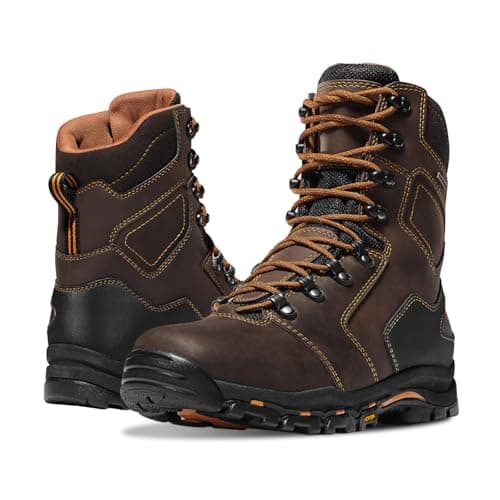
Danner Vicious 8-inch: composite toe, ASTM F2413-18 EH
From Best work boots for electricians: EH-rated, non-metallic toe picks
 See price on AmazonAmazon
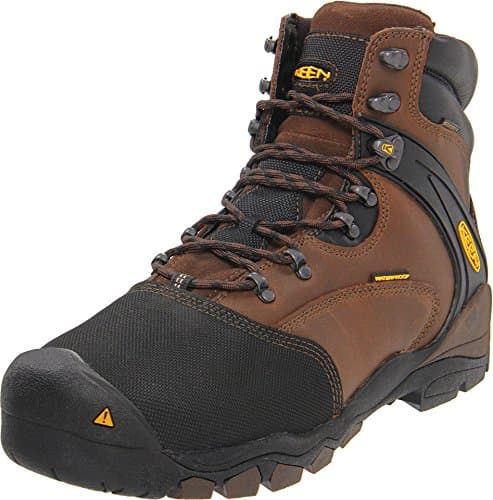
KEEN Utility Louisville 6 in. with Mt/75 internal met guard
From Best metatarsal guard work boots: internal and external met guards
 See price on AmazonAmazon
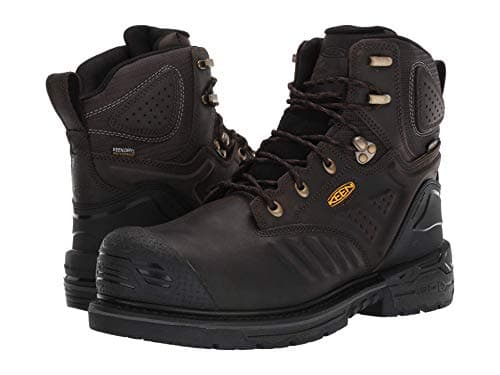
KEEN Utility Philadelphia 6-inch: carbon toe, 572 F outsole