Explainer
Can steel toe boots cut off your toes?
Published
Short answer
No, not in any realistic accident. A steel toe cap rated to ASTM F2413 must survive a 75 foot-pound impact and 2,500 pounds of compression while keeping a minimum clearance over the toes. A load heavy enough to fold the cap down onto your toes would crush an unprotected foot far worse. The cap prevents injuries far more often than it could cause one.
Boots for this job
All 7 picks compared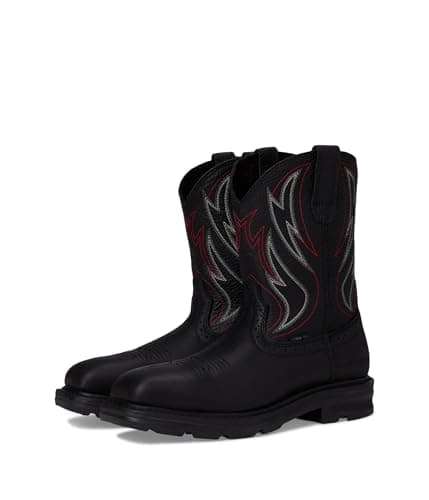
Ariat Sierra Shock Shield 10" steel toe, Goodyear welt
See price on AmazonSee it on Amazon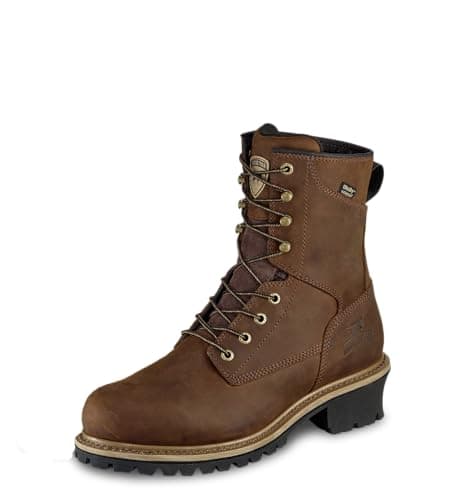
Irish Setter Mesabi 8" steel toe logger, 475F sole
See price on AmazonSee it on Amazon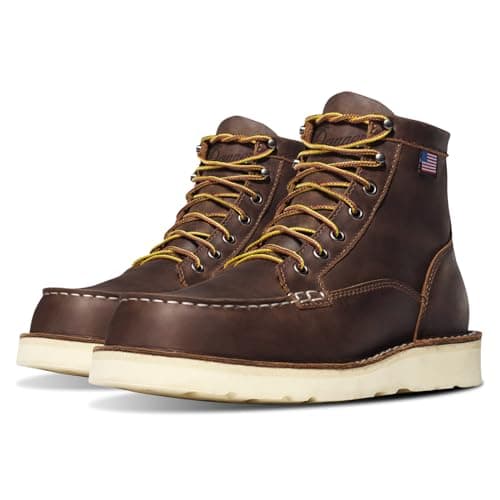
Danner Bull Run 6" steel toe, recraftable stitch-down
See price on AmazonSee it on Amazon
The story goes like this: a heavy load bends the steel cap, and the edge slices your toes off. It shows up on job sites, forums and social media. This page is for anyone weighing a safety toe boot and wondering if the myth has any truth. We explain what the ASTM impact and compression tests actually do, what ratings mean in plain terms, why the cut-off scenario does not hold up, and the real ways safety toe boots can hurt your feet when they do not fit.
Where the myth comes from
The idea is simple and scary: steel does not spring back, so a crushed cap might act like a blade. It became popular enough that it was tested on television on the program MythBusters, where the myth was rated busted. In those tests, loads that could deform the steel cap would have done much more damage to an unprotected boot.
The myth also skips over how a cap is shaped. The back edge of a toe cap sits over the ball of the foot and is rounded and padded by the boot lining. It is not a sharp edge pointing at your toes.
What the ASTM impact and compression tests do
Every safety toe boot sold to the US standard is tested under ASTM F2413. The label shows the results as I/75 and C/75. The impact test drops a weight onto the toe cap with 75 foot-pounds of energy. The compression test squeezes the toe area with 2,500 pounds of force. After each test, the space left inside the cap must still meet a minimum clearance so the toes are not crushed.
The current revision, F2413-18, uses the 75 class for both impact and compression. Older labels may show a 50 class, which was dropped in the 2018 revision. Use the ASTM F2413 label decoder to read your own boot.
- 1Standard and year: ASTM F2413, 2018 revision
- 2M or F: men's or women's footwear
- 3I/75: toe impact, 75 foot-pounds
- 4C/75: toe compression, 2,500 pounds-force
- 5Mt/75: metatarsal guard
- 6EH: electrical hazard sole, secondary protection
- 7PR: puncture resistant plate
- 8SD: static dissipative, class in megohms
- 9Cd: conductive, never combined with EH
I/75
- Test
- Impact
- Requirement
- 75 foot-pounds of impact energy
C/75
- Test
- Compression
- Requirement
- 2,500 pounds of compressive force
Both
- Test
- Clearance
- Requirement
- Minimum interior height must remain after testing
| Label mark | Test | Requirement |
|---|---|---|
| I/75 | Impact | 75 foot-pounds of impact energy |
| C/75 | Compression | 2,500 pounds of compressive force |
| Both | Clearance | Minimum interior height must remain after testing |
How much weight can a steel toe boot hold?
People often ask this as if the boot has a single weight limit. The test answer is 2,500 pounds of slow, steady compression on the toe area, and the cap must still leave room for the toes. That is a test value, not a promise that any 2,500 pound object is safe to drop or roll onto the boot. Real accidents involve edges, angles and moving loads.
Above the tested load a cap can deform. But the forces needed to do that are far beyond anything a bare or soft toe foot could survive without serious injury. The cap is designed to fail gradually, not to snap into a blade.
Note.Safety toes protect against the hazards in the test. They do not make you safe under a forklift tire or a dropped steel coil. Follow site rules for load handling.
Steel vs composite and alloy under load
Steel, alloy (usually aluminum) and composite caps all have to pass the same I/75 and C/75 tests to carry the rating. The difference is how they get there. Steel is thinnest for its strength. Alloy is lighter and a bit thicker. Composite is non-metallic and thicker again, which can mean a bulkier toe box.
Composite caps tend to crack or crush rather than bend, which is one reason they show up in the myth debate too. Either way, a cap that has taken a serious hit should be retired. See composite toe vs steel toe for the full comparison.
Steel
Metalthin wall, heaviest
Alloy
Metalthin wall, lighter
Composite
Non-metalthicker wall, lighter
The real risks of safety toe boots
The real problems with safety toes are about fit, not amputations. A cap that is too short or too low presses on the toes all day. A boot that is too narrow pinches at the edge of the cap. These cause blisters, bruised nails and sore joints.
If your toes already hurt, see steel toe boots hurting toes and how work boots should fit.
- Toes touching the cap when you stand: the boot is too short.
- Pain across the top of the toes when you crouch: the cap is too low or the boot flexes in the wrong spot.
- Pinching on the little toe: the boot is too narrow, try a wider width.
- Cold toes in winter: steel conducts cold, composite insulates better.
When to replace a safety toe boot
Any boot that has taken a heavy impact or crush on the toe should be replaced, even if it looks fine. The cap may be dented or cracked inside the leather where you cannot see it, and it will not meet its rating again.
- 1
Check the toe for dents, creases or a flattened shape.
- 2
Press on the cap and feel for soft spots or cracking sounds on composite caps.
- 3
Replace the boot after any major impact, and tell your supervisor if the hit happened at work.
Frequently asked questions
Are steel toe boots dangerous? No, when they fit well and meet ASTM F2413. They reduce injuries from falling and rolling objects. Poor fit causes most complaints, so size them carefully.
Do composite toes protect as well as steel? To carry the same I/75 and C/75 rating they must pass the same tests. They are bulkier for the same protection but lighter and non-metallic.
Can a steel toe cap bend back into shape? No. A deformed cap stays deformed and should be retired. Do not try to push it back out.
Does OSHA require steel toe boots? OSHA 1910.136 requires protective footwear where there is a danger from falling or rolling objects or objects piercing the sole. It does not require steel specifically, any toe that meets the referenced ASTM standard works.
What you need for this
- See price on AmazonAmazon
Sierra Shock Shield 10 in. steel toe, unlined
From Best steel toe work boots ranked on fit, build and resoleability
 See price on AmazonAmazon
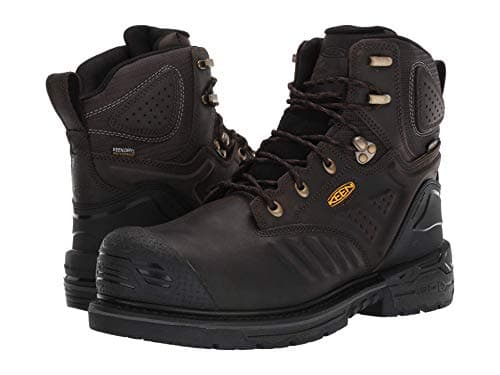
KEEN Utility Philadelphia 6-inch: carbon toe, 572 F outsole
 See price on AmazonAmazon
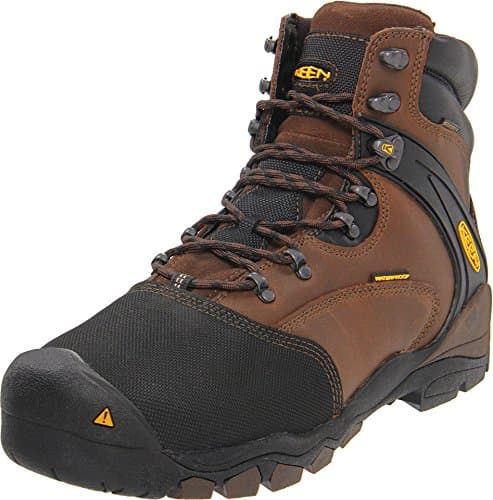
KEEN Utility Louisville 6 in. with Mt/75 internal met guard
From Best metatarsal guard work boots: internal and external met guards