Explainer
What are composite toe boots?
Published
Short answer
Composite toe boots are safety boots with a toe cap made from non-metal materials such as carbon fiber, fiberglass, Kevlar or hard plastic instead of steel. When the boot is labeled to ASTM F2413 with I/75 and C/75, the composite cap has passed the same impact and compression tests as a steel cap. The usual trade-off is a bulkier toe in exchange for less weight, no metal and less heat or cold transfer.
Boots for this job
All 6 picks compared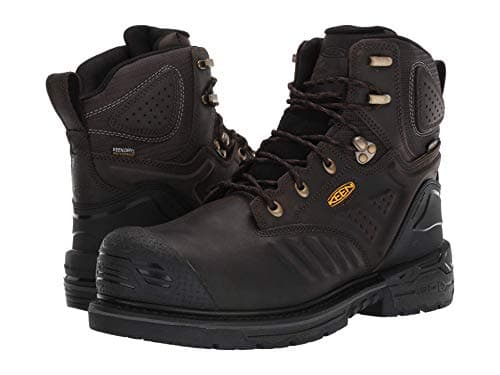
KEEN Utility Philadelphia 6-inch: carbon-fiber toe, EH
See price on AmazonSee it on Amazon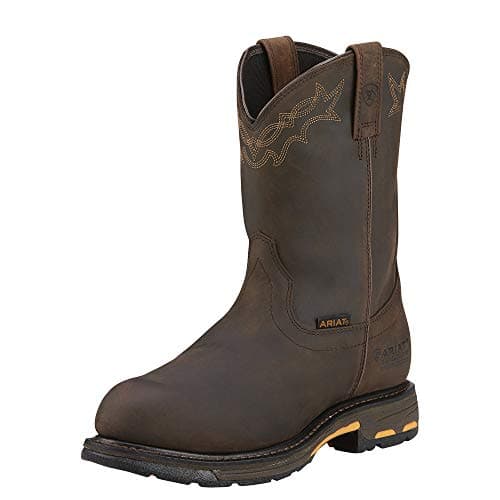
Ariat WorkHog waterproof: composite toe, EH, U-Turn entry
See price on AmazonSee it on Amazon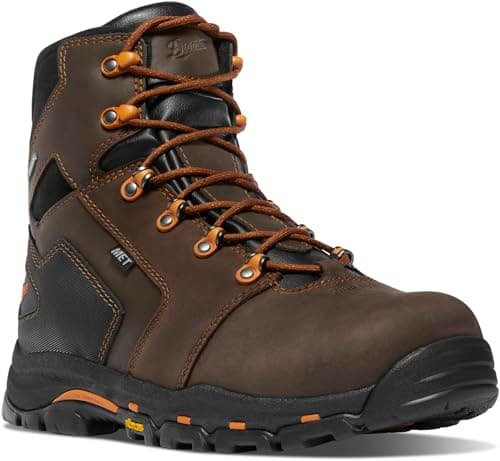
Danner Vicious 6-inch: composite toe, F2413-18 I/75 C/75 EH
See price on AmazonSee it on Amazon
If a job listing says "safety toe required" and you are looking at a boot labeled composite toe, this page explains what you are buying. It covers what a composite cap is made of, how it is tested and rated, how it compares to steel and alloy caps, and who tends to benefit from one. It also covers comfort, because a composite toe that fits badly will hurt just as much as a steel one. If you already know you want one, the best composite toe work boots guide lists current options.
What a composite toe cap is made of
A composite toe cap is a molded shell that sits inside the front of the boot, between the lining and the upper leather, the same place a steel cap sits. "Composite" simply means the cap is made from a non-metal material or a blend of materials. Common ones are carbon fiber, fiberglass, aramid fibers such as Kevlar, and high-strength plastics or polymer blends. Brands often give their caps trade names, but the idea is the same: a hard, non-metal dome that protects the toes from a falling or rolling object.
Because these materials are less dense than steel, the cap usually weighs less. They are also not as strong per millimeter, so to pass the same test the cap has to be thicker. That extra wall thickness is why composite toe boots often look a little rounder or taller at the front than a steel toe boot of the same size.
Steel
Metalthin wall, heaviest
Alloy
Metalthin wall, lighter
Composite
Non-metalthicker wall, lighter
How composite toes are rated
In the US, safety toe footwear is tested and labeled under ASTM F2413. The label is usually printed inside the tongue or on the shaft. For the toe, the two markings that matter are I/75 for impact resistance (the cap is tested with a 75 foot-pound impact) and C/75 for compression resistance (the cap is tested under a 2,500-pound load). A composite toe boot marked I/75 C/75 has met the same toe requirements as a steel toe boot marked I/75 C/75.
The material of the cap is not what the standard grades. The standard grades the result. So "composite" on its own tells you the cap has no metal, while the ASTM line tells you whether it passed. Read the label, not the marketing copy. The ASTM F2413 label decoder walks through every line, and ASTM F2413 markings explained covers the extras such as EH, PR and Mt.
Note.A boot sold as "composite toe" without an ASTM F2413 label has not shown that it meets the US safety toe standard. If your site requires safety toes, look for the label.
Composite vs steel vs alloy toe
All three cap types can carry the same I/75 C/75 rating. The differences are in shape, weight and how the cap behaves around heat, cold, electricity and metal detectors. The table below sums up the general pattern. Exact weight depends on the whole boot, not just the cap, so a heavy composite boot can still outweigh a light steel one.
Material
- Steel
- Steel
- Alloy (aluminum or titanium)
- Lightweight metal
- Composite
- Non-metal (carbon fiber, fiberglass, plastics)
Cap thickness
- Steel
- Thinnest
- Alloy (aluminum or titanium)
- Thin
- Composite
- Thickest
Toe profile
- Steel
- Lowest
- Alloy (aluminum or titanium)
- Low
- Composite
- Often bulkier
Cap weight
- Steel
- Heaviest
- Alloy (aluminum or titanium)
- Lighter
- Composite
- Usually lightest
Metal detectors
- Steel
- Sets them off
- Alloy (aluminum or titanium)
- Sets them off
- Composite
- Cap does not
Heat and cold transfer
- Steel
- Conducts
- Alloy (aluminum or titanium)
- Conducts
- Composite
- Conducts less
| Trait | Steel | Alloy (aluminum or titanium) | Composite |
|---|---|---|---|
| Material | Steel | Lightweight metal | Non-metal (carbon fiber, fiberglass, plastics) |
| Cap thickness | Thinnest | Thin | Thickest |
| Toe profile | Lowest | Low | Often bulkier |
| Cap weight | Heaviest | Lighter | Usually lightest |
| Metal detectors | Sets them off | Sets them off | Cap does not |
| Heat and cold transfer | Conducts | Conducts | Conducts less |
Who composite toe boots suit
Composite caps make the most sense where metal is a problem or where weight adds up over a long day. Typical cases:
- Workers who pass through metal detectors, such as at airports, secure plants or some warehouses. The cap will not set them off, though metal shanks, eyelets or hardware elsewhere in the boot still can.
- Electricians and others near live circuits who prefer no metal in the toe. The cap alone does not make a boot safe around electricity; look for an EH rating on the label. See should electricians wear steel toe boots.
- Outdoor work in cold weather, since a non-metal cap does not pull heat out of the toes as readily as steel.
- Warehouse, logistics and long walking shifts, where a lighter boot can feel easier by the end of the day. See the warehouse safety toe guide.
- Anyone who reacts to the cold, hard feel of metal over the toes.
Downsides to know before you buy
The thicker cap is the main trade-off. It can make the toe box look bulky, and in some boots it leaves a little less room inside than a steel cap would, so people with tall toes or a high forefoot should try before committing. A composite toe is also not a lifetime part. Like any safety toe, once it takes a hard hit, the boot should be replaced, because the cap may be damaged in ways you cannot see.
Composite caps are not "weaker" in the sense of the standard, since they pass the same test. But in extreme crushing loads well beyond the test, steel and composite caps behave differently, and there is no single right answer for every hazard. If your employer specifies steel for a particular task, follow that. When the requirement is simply "ASTM F2413 safety toe", composite meets it.
Are composite toe boots comfortable?
Comfort comes mostly from fit, the last the boot is built on, the footbed and the outsole, not the cap material. A composite toe in the right length and width is comfortable for most people. The same boot a half size short will press on the toes no matter what the cap is made of. Check that you have about a thumb width of room in front of your longest toe and that the edge of the cap does not land on top of your toe joints. How should work boots fit has the full check.
Because composite caps do not hold cold as much as steel, many people find them more comfortable in winter. In hot weather the difference is small. If comfort is your top priority, the most comfortable work boots guide is a better starting point than the cap material.
Frequently asked questions
Are composite toe boots OSHA approved? OSHA does not approve individual boots. Its foot protection rule points to the ASTM footwear standards. A composite toe boot labeled to ASTM F2413 with I/75 C/75 meets the safety toe part of that. See when are safety toe boots required.
Are composite toe boots lighter than steel toe boots? The cap usually is. The whole boot may or may not be, since leather, sole and insulation weigh far more than the cap. Compare total listed weight when a brand publishes it.
Do composite toe boots set off metal detectors? The cap does not. Some composite toe boots also use non-metal shanks and hardware so the whole boot is metal free, but check the listing because many still have metal eyelets or a steel shank.
Do composite toes protect as well as steel? For the impact and compression tests in ASTM F2413, yes, if the label shows I/75 C/75. The standard rates the result, not the material.
What you need for this
- See price on AmazonAmazon
KEEN Utility Philadelphia 6-inch: carbon toe, 572 F outsole
 See price on AmazonAmazon
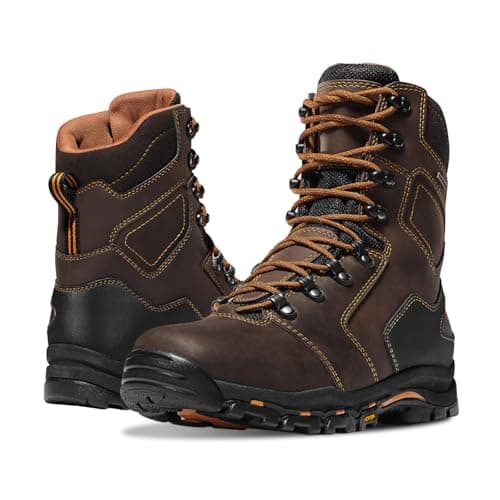
Danner Vicious 8-inch: composite toe, ASTM F2413-18 EH
From Best work boots for electricians: EH-rated, non-metallic toe picks
 See price on AmazonAmazon
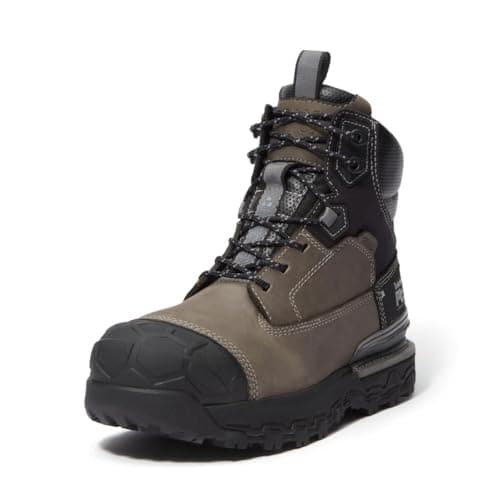
Timberland PRO Boondock Ultralight 6-inch: composite toe
 See price on AmazonAmazon
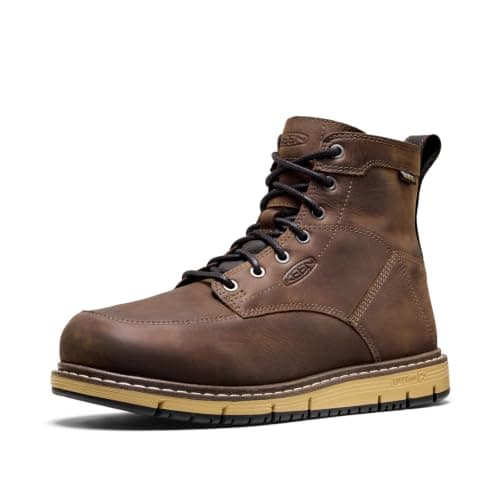
KEEN Utility San Jose 6-inch: aluminum toe, waterproof wedge
From Best lightweight work boots that keep the safety rating