Comparison
Safety toe vs soft toe work boots
Published
Short answer
Wear a safety toe (steel, alloy or composite) when your employer or site requires it, or when there is a real risk of falling, rolling or crushing loads. A soft toe is fine for work without those hazards and is usually lighter and roomier. Soft toe boots can still be EH rated, but to a different standard (ASTM F2892) than safety toe boots (ASTM F2413).
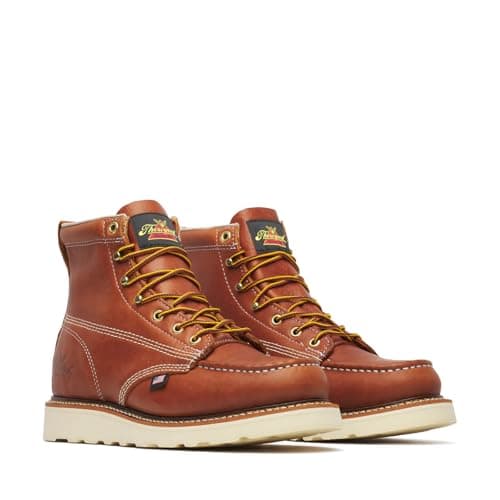
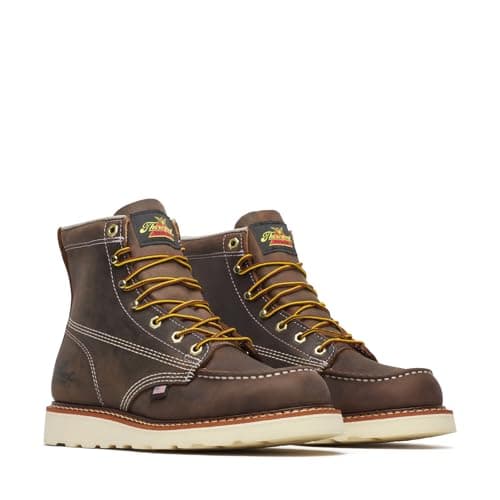
Thorogood
Thorogood American Heritage 6" moc toe, MAXWear wedge
See price on Amazon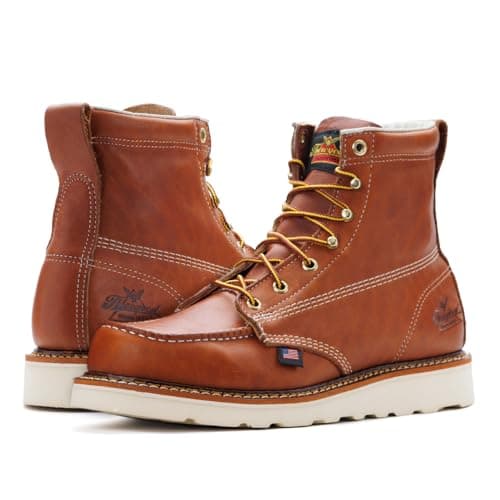
Thorogood
Thorogood American Heritage 6-inch: steel toe moc wedge
See price on Amazon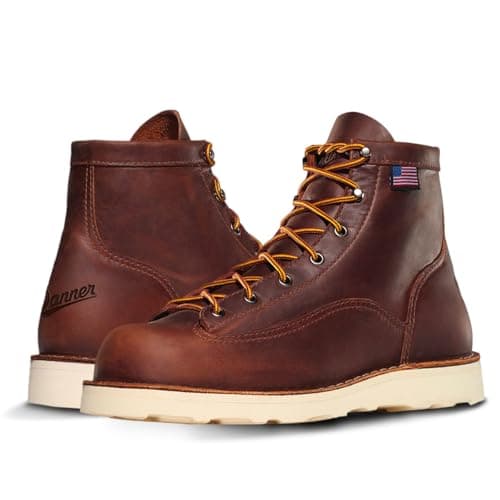
Danner
Danner Bull Run 6 in. unlined wedge with OrthoLite footbed
See price on Amazon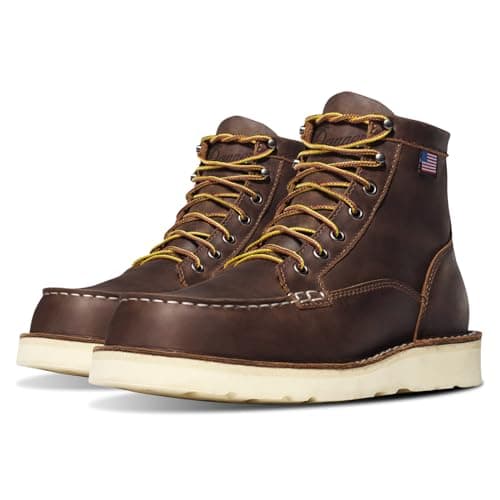
Danner
Danner Bull Run 6-inch: steel toe moc, stitch-down wedge
See price on Amazon
- Thorogood American Heritage 6" moc toe, MAXWear wedge
- Outsole
- MAXWear Wedge
- Waterproof
- Not stated
- EH rated
- Yes, ASTM F2892-18
- Safety toe
- -
- Thorogood American Heritage 6-inch: steel toe moc wedge
- Outsole
- MAXWear Wedge, F3445-21 slip
- Waterproof
- Not stated
- EH rated
- Yes, ASTM F2413-18
- Safety toe
- Steel, ASTM F2413-18
- Danner Bull Run 6 in. unlined wedge with OrthoLite footbed
- Outsole
- -
- Waterproof
- Water-resistant leather only
- EH rated
- -
- Safety toe
- Soft toe
- Danner Bull Run 6-inch: steel toe moc, stitch-down wedge
- Outsole
- Non-marking slip-resistant wedge
- Waterproof
- Water-resistant oiled leather
- EH rated
- Yes
- Safety toe
- Steel, ASTM F2413-18 I/75 C/75 EH
| Pick | Outsole | Waterproof | EH rated | Safety toe | Price | Link |
|---|---|---|---|---|---|---|
| Thorogood American Heritage 6" moc toe, MAXWear wedge | MAXWear Wedge | Not stated | Yes, ASTM F2892-18 | - | - | Amazon |
| Thorogood American Heritage 6-inch: steel toe moc wedge | MAXWear Wedge, F3445-21 slip | Not stated | Yes, ASTM F2413-18 | Steel, ASTM F2413-18 | - | Amazon |
| Danner Bull Run 6 in. unlined wedge with OrthoLite footbed | - | Water-resistant leather only | - | Soft toe | - | Amazon |
| Danner Bull Run 6-inch: steel toe moc, stitch-down wedge | Non-marking slip-resistant wedge | Water-resistant oiled leather | Yes | Steel, ASTM F2413-18 I/75 C/75 EH | - | Amazon |
Facts are taken from each Amazon listing. Prices are checked daily and shown with their date.
Verdict
If your site requires a rated toe or you handle heavy loads, buy the Thorogood American Heritage 6" Steel Toe or the Danner 6" Bull Run Steel Toe. If no rule applies and you want a lighter, roomier boot that still lists EH protection, the soft toe Thorogood American Heritage 6" Moc Toe or Danner 6" Bull Run fits.
This page is for workers deciding between a soft toe and a safety toe boot, and for anyone wondering whether composite, steel or soft toe is right for their job. We explain what a soft toe is, which hazards call for a rated toe, how the labels differ, and compare two model families that come both ways: the Thorogood American Heritage 6" moc toe and the Danner Bull Run 6" moc toe. That lets you see exactly what changes when you add a toe cap and what stays the same.
What soft toe and safety toe mean
A soft toe boot has no protective cap. The toe is leather and lining, sometimes with a stiffener to hold the shape, but it is not built to resist impact or compression. Many soft toe work boots are still built tough, with welted or stitch-down soles, oil-resistant outsoles and EH protection.
A safety toe boot has a cap tested to ASTM F2413 for impact and compression. The cap can be steel, alloy (aluminum) or composite. Our pages on composite toe vs steel toe and alloy toe vs steel toe compare the cap types. Here the question is simpler: do you need a cap at all?
Steel
Metalthin wall, heaviest
Alloy
Metalthin wall, lighter
Composite
Non-metalthicker wall, lighter
When a safety toe is required
In the US, OSHA requires protective footwear where employees are exposed to foot injury from falling or rolling objects, objects piercing the sole, or electrical hazards. In practice your employer decides after assessing the job, and many construction sites, warehouses, plants and utilities make safety toes mandatory. If your site has a rule, follow it: a soft toe boot will not be accepted no matter how sturdy it looks. See when are safety toe boots required and do employers have to pay for safety boots.
- Material handling, forklifts, pallets and heavy parts: safety toe.
- Steel work, concrete forms, demolition: safety toe, often with puncture resistance.
- Driving, farm chores, landscaping, light maintenance: soft toe is often fine if no rule applies.
- Roofing: many roofers choose soft toe wedges for flexibility, unless the site requires a cap.
Note.Your employer's hazard assessment and site rules decide what you must wear. When in doubt, ask before you buy.
How the labels differ
A safety toe boot carries an ASTM F2413 label that starts with the toe ratings, such as M I/75 C/75, and may add EH, PR or Mt. A soft toe boot cannot carry I/75 C/75. If it is EH rated, it is tested under ASTM F2892, the standard for soft toe protective footwear. You can see this in the listings below: the soft toe Thorogood American Heritage 6" moc toe lists EH to ASTM F2892-18, while the steel toe version lists EH to ASTM F2413-18. Decode any label with our ASTM F2413 label decoder.
Same boot, with and without a cap
Both families below are moc toe 6 inch boots from US makers, sold in soft toe and steel toe versions. The upper, footbed and outsole style stay largely the same, so the cap is the main difference. The Thorogood steel toe listing pairs a heel outsole name in the title with a wedge outsole in the features, so confirm the sole on the exact color you order.
Thorogood American Heritage 6" Moc Toe (soft toe)
- Toe
- Soft toe
- Listed EH standard
- ASTM F2892-18
- Construction
- Goodyear storm welt
- Footbed
- Removable dual-density PU
- Price at listing
- $264.95
Thorogood American Heritage 6" Steel Toe
- Toe
- Steel
- Listed EH standard
- ASTM F2413-18
- Construction
- Not stated
- Footbed
- Removable Poron cushion insole
- Price at listing
- $274.95
Danner 6" Bull Run (soft toe)
- Toe
- Soft toe
- Listed EH standard
- ASTM F2892-18
- Construction
- Stitch-down, recraftable
- Footbed
- Removable 3-layer OrthoLite
- Price at listing
- $259.95
Danner 6" Bull Run Steel Toe
- Toe
- Steel, F2413-18 I/75 C/75
- Listed EH standard
- ASTM F2413-18
- Construction
- Stitch-down, recraftable
- Footbed
- Removable 3-layer OrthoLite
- Price at listing
- $269.95
| Boot | Toe | Listed EH standard | Construction | Footbed | Price at listing |
|---|---|---|---|---|---|
| Thorogood American Heritage 6" Moc Toe (soft toe) | Soft toe | ASTM F2892-18 | Goodyear storm welt | Removable dual-density PU | $264.95 |
| Thorogood American Heritage 6" Steel Toe | Steel | ASTM F2413-18 | Not stated | Removable Poron cushion insole | $274.95 |
| Danner 6" Bull Run (soft toe) | Soft toe | ASTM F2892-18 | Stitch-down, recraftable | Removable 3-layer OrthoLite | $259.95 |
| Danner 6" Bull Run Steel Toe | Steel, F2413-18 I/75 C/75 | ASTM F2413-18 | Stitch-down, recraftable | Removable 3-layer OrthoLite | $269.95 |
Trade-offs of each
Soft toe pros: usually lighter, more flexible across the forefoot, and roomier in the toe box, with no cap edge to press on your toes. They are also comfortable for driving and long walks. Soft toe cons: no impact or compression protection, and not allowed on sites that require a rated toe.
Safety toe pros: rated protection against falling and rolling objects, and accepted on job sites. Safety toe cons: some added weight, a firmer toe box and the chance of the cap edge rubbing if the fit is off. Sizing up a half size is not a fix by default; read should you size up in work boots and check Thorogood sizing before ordering.
How to choose
For job-specific picks see construction work boots, safety toe boots for warehouse work and roofing boots.
- 1
Ask your employer or check the site rules for footwear requirements.
- 2
List your hazards: falling objects, rolling loads, nails, live circuits, heat.
- 3
If any impact or compression risk exists, buy a safety toe; pick steel, alloy or composite by weight and climate.
- 4
If you need EH but no toe protection, a soft toe EH boot rated to ASTM F2892 fits.
- 5
Try the boot with your work socks and check toe room ahead of the cap.
Frequently asked questions
Is a composite toe the same as a soft toe? No. A composite toe is a rated safety cap made from non-metallic material. A soft toe has no protective cap at all.
Should I get soft toe or steel toe boots? Get a safety toe if your job has any risk of falling or rolling objects, or if your site requires one. Choose soft toe only when no rule applies and those hazards are absent.
Can soft toe boots be EH rated? Yes. Soft toe boots can be tested for electrical hazard protection under ASTM F2892. The soft toe Thorogood and Danner Bull Run boots on this page both list it.
Are safety toe boots less comfortable? Not necessarily. A well-fitted safety toe boot can be comfortable all day. Most discomfort comes from a cap that sits too close to the toes, which is a sizing or toe shape problem.
What you need for this
 See price on AmazonAmazon
Thorogood American Heritage 6 in. moc toe, soft toe
 See price on AmazonAmazon
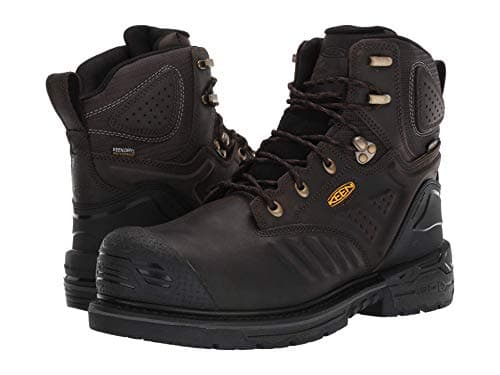
KEEN Utility Philadelphia 6-inch: carbon toe, 572 F outsole
From Best construction work boots for mud, rebar and ladders
 See price on AmazonAmazon
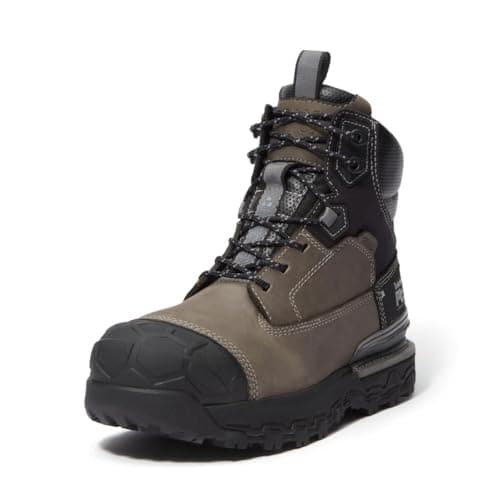
Timberland PRO Boondock Ultralight 6-inch: composite toe