Explainer
Should you size up in work boots?
Published
Short answer
Not automatically. Start with your measured size and try boots on with the socks you work in. Go up half a size only if your toes touch the end or the back edge of the safety cap with thick socks on. If the boot feels tight across the ball of the foot but the length is right, a wider width is usually the better fix, because a longer boot moves the flex point and the cap out of place.
Boots for this job
All 7 picks compared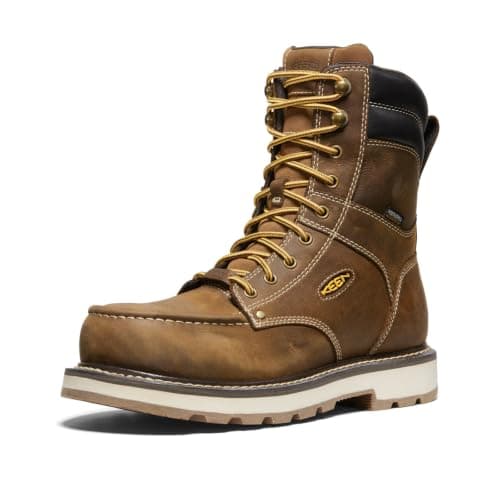
KEEN Utility Cincinnati 8-inch EE: asymmetrical carbon toe
See price on AmazonSee it on Amazon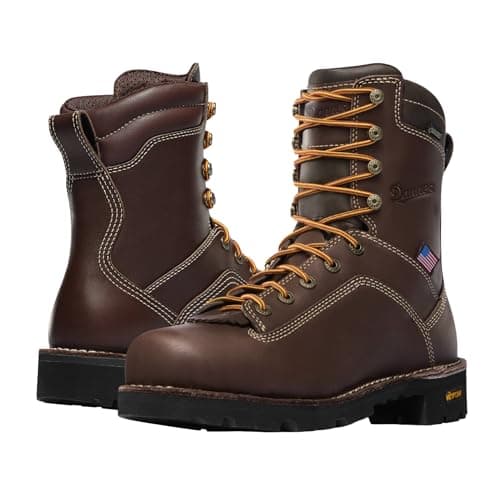
Danner Quarry USA 8-inch Wide: alloy toe, GORE-TEX
See price on AmazonSee it on Amazon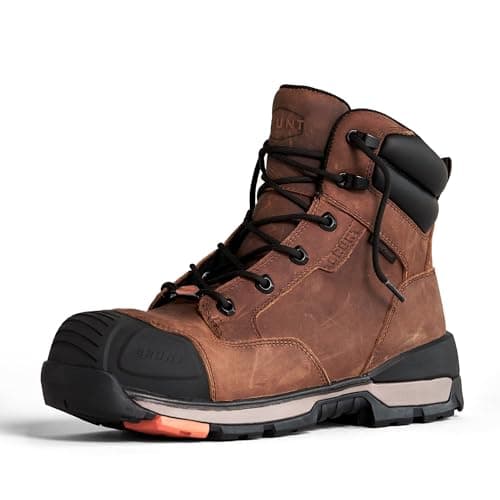
BRUNT Perkins: adjustable D to EE width, composite toe
See price on AmazonSee it on Amazon
"Size up in work boots" is common advice, and sometimes it is right. But a boot that is too long causes its own problems: heel slip, blisters, creases in the wrong place and a toe cap that sits ahead of your toes. This page explains when a half size up helps, when width is the issue, whether steel toe boots run big, and how to check fit at home. Use our size and width converter to move between US, EU and women's sizes.
Do work boots run big or small?
It depends on the brand and the last, the foot-shaped form a boot is built on. Some heritage-style boots are known for running large compared with sneaker size, while many modern athletic-style work boots are closer to sneaker sizing. There is no single rule across brands, which is why measuring your foot and reading the maker's fit notes matters.
Steel toe boots do not run big because of the cap. The size on the box describes the last, not the cap. What changes is how the toe box feels: the cap does not stretch, so a boot that is a little short or narrow in the toe will not loosen up there the way a soft toe boot might.
When going up half a size makes sense
A good target is about a thumb's width of space in front of your longest toe, with toes free to wiggle and not pressed against the cap. If you only get there by going up half a size, do it. Then check that the heel does not slip much and that the boot creases near the ball of your foot, not ahead of it.
- 1Toe room: about a thumb width ahead of the longest toe
- 2Toes clear the cap edge: no pressure when you stand or crouch
- 3Widest point at the ball: the ball of the foot sits where the boot is widest
- 4Minimal heel lift: a little lift is normal in new stiff boots
- Your toes touch the end of the boot or the back of the cap when you stand or walk downhill.
- You wear thick winter socks or an aftermarket insole that takes up more room than the stock one.
- Your feet swell over a long shift and the boots feel tight by the afternoon.
- The brand's own fit notes say the model runs small.
When width is the real fix
Many people size up because a boot feels tight, when the tightness is across the ball of the foot. Going longer does give a little more width, but it also moves the widest part of the boot forward, past your actual widest point. You end up with extra length you do not need, heel slip and the cap sitting too far forward.
If the length is right but the sides press on your little toe or the ball of the foot, try a wider width first: E or EE wide, EEE or 4E in men's sizing. Our work boot width chart explains the letters and our best work boots for wide feet guide lists boots offered in wide widths.
Toes hit the end or the cap edge
- Likely fix
- Half size longer
Pressure on the sides at the ball of the foot
- Likely fix
- Wider width, same length
Heel lifts a lot, toes have plenty of room
- Likely fix
- Half size shorter or a narrower width
Top of foot pressed, length and width fine
- Likely fix
- Different lacing or a boot with more instep volume
| What you feel | Likely fix |
|---|---|
| Toes hit the end or the cap edge | Half size longer |
| Pressure on the sides at the ball of the foot | Wider width, same length |
| Heel lifts a lot, toes have plenty of room | Half size shorter or a narrower width |
| Top of foot pressed, length and width fine | Different lacing or a boot with more instep volume |
How to check fit at home
For a full fit walkthrough, see how should work boots fit and the work boot size chart. If a boot fits but feels hard underfoot, the fix may be an insole rather than a new size: read how to choose insoles for work boots.
- 1
Try boots on late in the day, when feet are at their largest.
- 2
Wear the socks and insoles you will work in.
- 3
Lace fully and stand. Feel for a thumb's width in front of the longest toe.
- 4
Walk, crouch and climb stairs. Toes should not jam into the cap.
- 5
Check heel lift: a little is normal in new stiff boots, a lot is not.
- 6
Keep the boots clean and indoors until you are sure, so you can return them.
Brand notes worth knowing
Heritage-style boots on traditional lasts, such as many Red Wing and Thorogood models, have their own sizing habits. We cover them in are Red Wing boots true to size and are Thorogood boots true to size. When a brand offers a size chart or fit guide, trust it over general advice, and check which width the listing is for before ordering.
If you are still unsure, comfort-focused models are often more forgiving. Our most comfortable work boots guide lists options with roomier toe boxes.
Frequently asked questions
Should work boots be a little bigger than sneakers? Not necessarily. Some boots run large and need the same or a smaller size. Aim for thumb-width toe room with work socks, whatever the number says.
Should you size up in steel toe boots? Only if your toes touch the cap or the end of the boot. The cap does not stretch, so fit at the toe must be right from day one.
Do steel toe boots run big? The cap does not change the size. Some brands run big and some small, so check the brand's fit notes.
Is it better to have work boots too big or too small? Neither. Too small pinches the toes against the cap. Too big causes heel slip and blisters. If you must choose, slightly long with a thicker sock is easier to manage than too short.
What you need for this
- See price on AmazonAmazon
KEEN Utility Cincinnati 8-inch EE: asymmetrical carbon toe
From Best work boots for wide feet: EE, 3E and wide-fit safety boots
 See price on AmazonAmazon
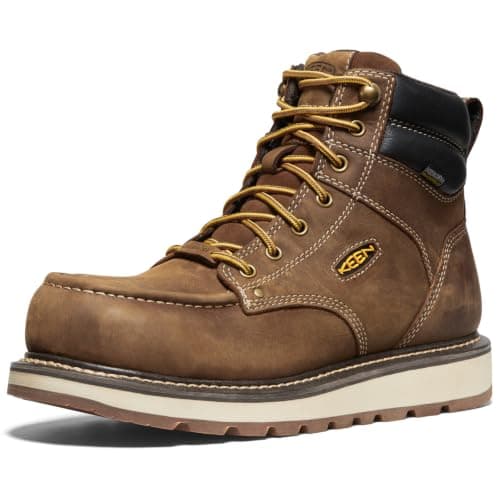
KEEN Utility Cincinnati 6-inch: carbon toe, Goodyear welt
From The most comfortable work boots, including safety toe picks
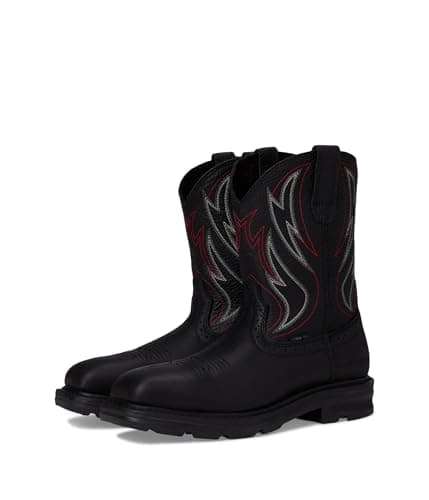 See price on AmazonAmazon
Sierra Shock Shield 10 in. steel toe, unlined
From Best steel toe work boots ranked on fit, build and resoleability