Explainer
What makes a good work boot?
Published
Short answer
A good work boot fits your foot well, has the safety ratings your job requires, and is built to last: full-grain leather, a solid construction such as Goodyear welt or a well bonded cement sole, an outsole suited to your surfaces, and a shank and midsole that support you through a full shift. Fit comes first, because a well made boot that hurts will not get worn.
Boots for this job
All 7 picks compared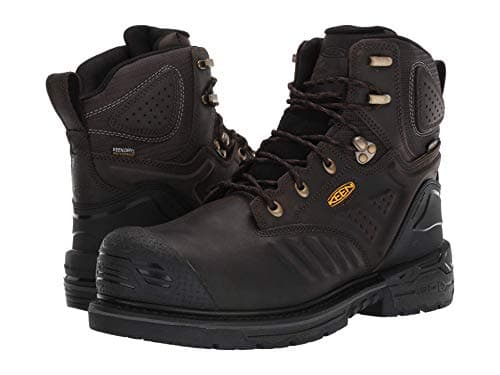
KEEN Utility Philadelphia 6" carbon toe, 572F heat sole
See price on AmazonSee it on Amazon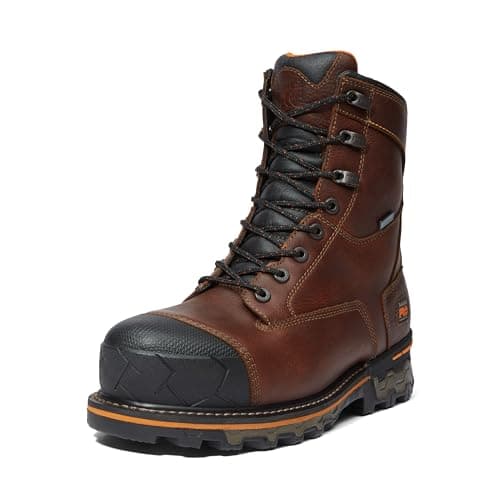
Timberland PRO Boondock 8" composite toe, puncture resistant
See price on AmazonSee it on Amazon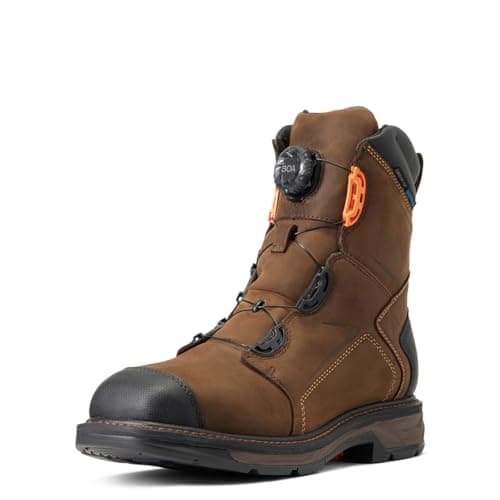
Ariat WorkHog XT 8" BOA, carbon toe, waterproof
See price on AmazonSee it on Amazon
Work boots run from cheap big box pairs to boots that cost several hundred dollars, and the listings all claim to be tough and comfortable. This page is for anyone trying to judge a boot on its own merits. We go through the parts that matter in order of importance: fit, safety ratings, construction, leather, outsole and heel, and support. Along the way we point to the guides and explainers that go deeper on each one.
1. Fit comes first
No construction detail makes up for a boot that does not fit. Your heel should stay put with minimal lift, the widest part of your foot should sit at the widest part of the boot, and your toes need room ahead of the toe cap. Try boots on late in the day, with the socks you work in.
Width matters as much as length. Many work boots come in D, EE and wider. Use the boot size and width converter and read how work boots should fit before you order.
- 1Toe room: about a thumb width ahead of the longest toe
- 2Toes clear the cap edge: no pressure when you stand or crouch
- 3Widest point at the ball: the ball of the foot sits where the boot is widest
- 4Minimal heel lift: a little lift is normal in new stiff boots
2. The right safety ratings
A good boot for your job carries the ratings your site requires. In the US that means ASTM F2413 for safety toe footwear, with marks such as I/75 and C/75 for the toe, EH for electrical hazard, PR for puncture resistance and Mt for metatarsal protection. Soft toe boots can be rated EH under ASTM F2892.
Do not pay for protection you do not need, but do not skip what your employer's hazard assessment requires either. The ASTM F2413 label decoder explains every line, and safety toe vs soft toe helps you decide.
3. Construction: welt vs cement
Construction is how the sole is attached to the upper, and it decides how long the boot lasts and whether it can be repaired. The two most common methods are Goodyear welt and cement.
Neither is always better. A welted boot suits long term wear and resoling. A cemented boot can be light and comfortable and makes sense if you wear through boots fast. Read can work boots be resoled for more.
Goodyear welt
Upper and welt strip are stitched together and the sole is stitched to the welt. A cobbler can cut the stitch and fit a new sole.
Resoleable
Cemented
The sole is glued straight to the upper. Lighter, more flexible and cheaper to make, but usually replaced rather than resoled.
Usually not resoleable
How it is made
- Goodyear welt
- Upper stitched to a welt strip, sole stitched to the welt
- Cement
- Sole glued directly to the upper
Resoling
- Goodyear welt
- Usually resoleable
- Cement
- Usually not practical
Break in
- Goodyear welt
- Often stiffer at first
- Cement
- Often flexible from the start
Weight
- Goodyear welt
- Heavier
- Cement
- Lighter
Typical price
- Goodyear welt
- Higher
- Cement
- Lower
| Goodyear welt | Cement | |
|---|---|---|
| How it is made | Upper stitched to a welt strip, sole stitched to the welt | Sole glued directly to the upper |
| Resoling | Usually resoleable | Usually not practical |
| Break in | Often stiffer at first | Often flexible from the start |
| Weight | Heavier | Lighter |
| Typical price | Higher | Lower |
4. Leather and materials
Full-grain leather is the outer layer of the hide with its natural grain intact. It is the most durable and water resistant option and it softens and shapes to your foot. Top grain and corrected grain leathers are sanded or coated and wear differently. Nubuck is sanded on the surface for a soft feel and needs different care. Synthetic and textile uppers are lighter and break in faster but usually do not last as long in rough work.
If you work in wet conditions, a waterproof membrane helps, but it also traps more heat. See waterproof vs water resistant work boots and the best waterproof work boots.
5. Outsole and heel for your surfaces
The outsole should match where you work. Wedge soles are flat and spread weight on concrete and smooth floors and do not pick up much debris. Lug soles with a defined heel bite into dirt and mud and catch ladder rungs. Logger heels are taller for slopes and uneven ground. Look for oil and slip resistant compounds if you work on smooth or greasy floors.
More on this in why work boots have heels and the best wedge sole work boots.
Wedge
Heel height: flat, about 1 inch
Even support on concrete and floors. The flat bottom gives a ladder rung little to catch on.
Lug, defined heel
Heel height: about 1 to 1.5 inches
Deep tread for loose ground. The front edge of the heel holds a ladder rung.
Logger heel
Heel height: about 2 inches, angled
Tall, angled heel for climbing, poles and steep ground. Less stable on flat concrete.
6. Support and comfort through a shift
A shank in the arch adds stiffness for ladders and uneven ground. The midsole and insole decide how the boot feels after hours on concrete. Many stock insoles are thin, so plan on whether you will replace them. A boot that is too heavy for your job wears you out, so choose the lightest build that still gives the protection and durability you need.
See how to choose insoles for work boots and 6 inch vs 8 inch work boots.
- Steel or fiberglass shank for climbing and support.
- Cushioned midsole for slab and warehouse floors.
- Removable insole so you can upgrade it.
- Shaft height that suits the job: 6 inch for mobility, 8 inch for more ankle support and debris protection.
Quick checklist before you buy
- 1
Measure length and width, and try boots on with work socks.
- 2
Confirm the safety marks your job needs on the label.
- 3
Decide between welted and cemented based on how long you want the boot to last.
- 4
Choose full-grain leather for durability, synthetics for low weight.
- 5
Match the outsole and heel to your surfaces and ladders.
- 6
Check the return policy in case the fit is wrong.
Frequently asked questions
Are expensive work boots worth it? Often, if they fit and you wear them daily. Welted boots in full-grain leather can be resoled and last longer. See how much work boots cost for what you get at each level.
What is the most important part of a work boot? Fit. A well made boot that does not fit causes pain and gets left in the truck.
Is a heavier boot more durable? Not always. Weight comes from the toe cap, sole and construction. Choose durability features that match your work instead of judging by weight.
How long should a good work boot last? It depends on the job and the build. Read how long work boots last for the signs it is time to replace them.
What you need for this
- See price on AmazonAmazon
KEEN Utility Philadelphia 6-inch: carbon toe, 572 F outsole
From Best construction work boots for mud, rebar and ladders
 See price on AmazonAmazon
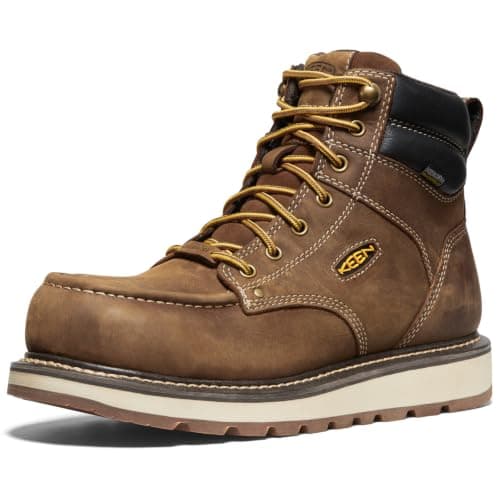
KEEN Utility Cincinnati 6-inch: carbon toe, Goodyear welt
From The most comfortable work boots, including safety toe picks
 See price on AmazonAmazon
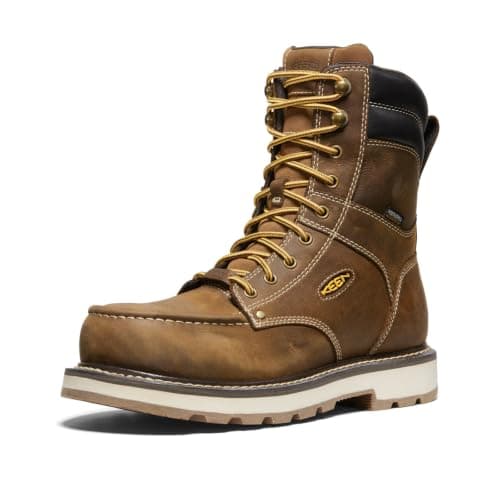
KEEN Utility Cincinnati 8-inch EE: asymmetrical carbon toe
From Best work boots for wide feet: EE, 3E and wide-fit safety boots