Explainer
Why do work boots have heels?
Published
Short answer
Work boots have heels mainly for grip and control. A defined heel catches ladder rungs so your foot does not slide forward, digs into mud and loose ground, and helps when walking downhill. Taller logger heels add bite on slopes. On flat concrete a wedge sole with no gap is often more comfortable and picks up less debris.
Boots for this job
All 7 picks compared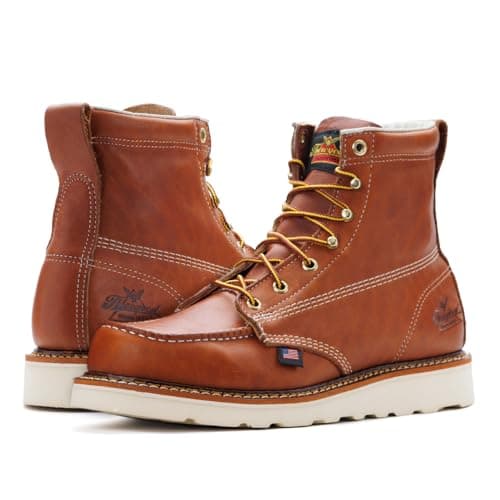
Thorogood American Heritage 6-inch: steel toe moc wedge
See price on AmazonSee it on Amazon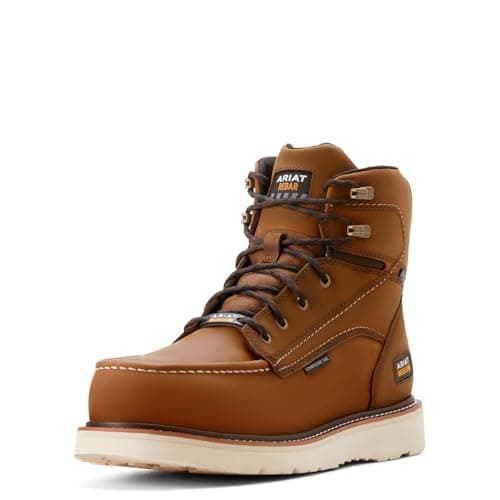
Ariat Rebar Wedge Moc 6-inch: composite toe, waterproof
See price on AmazonSee it on Amazon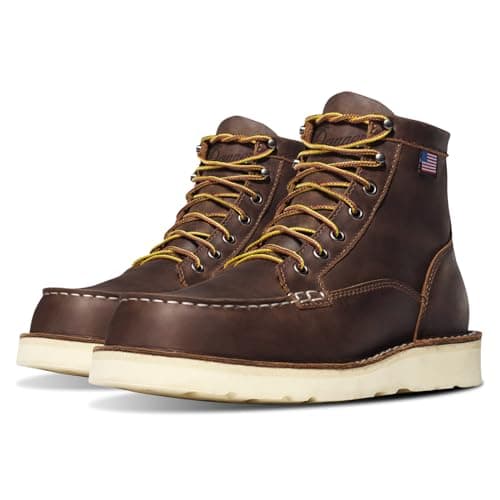
Danner Bull Run 6-inch: steel toe moc, stitch-down wedge
See price on AmazonSee it on Amazon
Look at a row of work boots and you will see two basic shapes: soles with a separate, defined heel, and flat wedge soles that run in one line from toe to heel. This page is for anyone choosing between them. We explain what a heel actually does on the job, the difference between a standard heel and a logger heel, where a wedge sole works better, and how to match the bottom of the boot to your trade.
What a defined heel does
A defined heel is a raised block at the back of the sole with a clear step, called the heel breast, in front of it. That step is the main point. It gives you an edge that hooks onto things and stops forward slip.
Wedge
Heel height: flat, about 1 inch
Even support on concrete and floors. The flat bottom gives a ladder rung little to catch on.
Lug, defined heel
Heel height: about 1 to 1.5 inches
Deep tread for loose ground. The front edge of the heel holds a ladder rung.
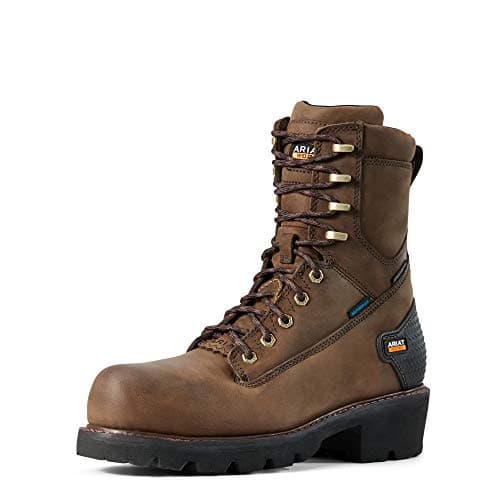
Logger heel
Heel height: about 2 inches, angled
Tall, angled heel for climbing, poles and steep ground. Less stable on flat concrete.
- Ladders: the heel breast locks against a rung so your foot cannot slide forward off it.
- Downhill and slopes: the heel digs in when you step down, giving braking traction.
- Mud and loose ground: a defined heel and deep lugs bite into soft soil instead of skating on top.
- Climbing equipment: steps, pegs and rebar mats give a defined heel something to catch.
Standard heel vs logger heel
A standard work boot heel is moderate in height. A logger heel is taller and often angled, and it was developed for forestry work on steep, uneven ground. The extra height shifts weight forward slightly and adds more bite on slopes.
Linemen and climbers often want a defined heel plus a stiff shank. See lineman boot steel shank explained and logger boots vs work boots.
Wedge (no defined heel)
- Strengths
- Even weight on flat floors, little debris pickup, often comfortable on concrete
- Trade-offs
- Less grip on ladders, slopes and mud
Standard defined heel
- Strengths
- Good ladder grip, all round traction
- Trade-offs
- Can pick up mud between heel and forefoot
Logger heel
- Strengths
- Strong bite on slopes and uneven ground
- Trade-offs
- Less stable on flat hard floors, heavier
| Heel type | Strengths | Trade-offs |
|---|---|---|
| Wedge (no defined heel) | Even weight on flat floors, little debris pickup, often comfortable on concrete | Less grip on ladders, slopes and mud |
| Standard defined heel | Good ladder grip, all round traction | Can pick up mud between heel and forefoot |
| Logger heel | Strong bite on slopes and uneven ground | Less stable on flat hard floors, heavier |
When a wedge sole is better
Wedge soles became popular on moc toe boots and are common in masonry, concrete and indoor work. The flat bottom spreads pressure evenly across a large area, which many people find easier on the feet on slab. They also do not hold tar, gravel or concrete in a gap the way a heeled lug sole can, and they do not leave as many marks on finished floors.
The trade-off is grip. On ladders the foot can slide forward on the rung, and in mud a flat sole can skate. If you climb ladders all day, a wedge may not be the right choice no matter how comfortable it is.
Which heel for which trade
For trade specific picks, see the best work boots for concrete, best roofing boots and best logger boots.
Concrete, masonry, flatwork
- Common choice
- Wedge
- Why
- Even pressure and less debris pickup on slab
Warehouse and indoor
- Common choice
- Wedge or low defined heel
- Why
- Flat smooth floors, slip resistant compound matters most
Roofing
- Common choice
- Depends on the roof
- Why
- Soft, flexible soles for shingles, avoid aggressive lugs that damage roofing
Electrical and HVAC with ladders
- Common choice
- Defined heel
- Why
- Ladder grip
Lineman and climbing
- Common choice
- Defined heel with stiff shank
- Why
- Rung and peg support
Logging and steep ground
- Common choice
- Logger heel
- Why
- Slope traction
Farm, ranch, mud
- Common choice
- Defined heel with deep lugs
- Why
- Traction in soft ground
| Work | Common choice | Why |
|---|---|---|
| Concrete, masonry, flatwork | Wedge | Even pressure and less debris pickup on slab |
| Warehouse and indoor | Wedge or low defined heel | Flat smooth floors, slip resistant compound matters most |
| Roofing | Depends on the roof | Soft, flexible soles for shingles, avoid aggressive lugs that damage roofing |
| Electrical and HVAC with ladders | Defined heel | Ladder grip |
| Lineman and climbing | Defined heel with stiff shank | Rung and peg support |
| Logging and steep ground | Logger heel | Slope traction |
| Farm, ranch, mud | Defined heel with deep lugs | Traction in soft ground |
Steel toe boots with a defined heel
Many people search for safety toe boots with a defined heel because so many popular safety toe moc toe styles use wedge soles. The safety toe and the heel are independent features. You can find steel, alloy and composite toe boots in both wedge and heeled versions, so pick the toe type for your hazards and the sole for your surfaces.
If you want a heeled safety toe boot, look at the outsole photo for a clear step in front of the heel, and check the listing for ladder or climbing features. See the best steel toe work boots and composite toe vs steel toe.
Heel wear and safety
As a heel wears, especially on the outside edge, your foot rolls and the ladder edge rounds off. A worn heel loses grip on rungs and can change how your knees and hips feel by the end of a shift. Check the heel regularly. Welted boots can often be resoled with a fresh heel, which is one reason they are popular with ladder trades.
- 1
Look at the heel from behind for uneven wear.
- 2
Check that the heel breast still has a clear square edge.
- 3
Resole or replace when the lugs are worn flat or the edge is rounded.
Frequently asked questions
Are wedge soles bad for ladders? They give less grip than a defined heel because there is no edge to lock onto the rung. Many people use them on ladders, but heeled soles are the safer choice for frequent climbing.
Why do cowboy and western work boots have tall heels? The tall heel was designed to keep the foot from slipping through a stirrup. Western work boots often use a lower, flatter heel for walking.
Is a logger heel good for everyday work? It suits slopes and uneven ground. On flat concrete all day, many people find a lower heel or wedge more stable and comfortable.
Does heel height affect comfort? Yes. A moderate heel can ease strain on the calf for some people, while a flat wedge spreads pressure. Try both if you can.
What you need for this
- See price on AmazonAmazon
Thorogood American Heritage 6-inch: steel toe moc wedge
From Best wedge sole work boots, and when a wedge is the wrong pick
 See price on AmazonAmazon
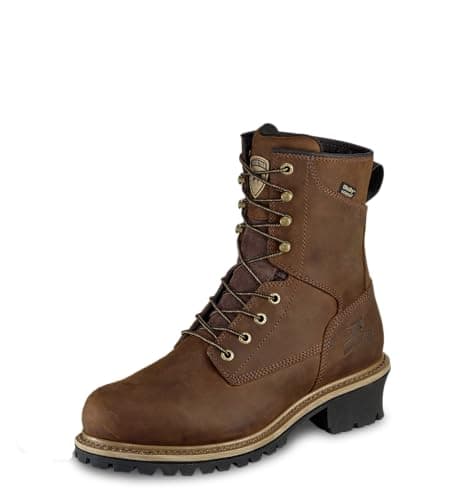
Irish Setter Mesabi 8 in. steel toe, heat resistant sole
From Best logger boots for timber, rough ground and utility work
 See price on AmazonAmazon
Ariat Powerline 8 in. H2O composite toe version