Explainer
What are wellington work boots?
Published
Short answer
A wellington work boot is a pull-on boot with no laces, a tall leather shaft (often around 10 to 13 inches) and pull loops or tabs at the top. It is named after the first Duke of Wellington, who popularized a fitted pull-on boot in the early 1800s. Work wellingtons come in soft toe and safety toe versions and suit jobs where you want boots that go on and off fast and keep debris out of laces.
Boots for this job
All 7 picks compared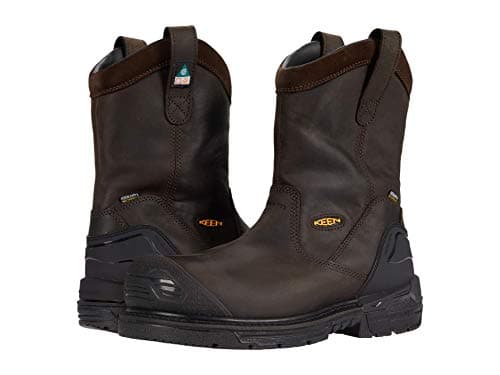
KEEN Utility Philadelphia Wellington, CSA and puncture resistant
See price on AmazonSee it on Amazon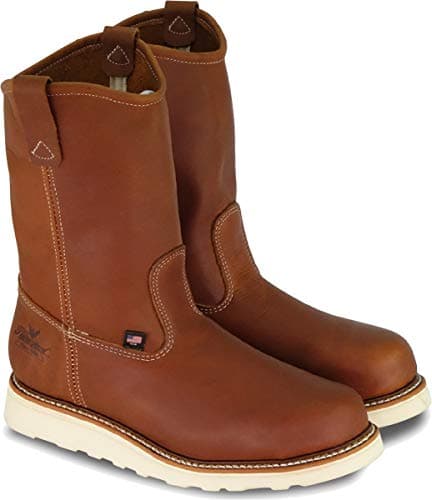
Thorogood American Heritage 11 in. steel toe wellington
See price on AmazonSee it on Amazon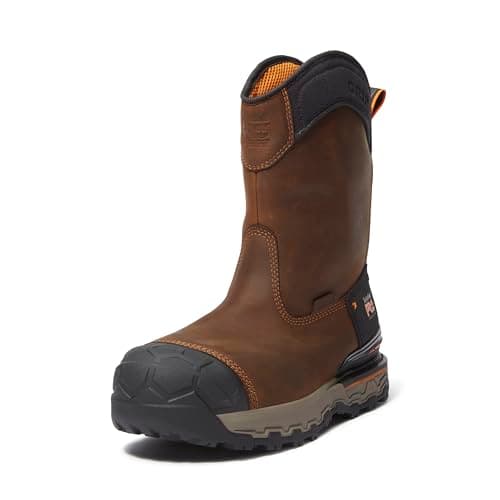
Timberland PRO Boondock Ultralight Pull-On, composite toe
See price on AmazonSee it on Amazon
In the US, "wellington" usually means a leather pull-on work boot, while in the UK it often means a rubber rain boot. Both share the same idea: a tall boot you step into, with no laces. This page covers what makes a work wellington, the common shaft heights and toe shapes, who wears them, and the trade-offs against lace-up boots. If you are shopping, our best wellington work boots guide has picks with safety toes.
Where the name comes from
Arthur Wellesley, the first Duke of Wellington, had his bootmaker adapt the military Hessian boot into a plainer, closer-fitting boot that could be worn on horseback and in town. The style took his name and spread across Britain. Later, rubber versions made for farm and wet work took on the same name, which is why British "wellies" are rubber boots.
In American work wear, the wellington stayed a leather boot. It borrows from the cowboy and ranch boot, with a straight shaft, pull holes or loops, and a lower, wider heel than a riding boot. Many oil field, farm and plant workers have worn them for generations.
What makes a work wellington
Safety toe wellingtons carry the same ASTM F2413 rating as lace-ups, so a steel or composite toe wellington can meet a site requirement. Check the label for I/75, C/75 and any EH or PR rating your job needs; see ASTM F2413 markings explained.
- No laces: you step in and pull the boot on with loops or tabs at the top of the shaft.
- Tall shaft: commonly around 10 to 13 inches, covering the lower calf.
- Elastic or wide opening: some have side gussets or a side zip to make them easier to pull on.
- Heel: usually a low, broad work heel or a wedge sole, not a tall riding heel.
- Toe options: round, square and broad work toes, in soft toe and safety toe versions.
Shaft heights and toe shapes
Roper boots are a shorter cousin of the wellington, usually with a lower shaft and a lower heel. Western work boots tend to have a taller, more angled heel and a shaped toe. For work, choose the heel by what you stand on. Our why do work boots have heels article explains the trade-offs.
Wedge
Heel height: flat, about 1 inch
Even support on concrete and floors. The flat bottom gives a ladder rung little to catch on.
Lug, defined heel
Heel height: about 1 to 1.5 inches
Deep tread for loose ground. The front edge of the heel holds a ladder rung.
Logger heel
Heel height: about 2 inches, angled
Tall, angled heel for climbing, poles and steep ground. Less stable on flat concrete.
Shaft height
- Common options
- About 10, 11, 12 or 13 inches
- Why it matters
- Taller keeps out more mud and sparks but is warmer and harder to pull on
Toe shape
- Common options
- Round, square, broad work toe
- Why it matters
- Square and broad toes give more room for the toes and a safety cap
Heel
- Common options
- Wedge or low work heel
- Why it matters
- Wedge suits flat floors and concrete; a heel helps on ladders
Safety toe
- Common options
- Soft, steel or composite
- Why it matters
- Must match the hazard assessment at your job
| Feature | Common options | Why it matters |
|---|---|---|
| Shaft height | About 10, 11, 12 or 13 inches | Taller keeps out more mud and sparks but is warmer and harder to pull on |
| Toe shape | Round, square, broad work toe | Square and broad toes give more room for the toes and a safety cap |
| Heel | Wedge or low work heel | Wedge suits flat floors and concrete; a heel helps on ladders |
| Safety toe | Soft, steel or composite | Must match the hazard assessment at your job |
Who wears wellington work boots
Pull-ons are common in oil and gas, farming and ranching, welding, food plants and anywhere boots go on and off often. With no laces, there is nothing to snag, untie or catch sparks and slag. Welders like that hot metal cannot drop into the lacing, and many welding boots are wellingtons for that reason. Workers who change in and out of boots for clean areas or vehicles like the speed.
They are less suited to jobs that need firm ankle lockdown on rough ground or ladders, because a pull-on cannot be tightened around the ankle. Read pull-on vs lace-up work boots for a full comparison.
How a wellington should fit
Expect some heel slip when a pull-on is new, because there are no laces to hold the heel down. The slip usually decreases as the leather and insole break in, but a boot that slides a lot will rub. The instep, the top of your foot, is the main fit point: snug enough to hold your foot back in the boot, but not so tight that you can barely get it on.
Wide feet often do better in a broad square toe. Check our best work boots for wide feet guide and the work boot width chart, and try boots on with the socks you work in.
Tall leather shafts can also rub the calf at first. Taller socks that reach above the top of the shaft help, and so does a little leather conditioner on a stiff new shaft. If a pull-on still feels loose after break-in, a thicker insole or a heel grip pad can take up space. See how to break in work boots for more.
Frequently asked questions
Why are they called wellington boots? They are named after Arthur Wellesley, the first Duke of Wellington, who popularized a fitted pull-on boot in the early 19th century.
Are wellington boots good for work? Yes, for jobs where you take boots on and off often, work around sparks or want no laces to snag. Lace-ups give better ankle support on uneven ground.
Can you get steel toe wellingtons? Yes. Many work wellingtons come with steel or composite safety toes rated to ASTM F2413.
Are wellingtons waterproof? Leather wellingtons are not waterproof unless they have a membrane or are sold as waterproof. Rubber wellies are waterproof up to the shaft height. See our best waterproof work boots guide.
What you need for this
- See price on AmazonAmazon
KEEN Utility Philadelphia Wellington, CSA and puncture resistant
 See price on AmazonAmazon
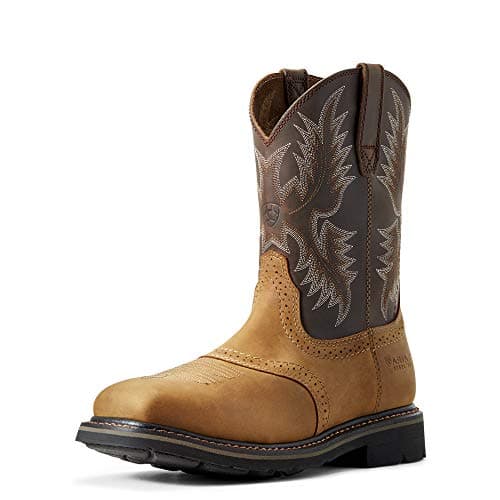
Ariat Sierra Wide Square Toe Steel: 300C hot contact heel
From Best welding boots: heat-resistant soles and met guards compared
 See price on AmazonAmazon
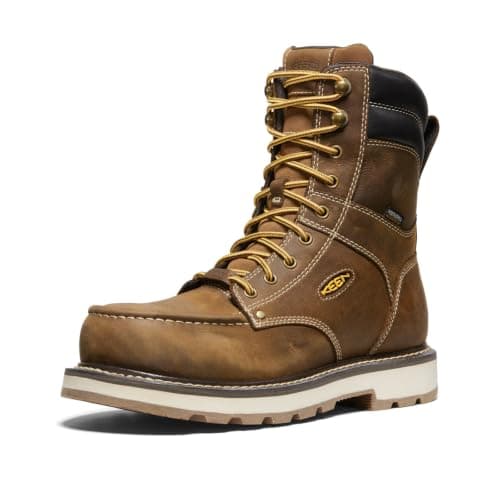
KEEN Utility Cincinnati 8-inch EE: asymmetrical carbon toe
From Best work boots for wide feet: EE, 3E and wide-fit safety boots