Comparison
Pull-on vs lace-up work boots
Published
Short answer
Pull-on (wellington) work boots slide on with no laces, come off fast and have nothing for sparks or mud to catch on. Lace-up boots let you adjust fit at the instep and ankle, so they usually hold the heel better and give more ankle support on uneven ground and ladders. Choose pull-on for speed, welding and ranch work, and lace-up for climbing, rough terrain and a locked-in fit.
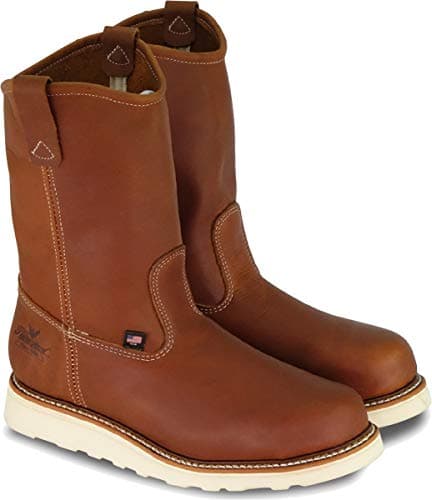
Thorogood
Thorogood American Heritage 11 in. steel toe wellington
See price on Amazon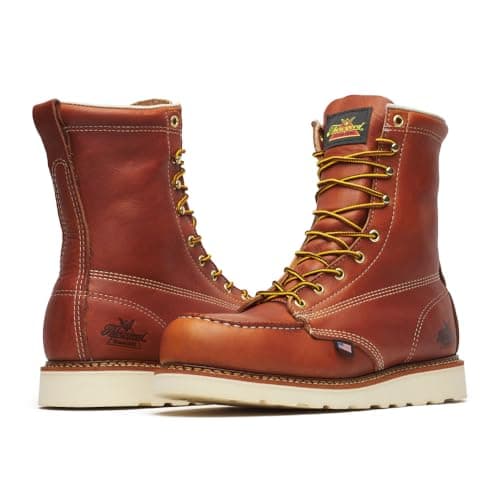
Thorogood
Thorogood American Heritage 8" steel toe moc, MAXWear wedge
See price on Amazon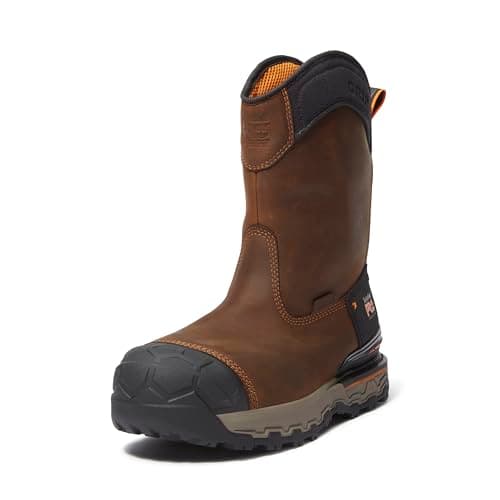
Timberland PRO
Timberland PRO Boondock Ultralight Pull-On, composite toe
See price on Amazon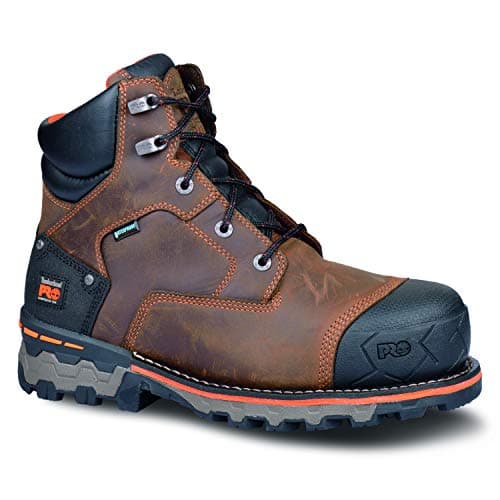
Timberland PRO
Timberland PRO Boondock 6-inch: composite toe, EH, wide size
See price on Amazon
- Thorogood American Heritage 11 in. steel toe wellington
- Height
- 11 in.
- Safety toe
- Steel, ASTM F2413-18
- Waterproof
- Not stated
- Thorogood American Heritage 8" steel toe moc, MAXWear wedge
- Height
- 8 in
- Safety toe
- -
- Waterproof
- Not stated
- Timberland PRO Boondock Ultralight Pull-On, composite toe
- Height
- Not stated
- Safety toe
- Composite, ASTM F2413-18 I and C
- Waterproof
- Yes, ASTM F1671-07 membrane
- Timberland PRO Boondock 6-inch: composite toe, EH, wide size
- Height
- 6 inch
- Safety toe
- Composite (non-metallic)
- Waterproof
- Yes, membrane (ASTM F1671-07)
| Pick | Height | Safety toe | Waterproof | Price | Link |
|---|---|---|---|---|---|
| Thorogood American Heritage 11 in. steel toe wellington | 11 in. | Steel, ASTM F2413-18 | Not stated | - | Amazon |
| Thorogood American Heritage 8" steel toe moc, MAXWear wedge | 8 in | - | Not stated | - | Amazon |
| Timberland PRO Boondock Ultralight Pull-On, composite toe | Not stated | Composite, ASTM F2413-18 I and C | Yes, ASTM F1671-07 membrane | - | Amazon |
| Timberland PRO Boondock 6-inch: composite toe, EH, wide size | 6 inch | Composite (non-metallic) | Yes, membrane (ASTM F1671-07) | - | Amazon |
Facts are taken from each Amazon listing. Prices are checked daily and shown with their date.
Verdict
For welding, flat ground and fast on and off, the Thorogood American Heritage 11-inch Wellington is the traditional welted pull-on, while the Timberland PRO Boondock Ultralight Pull-On is the lighter waterproof option. If you climb or need ankle hold, go lace-up with the Thorogood American Heritage 8-inch Moc Toe or the Timberland PRO Boondock 6-inch.
This page is for anyone choosing between a laceless wellington style work boot and a traditional lace-up. We compare them on fit, heel hold, ankle support, safety around sparks and molten metal, and how quickly they go on and off. We also look at two matched pairs from our guides, a Thorogood American Heritage wellington and lace-up, and a Timberland PRO Boondock pull-on and lace-up, so you can see how the same brand handles both styles. Specs come only from the product listings.
How the two styles are built
A pull-on or wellington work boot has a tall shaft with no laces. You pull it on with the side pulls or loops at the top. The fit comes from the shape of the last and the instep, and the shaft is usually 10 to 11 inches or taller. Some have a side zip instead, like Thorogood's GEN-Flex2 Side-Zip Wellington.
A lace-up boot uses eyelets and hooks to snug the leather around your instep and ankle. Common heights are 6 and 8 inches. Logger and lineman boots go taller. Our page on 6-inch vs 8-inch work boots covers how shaft height changes support.
People also search for wellington vs western boots. A western boot usually has a riding heel, a pointed or narrow toe and a fashion focus. A work wellington uses the same laceless idea but adds a work outsole, a flatter heel or wedge, and often a safety toe and EH rating. See what are wellington work boots for more.
Fit and heel slip
Fit is the biggest difference. With laces you can tighten across the instep to stop your heel lifting, then loosen the top for flex. A pull-on has to fit your instep from the start. If the instep is too loose, your heel slides. If it is too tight, the boot is hard to get on.
Some heel lift is normal in a new pull-on boot and often settles as the leather breaks in. Heavy slip that rubs your heel raw is a fit problem. If you have a high instep, try pull-ons in person or use a brand with an entry system meant for it. Ariat, for example, lists a U-Turn Entry System on its WorkHog pull-on.
If you have narrow heels and wide forefeet, lace-ups are usually easier to dial in. Our fit guide explains what to check.
- 1Toe room: about a thumb width ahead of the longest toe
- 2Toes clear the cap edge: no pressure when you stand or crouch
- 3Widest point at the ball: the ball of the foot sits where the boot is widest
- 4Minimal heel lift: a little lift is normal in new stiff boots
Ankle support, ladders and rough ground
Laces let you lock your ankle into the boot. On uneven ground, rebar, scaffolding and ladders, that locked-in feel helps stability. A tall pull-on shaft protects the shin from brush and debris but does not grip the ankle the same way.
For climbing, defined heels matter as much as laces. A wedge sole on either style is fine for flat concrete but gives less bite on ladder rungs. See why work boots have heels and our lineman boot guide if you climb.
Wedge
Heel height: flat, about 1 inch
Even support on concrete and floors. The flat bottom gives a ladder rung little to catch on.
Lug, defined heel
Heel height: about 1 to 1.5 inches
Deep tread for loose ground. The front edge of the heel holds a ladder rung.
Logger heel
Heel height: about 2 inches, angled
Tall, angled heel for climbing, poles and steep ground. Less stable on flat concrete.
Spark safety and getting out fast
Pull-ons have no laces to catch sparks, slag or hot debris, and no gap at the tongue for them to drop into. That is why many welders, foundry workers and fabricators prefer them. Our welding boot guide covers both styles for that work.
A pull-on also comes off quickly. If something hot or a chemical gets into the boot, you can get it off without untying laces. Lace-to-toe boots with a kiltie or tongue flap are the other common choice for spark-heavy work.
Pull-ons are also easier to wear for jobs where you take boots off often, such as ranch, farm and some service calls.
Note.Pull-ons only help in an emergency if they fit loosely enough to come off. Follow your site's rules for hot work PPE, which may call for spats or leggings as well.
Two matched pairs compared from their listings
Comparing boots from the same brand shows the style difference without changing the build. The Thorogood pair shares the American Heritage MAXWear Wedge outsole and EH rating, with one as an 11-inch wellington and one as an 8-inch lace-up moc toe. The Timberland PRO pair shares the composite safety toe, waterproof membrane and TPU outsole.
Thorogood American Heritage 11-inch Wellington
- Style
- Pull-on
- Height
- 11 inch
- Toe
- Steel, ASTM F2413-18
- EH
- Yes
- Other listed features
- Goodyear welt, fiberglass shank, wedge outsole
Thorogood American Heritage 8-inch Moc Toe
- Style
- Lace-up
- Height
- 8 inch
- Toe
- Steel, ASTM F2413-18
- EH
- Yes
- Other listed features
- MAXWear Wedge outsole, American made with USA and global components
Timberland PRO Boondock Ultralight Pull-On
- Style
- Pull-on
- Height
- Not stated in listing
- Toe
- Composite, ASTM F2413-18 I and C
- EH
- Not stated in listing
- Other listed features
- Waterproof membrane, HoverSpring foam, TPU outsole
Timberland PRO Boondock 6-inch
- Style
- Lace-up
- Height
- 6 inch
- Toe
- Composite, ASTM F2413-18 I and C
- EH
- Yes
- Other listed features
- Waterproof membrane, TPU outsole
| Boot | Style | Height | Toe | EH | Other listed features |
|---|---|---|---|---|---|
| Thorogood American Heritage 11-inch Wellington | Pull-on | 11 inch | Steel, ASTM F2413-18 | Yes | Goodyear welt, fiberglass shank, wedge outsole |
| Thorogood American Heritage 8-inch Moc Toe | Lace-up | 8 inch | Steel, ASTM F2413-18 | Yes | MAXWear Wedge outsole, American made with USA and global components |
| Timberland PRO Boondock Ultralight Pull-On | Pull-on | Not stated in listing | Composite, ASTM F2413-18 I and C | Not stated in listing | Waterproof membrane, HoverSpring foam, TPU outsole |
| Timberland PRO Boondock 6-inch | Lace-up | 6 inch | Composite, ASTM F2413-18 I and C | Yes | Waterproof membrane, TPU outsole |
Which style should you buy
Pick pull-on if you weld or work around sparks, walk mostly flat ground, take your boots off often, or are tired of laces breaking and coming loose. Make sure the instep fits snugly without pinching.
Pick lace-up if you climb, work on uneven ground, need firm ankle support, or have a foot shape that needs adjustment. Lace-ups are the default for most construction work. See our construction boot guide.
- Welding and hot work: pull-on or lace-to-toe with a kiltie
- Ladders, scaffolds and rough ground: lace-up with a defined heel
- Ranch, farm and quick on and off: pull-on
- High instep or hard-to-fit feet: lace-up
Frequently asked questions
Are pull-on work boots safe? They can carry the same ASTM F2413 safety toe and EH ratings as lace-ups. Check the label. The trade-off is less adjustable fit and ankle hold.
Do pull-on boots give ankle support? The tall shaft gives some, but you cannot tighten it around the ankle like laces. For climbing and uneven ground, lace-ups usually feel more stable.
What is the difference between a wellington and a western boot? Both are laceless. A western boot usually has a riding heel and a narrower toe. A work wellington has a work outsole, often a safety toe and EH rating, and a lower, flatter heel or wedge.
Should pull-on boots slip at the heel? A little lift is common at first and often eases with break-in. Heavy slip or rubbing means the boot is the wrong fit.
What you need for this
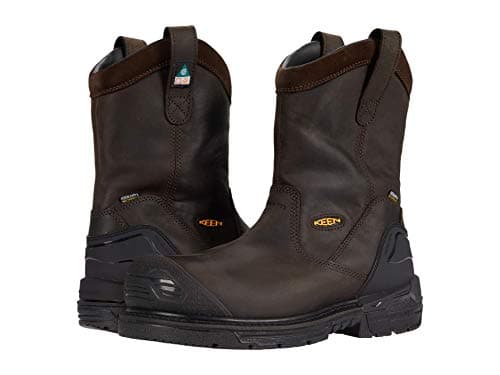 See price on AmazonAmazon
KEEN Utility Philadelphia Wellington, CSA and puncture resistant
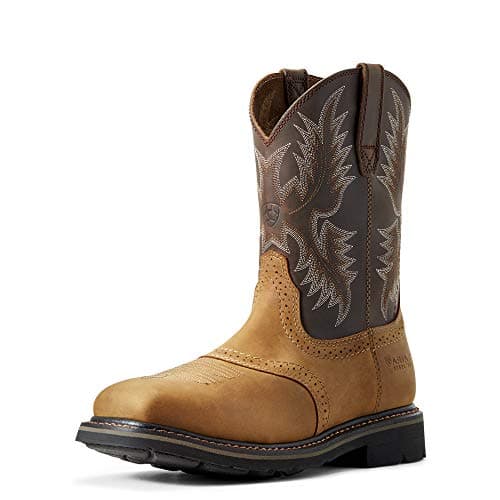 See price on AmazonAmazon
Ariat Sierra Wide Square Toe Steel: 300C hot contact heel
From Best welding boots: heat-resistant soles and met guards compared
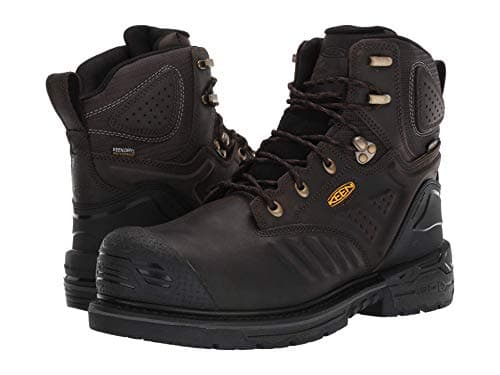 See price on AmazonAmazon
KEEN Utility Philadelphia 6-inch: carbon toe, 572 F outsole
From Best construction work boots for mud, rebar and ladders
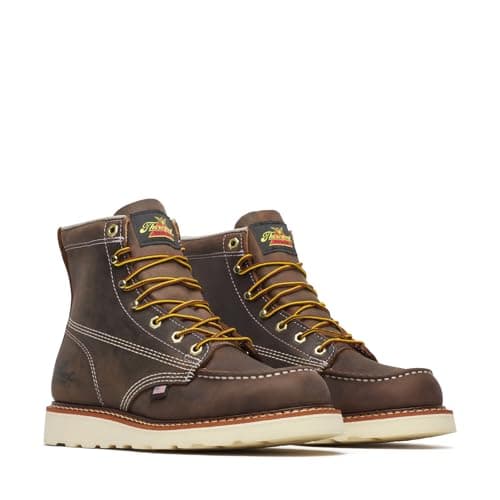 See price on AmazonAmazon
Thorogood American Heritage 6 in. moc toe, soft toe