Comparison
Logger boots vs regular work boots
Published
Short answer
Logger boots are tall lace-up work boots, usually 8 inches or more, with a raised heel, a deep lug outsole and a stiff shank for steep, rough and uneven ground. Regular work boots are often 6 to 8 inches with a lower heel or a flat wedge sole. Choose a logger for forestry, climbing, linework and slopes; choose a regular work boot for flat sites, concrete and long walking.
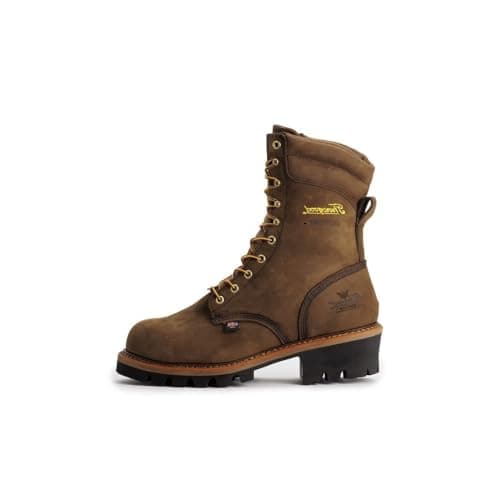
Thorogood
Logger Series 9 in. waterproof steel toe, Vibram sole
See price on Amazon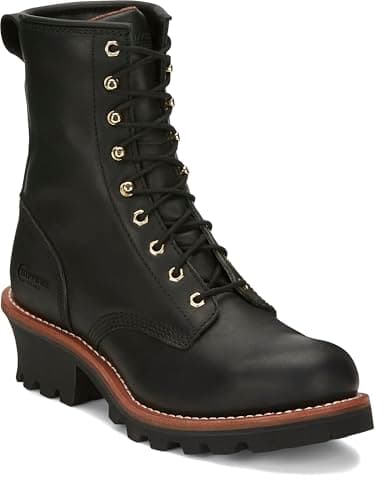
Chippewa
Chippewa Baldor 8 in. steel toe logger with Vibram sole
See price on Amazon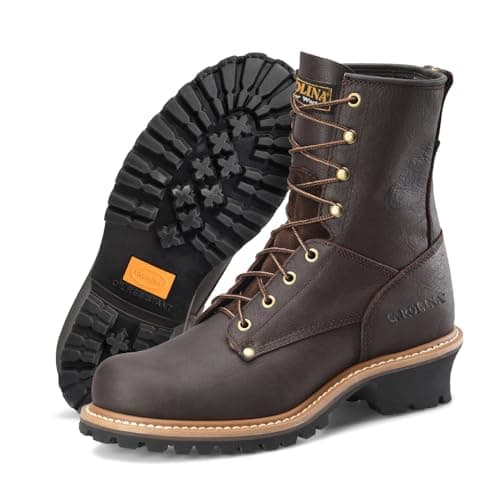
Carolina
Carolina Elm 8 in. unlined logger, EH rated
See price on Amazon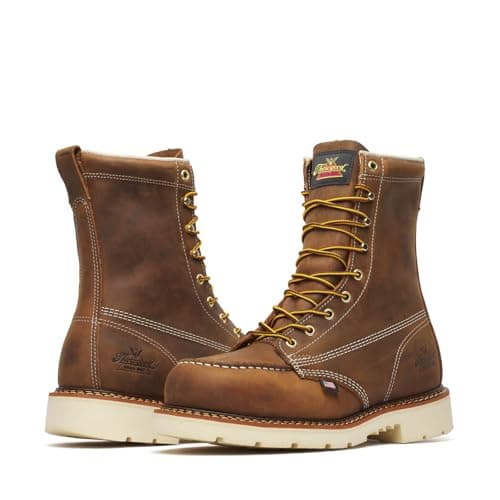
Thorogood
Thorogood American Heritage 8 in. steel toe with heel
See price on Amazon
- Logger Series 9 in. waterproof steel toe, Vibram sole
- Height
- 9 in.
- Safety toe
- Steel
- Waterproof
- Yes
- EH
- EH rated (title)
- Chippewa Baldor 8 in. steel toe logger with Vibram sole
- Height
- 8 in.
- Safety toe
- Steel
- Waterproof
- Not stated
- EH
- Not stated
- Carolina Elm 8 in. unlined logger, EH rated
- Height
- 8 in.
- Safety toe
- Soft toe
- Waterproof
- No, unlined leather
- EH
- Yes, ASTM-rated
- Thorogood American Heritage 8 in. steel toe with heel
- Height
- 8 in.
- Safety toe
- Steel, ASTM F2413-18
- Waterproof
- Not stated
- EH
- ASTM F2413-18 EH
| Pick | Height | Safety toe | Waterproof | EH | Price | Link |
|---|---|---|---|---|---|---|
| Logger Series 9 in. waterproof steel toe, Vibram sole | 9 in. | Steel | Yes | EH rated (title) | - | Amazon |
| Chippewa Baldor 8 in. steel toe logger with Vibram sole | 8 in. | Steel | Not stated | Not stated | - | Amazon |
| Carolina Elm 8 in. unlined logger, EH rated | 8 in. | Soft toe | No, unlined leather | Yes, ASTM-rated | - | Amazon |
| Thorogood American Heritage 8 in. steel toe with heel | 8 in. | Steel, ASTM F2413-18 | Not stated | ASTM F2413-18 EH | - | Amazon |
Facts are taken from each Amazon listing. Prices are checked daily and shown with their date.
Verdict
For wet forestry or climbing work, the waterproof Thorogood Logger Series 9" is the most fully specified logger here; the Chippewa Baldor 8" suits steel toe needs on drier ground, and the Carolina Elm 8" is the soft toe, unlined option for heat. If you work mostly on flat sites, a standard boot like the Thorogood American Heritage 8" Steel Toe is the better fit.
This page is for anyone wondering what logger boots are and whether they need a pair. Loggers look like taller, more aggressive work boots, and that is mostly what they are, but the details change how they feel on slopes, ladders and concrete. We cover what defines a logger, how it compares with a standard work boot, who benefits, and three logger listings next to a standard 8 inch work boot from Thorogood.
What logger boots are
Logger boots come from timber work, where people walk steep, muddy and brushy ground and stand on logs and slopes. The style has a few traits that show up across brands:
None of these traits has a formal standard. Brands call a boot a logger based on style, so read the listing for height, heel and shank details instead of trusting the name alone.
Wedge
Heel height: flat, about 1 inch
Even support on concrete and floors. The flat bottom gives a ladder rung little to catch on.
Lug, defined heel
Heel height: about 1 to 1.5 inches
Deep tread for loose ground. The front edge of the heel holds a ladder rung.
Logger heel
Heel height: about 2 inches, angled
Tall, angled heel for climbing, poles and steep ground. Less stable on flat concrete.
- Tall shaft, commonly 8 inches or more, for ankle support and protection from brush.
- Raised heel with a defined edge that catches on slopes, rungs and climbing gear.
- Deep lug outsole that bites into dirt and sheds mud.
- Stiff shank, often steel, so the arch does not fold over a rung or branch.
Logger vs regular work boot
The raised heel is the biggest difference you feel. It helps on slopes and ladders but puts you slightly forward on flat concrete, and deep lugs can feel less stable on hard smooth floors than a wedge. Read why work boots have heels and 6 inch vs 8 inch work boots for more.
Shaft height
- Logger boot
- Usually 8 in or taller
- Typical work boot
- Often 6 or 8 in
Heel
- Logger boot
- Raised, defined heel
- Typical work boot
- Lower heel or flat wedge
Outsole
- Logger boot
- Deep, aggressive lugs
- Typical work boot
- Shallower lugs or smooth wedge
Shank
- Logger boot
- Stiff, often steel
- Typical work boot
- Varies; fiberglass, TPU or steel
Best ground
- Logger boot
- Slopes, mud, brush, ladders
- Typical work boot
- Flat sites, concrete, floors
Walking on flat hard ground
- Logger boot
- Can feel stiff and tippy
- Typical work boot
- More natural
| Factor | Logger boot | Typical work boot |
|---|---|---|
| Shaft height | Usually 8 in or taller | Often 6 or 8 in |
| Heel | Raised, defined heel | Lower heel or flat wedge |
| Outsole | Deep, aggressive lugs | Shallower lugs or smooth wedge |
| Shank | Stiff, often steel | Varies; fiberglass, TPU or steel |
| Best ground | Slopes, mud, brush, ladders | Flat sites, concrete, floors |
| Walking on flat hard ground | Can feel stiff and tippy | More natural |
Three loggers and a standard work boot
The Thorogood Logger Series 9", Chippewa Baldor 8" and Carolina Elm 8" unlined are listed as logger boots. The Thorogood American Heritage 8" Steel Toe is a standard moc toe work boot with a heel outsole, included as the regular work boot reference. Heel heights are not stated in these listings, so we do not list them.
Thorogood Logger Series 9" Waterproof Steel Toe
- Height
- 9 in
- Toe
- Steel
- Water protection
- Waterproof
- Sole and shank (as listed)
- Vibram midsole, storm welt, steel shank
- Price at listing
- $389.95
Chippewa Baldor 8" Steel Toe Logger
- Height
- 8 in
- Toe
- Steel
- Water protection
- Not stated
- Sole and shank (as listed)
- Vibram slip-resistant outsole
- Price at listing
- $274.95
Carolina Elm 8" Unlined Logger
- Height
- 8 in
- Toe
- Soft toe
- Water protection
- Unlined, not stated waterproof
- Sole and shank (as listed)
- Rubber lug outsole, triple-bar steel shank, EH
- Price at listing
- $154.99
Thorogood American Heritage 8" Steel Toe (work boot)
- Height
- 8 in
- Toe
- Steel, F2413-18
- Water protection
- Not stated
- Sole and shank (as listed)
- MAXWear 90 heel outsole, EH
- Price at listing
- $284.95
| Boot | Height | Toe | Water protection | Sole and shank (as listed) | Price at listing |
|---|---|---|---|---|---|
| Thorogood Logger Series 9" Waterproof Steel Toe | 9 in | Steel | Waterproof | Vibram midsole, storm welt, steel shank | $389.95 |
| Chippewa Baldor 8" Steel Toe Logger | 8 in | Steel | Not stated | Vibram slip-resistant outsole | $274.95 |
| Carolina Elm 8" Unlined Logger | 8 in | Soft toe | Unlined, not stated waterproof | Rubber lug outsole, triple-bar steel shank, EH | $154.99 |
| Thorogood American Heritage 8" Steel Toe (work boot) | 8 in | Steel, F2413-18 | Not stated | MAXWear 90 heel outsole, EH | $284.95 |
Who needs a logger
If you spend the day on concrete, in a warehouse or on flat finished floors, a logger is usually more boot than you need. A wedge or low-heel work boot spreads pressure across a flatter sole and tends to feel better over long walking shifts. See wedge sole work boots and work boots for concrete.
- Forestry, timber and arborist work on steep or brushy ground.
- Linemen and climbers who need a defined heel and stiff shank for gaffs and rungs. See lineman boot steel shank explained and lineman boots.
- Ranch, fence line and survey work on uneven, muddy terrain.
- Anyone on ladders all day who wants a heel that locks onto the rung.
Buying tips for loggers
If you want a boot that can be rebuilt, look for welted or stitch-down construction. Thorogood's Logger Series listing describes Goodyear storm welt construction. See can work boots be resoled.
- 1
Confirm the toe type your site requires; loggers come in soft toe, steel and composite.
- 2
Pick waterproof for wet ground, unlined for heat.
- 3
Check the shank and outsole in the listing; look for a stiff shank if you climb.
- 4
Try the boot laced fully; tall shafts need a good heel lock to avoid rubbing.
- 5
Plan for break-in. Stiff leather and shanks take time; see how to break in work boots.
Frequently asked questions
What are logger boots? Tall lace-up work boots, usually 8 inches or more, with a raised heel, deep lugs and a stiff shank, built for steep, muddy and uneven ground.
Are logger boots good for everyday work? They work, but on flat concrete the raised heel and stiff build can feel less comfortable than a wedge or low-heel boot over a long day.
Are logger boots good for linemen? Many linemen wear loggers or lineman-specific boots because the defined heel and stiff shank suit climbing. Check your employer's requirements first.
Do logger boots have steel toes? Some do and some do not. The Carolina Elm on this page is a soft toe logger, while the Thorogood Logger Series and Chippewa Baldor listings state steel toes.
What you need for this
 See price on AmazonAmazon
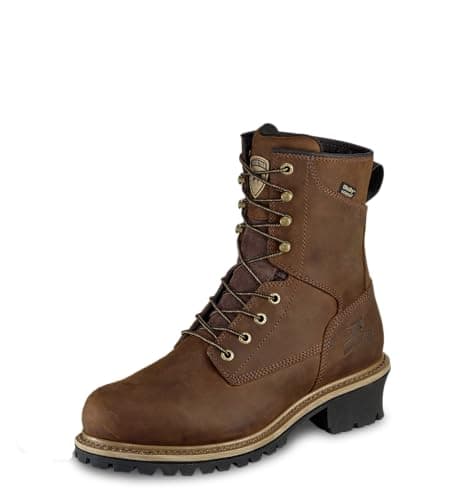
Irish Setter Mesabi 8 in. steel toe, heat resistant sole
From Best logger boots for timber, rough ground and utility work
 See price on AmazonAmazon
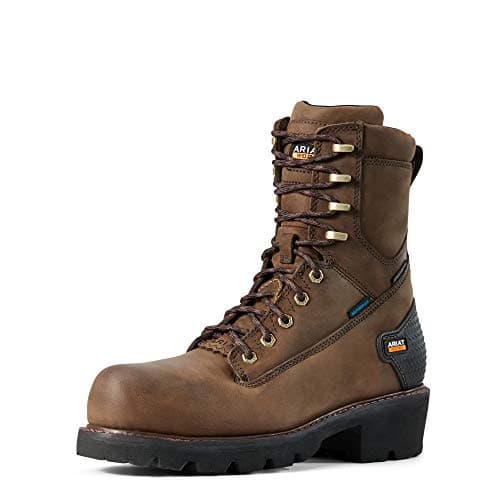
Ariat Powerline 8 in. H2O composite toe version
 See price on AmazonAmazon
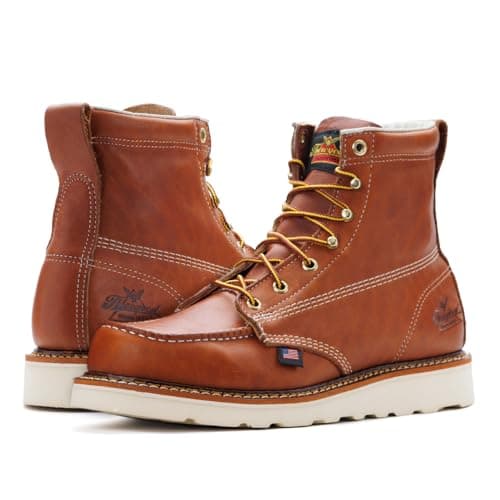
Thorogood American Heritage 6-inch: steel toe moc wedge
From Best wedge sole work boots, and when a wedge is the wrong pick
 See price on AmazonAmazon
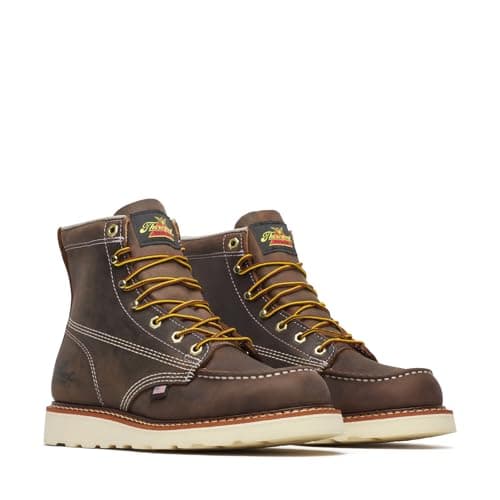
Thorogood American Heritage 6 in. moc toe, soft toe