Explainer
Lineman boots and the steel shank explained
Published
Short answer
Lineman boots have a stiff steel shank in the arch so the sole does not fold over a climbing gaff stirrup, ladder rung or peg. That support spreads your weight across the foot and cuts fatigue when you stand on a narrow point for long periods. A tall, defined heel locks the boot onto the stirrup or rung so your foot does not slide forward.
Boots for this job
All 8 picks compared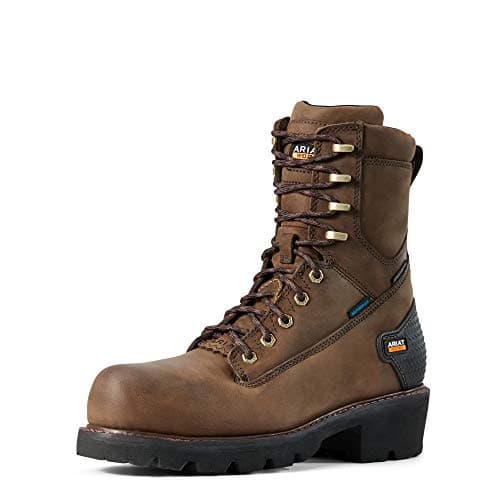
Ariat Powerline 8 in. H2O composite toe version
See price on AmazonSee it on Amazon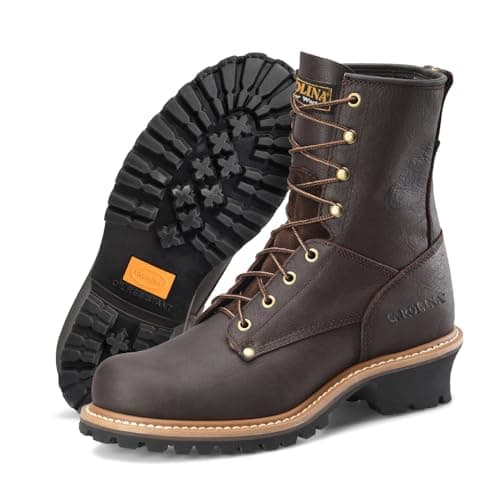
Carolina Elm 8 in. unlined logger, EH rated
See price on AmazonSee it on Amazon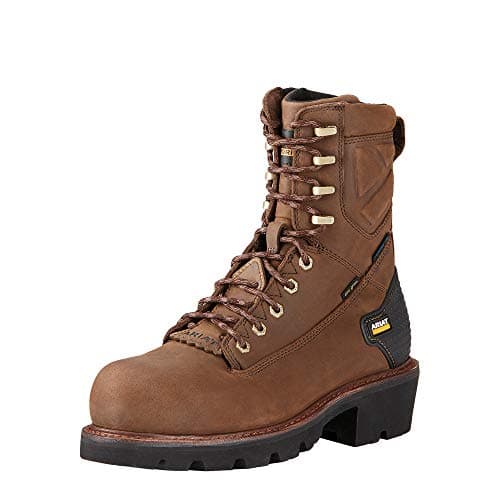
Ariat Powerline 8 in. H2O with extra-wide climbing shank
See price on AmazonSee it on Amazon
Climbing poles on gaffs, standing on step bolts and working off ladders puts all your weight on a narrow strip under the arch. A regular work boot with a flexible sole folds around that strip, and your foot and calf do the work of holding you up. This page explains what a steel shank is, why lineman and climbing boots need a stiff one, why the heel shape matters as much as the shank, and how to check a boot in your hands. For picks, see our best lineman boots guide.
What a shank is
The shank is a stiff piece built into the sole between the insole and outsole, running under the arch from the heel toward the ball of the foot. Almost every work boot has some kind of shank. It can be steel, fiberglass, composite, nylon or a molded TPU piece. Its job is to give the middle of the sole structure, so the boot supports your arch instead of bending wherever there is pressure.
Shanks differ a lot in stiffness. A light hiker-style shank lets the boot flex for walking. A lineman or climbing shank is much stiffer and often longer, so the boot holds its shape when all your weight hangs on a single point under the arch.
- 1Upper: leather or synthetic shell and lacing
- 2Toe cap: steel, alloy or composite
- 3Metatarsal guard zone: top of the foot behind the cap
- 4Insole: the footbed under your foot
- 5Midsole: cushioning and structure
- 6Shank: stiffens the arch for ladders and pegs
- 7Puncture plate: in PR rated boots
- 8Welt: strip the sole is stitched to
- 9Outsole: the tread, where EH and slip ratings live
- 10Heel: defined heel for climbing
Why climbers need a stiff steel shank
When you climb with gaffs, the stirrup of the climber sits under the arch of your boot. On a ladder or step bolt, the rung sits in the same place. With a soft sole, the boot wraps around that narrow support. Your plantar fascia, arch and calf then carry the load, and over a day of climbing that adds up to sore feet and tired legs.
A stiff steel shank bridges that support and spreads the pressure across the whole sole. It also keeps the boot from twisting on the stirrup, which gives you a more stable platform when you lean back in your belt. Steel is common because it gives high stiffness in a thin piece. Some boots use other rigid materials; what matters is how stiff the sole is under the arch.
The heel matters as much as the shank
Lineman boots usually have a tall, defined heel, often logger style, with a sharp forward edge called the breast of the heel. That edge catches the gaff stirrup or rung and stops your foot from sliding forward off it. A wedge sole, with no gap between heel and forefoot, has nothing to catch, which is why wedge soles are a poor choice for climbing.
The heel also puts your foot at an angle that many climbers find more comfortable for standing on a stirrup. Read more in why do work boots have heels and logger boots vs work boots.
Wedge
Heel height: flat, about 1 inch
Even support on concrete and floors. The flat bottom gives a ladder rung little to catch on.
Lug, defined heel
Heel height: about 1 to 1.5 inches
Deep tread for loose ground. The front edge of the heel holds a ladder rung.
Logger heel
Heel height: about 2 inches, angled
Tall, angled heel for climbing, poles and steep ground. Less stable on flat concrete.
How to check a boot for a climbing shank
Many lineman boots are also EH rated, because line work happens near energized equipment. EH is secondary protection only; read what does EH rated mean and EH rated vs dielectric boots. For the trade overall, see best work boots for electricians.
- 1
Hold the boot by the heel and toe and try to bend the sole at the arch. A climbing boot should barely flex there.
- 2
Look at the heel from the side. You want a clear step with a defined breast, not a smooth wedge.
- 3
Check the product listing for the shank material and a description such as "lineman" or "climbing shank".
- 4
Look for a tall shaft, often 8 inches or more, for ankle support on the pole.
- 5
Confirm the ASTM label if your utility requires a safety toe or EH rating.
Note.Follow your employer's climbing and fall protection rules. A good boot does not replace training, gaff inspection or a fall restriction device where required.
Trade-offs of a stiff shank
The same stiffness that helps on the pole makes a boot less flexible for walking long distances or driving. Lineman boots also tend to be heavier and take longer to break in, especially with a stitched, resoleable construction. Many line workers accept that because they spend much of the day climbing or standing on narrow supports.
If you climb only now and then, a logger boot with a defined heel and solid shank may be enough. If you climb daily, buy a boot made for it and plan on resoling: see can work boots be resoled.
Frequently asked questions
Do all work boots have a steel shank? No. Many use fiberglass, composite or nylon shanks, and some lightweight boots have very little shank at all. Lineman boots are among the stiffest.
Is a steel shank the same as a steel toe? No. The shank is in the arch of the sole and gives support. The toe cap protects the toes and is rated under ASTM F2413. A boot can have one without the other.
Can I climb in wedge sole boots? It is not recommended. A wedge has no heel edge to catch a gaff stirrup or rung, so your foot can slide forward.
Do steel shanks make boots cold? Steel conducts heat more than composite, but the shank is buried in the sole. Insulation and sock choice matter more for warmth.
What you need for this
- See price on AmazonAmazon
Ariat Powerline 8 in. H2O composite toe version
 See price on AmazonAmazon
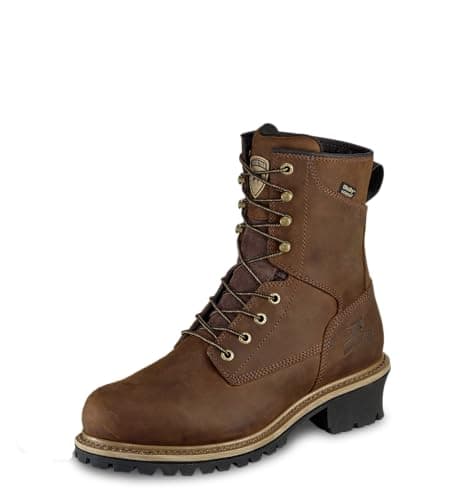
Irish Setter Mesabi 8 in. steel toe, heat resistant sole
From Best logger boots for timber, rough ground and utility work
 See price on AmazonAmazon
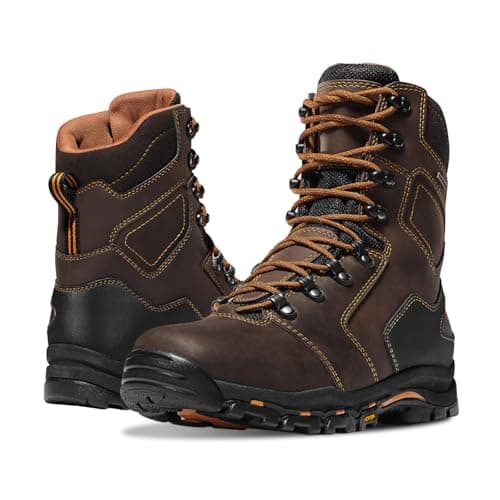
Danner Vicious 8-inch: composite toe, ASTM F2413-18 EH
From Best work boots for electricians: EH-rated, non-metallic toe picks