Explainer
Do you need steel toe boots for welding?
Published
Short answer
Most welding shops and job sites require safety toe boots because welders handle heavy plate, pipe and fixtures. The toe can be steel, alloy or composite as long as the boot meets ASTM F2413, unless your employer specifies one. Just as important for welding are leather uppers, covered laces or a pull-on design, a heat-resistant outsole, and metatarsal protection where heavy pieces are moved.
Boots for this job
All 7 picks compared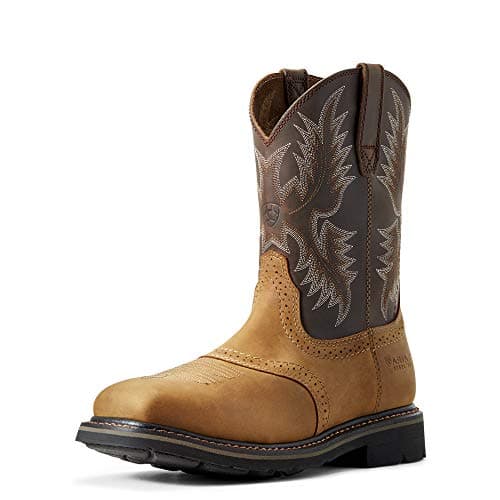
Ariat Sierra Wide Square Toe Steel: 300C hot contact heel
See price on AmazonSee it on Amazon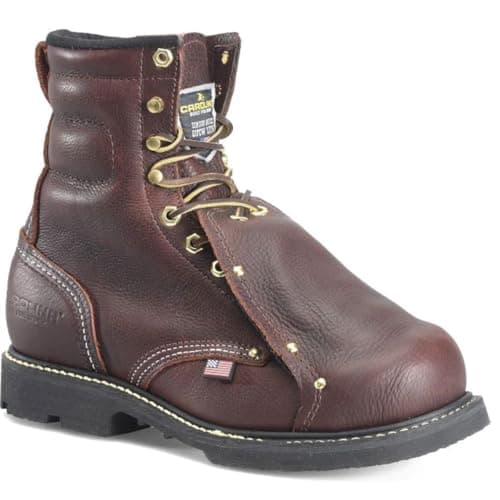
Carolina Foundry 8": steel toe, internal met guard, Vibram heat sole
See price on AmazonSee it on Amazon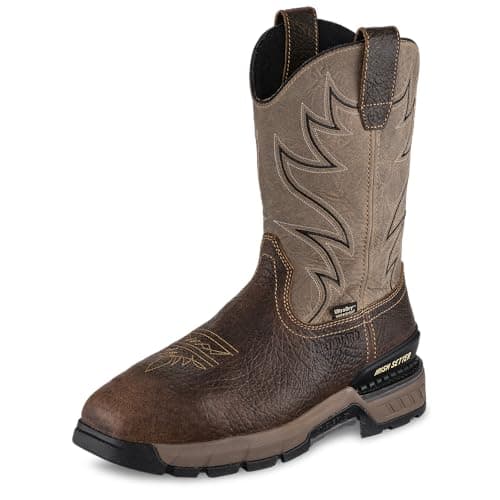
Irish Setter Two Harbors 11" NMT toe with internal met guard
See price on AmazonSee it on Amazon
Welding puts your feet in the path of three hazards at once: falling or rolling steel, sparks and spatter, and hot surfaces underfoot. A steel toe handles only the first one. This page explains whether you need a safety toe for welding, why steel is so common in shops, and which other boot features matter, from leather and lace covers to heat-resistant soles and metatarsal guards. For specific boots, see the best welding boots.
Is a safety toe required for welding?
OSHA does not have a rule that says "welders must wear steel toe boots". What it has is a general foot protection rule, 29 CFR 1910.136, which requires protective footwear wherever there is a danger of foot injury from falling or rolling objects, objects piercing the sole, or electrical hazards. Welding work almost always involves moving heavy metal, so most employers' hazard assessments call for safety toe footwear in welding areas.
In practice, if you weld for a living in a fabrication shop, pipe yard, shipyard or construction site, expect a safety toe requirement. Hobby welders at home are not covered by OSHA rules, but the hazards are the same. Dropping a piece of plate or a heavy clamp on an unprotected foot is a common way to get hurt. When are safety toe boots required covers the rule in more detail.
Steel, alloy or composite toe for welders
Steel toes are traditional in welding and remain common. They are thin, so the toe profile stays low, and they are usually the least expensive option. Alloy toes are lighter metal caps with a similar low profile. Composite toes have no metal and conduct heat and cold less, which some welders prefer when kneeling on hot or cold steel for long periods.
All three can carry the same ASTM F2413 I/75 C/75 rating. Unless your employer specifies one type, choose by fit and comfort. If your work involves a lot of heavy pieces moving overhead or on carts, consider metatarsal protection in addition to the toe cap. See composite toe vs steel toe.
Sparks, spatter and heat: what the boot needs
Molten spatter and sparks are what ruin ordinary work boots in a welding bay. They burn through mesh and synthetic fabric, melt nylon laces and drop into any gap at the top of the boot. Look for these features:
- Full leather uppers. Leather resists sparks far better than mesh or synthetic panels.
- Covered laces or no laces. A pull-on Wellington boot has no laces to burn and no tongue gap. Lace-up boots with a flap or external met guard over the laces also work.
- A heat-resistant outsole. Many work boot outsoles are rated for contact with hot surfaces. Check the listing for a stated heat rating.
- Pants over the boot. Wear your pants outside the shaft, not tucked in, so spatter rolls off instead of falling into the boot.
- Smooth leather with few seams up front. Fewer seams and textured overlays mean fewer places for spatter to lodge.
Metatarsal guards for welders
Metatarsal protection guards the top of the foot behind the toe cap. It is common in foundries, steel mills and heavy fabrication, where long pieces can fall past the toe cap. An external metatarsal guard has a second benefit for welders: it usually covers the laces and shields them from spatter.
A boot whose guard passed the ASTM F2413 metatarsal test shows Mt/75 on its label. Internal vs external metatarsal guards explains the trade-offs, and the metatarsal guard boots guide lists options.
Electrical considerations around welding
Welding involves electricity, but an EH (electrical hazard) rated boot is designed as secondary protection against accidental contact with live circuits, and its protection is reduced by wear and wet conditions. It is not a substitute for proper grounding, dry gloves, insulation from the work and the welding safety practices your shop follows. Many welding boots are EH rated anyway, and if your employer requires EH, check the label for that line.
Keep boots dry. Wet leather and wet soles reduce electrical resistance and can make arc welding less safe. How to dry work boots covers drying without damaging the leather.
Note.Follow your employer's welding safety program and the equipment maker's instructions. Boots are one layer of protection, not the whole plan.
A quick welding boot checklist
- 1
Confirm what your employer requires: safety toe type, Mt, EH or puncture resistance.
- 2
Check the ASTM F2413 label for each required rating.
- 3
Choose full leather uppers with no mesh panels.
- 4
Pick a pull-on style or a lace-up with a lace cover or external met guard.
- 5
Look for an outsole listed as heat resistant.
- 6
Fit the boot with the socks you weld in, and kneel and crouch in it before buying.
- 7
Wear pants outside the shaft and replace boots once spatter has burned through the leather.
Frequently asked questions
Can I weld in regular work boots without a safety toe? If your employer requires safety toes, no. At home, you can, but you lose toe protection from dropped metal, and boots with mesh or nylon laces may burn.
Are pull-on boots better for welding? Many welders prefer them because there are no laces to burn and spatter cannot drop through the lacing. Lace-ups give a more adjustable fit, so a lace cover or met guard is the usual compromise. See pull-on vs lace-up work boots.
Do steel toe boots get hot when welding? Metal caps conduct heat, so kneeling on hot steel can warm the toe area more than with a composite cap. Insulating mats and a composite toe can help.
Do I need EH-rated boots for welding? Only if your employer requires them. EH is secondary protection and is reduced when boots are wet or worn.
What you need for this
- See price on AmazonAmazon
Ariat Sierra Wide Square Toe Steel: 300C hot contact heel
From Best welding boots: heat-resistant soles and met guards compared
 See price on AmazonAmazon
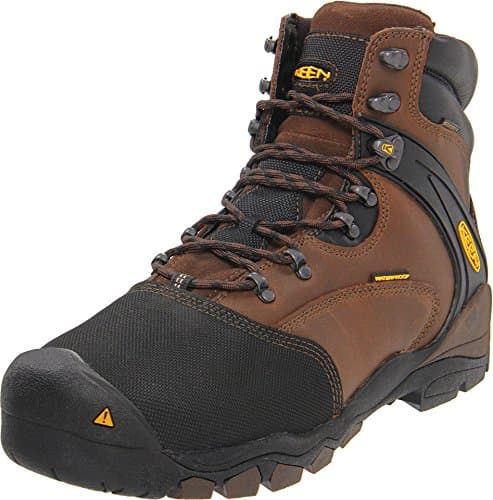
KEEN Utility Louisville 6 in. with Mt/75 internal met guard
From Best metatarsal guard work boots: internal and external met guards
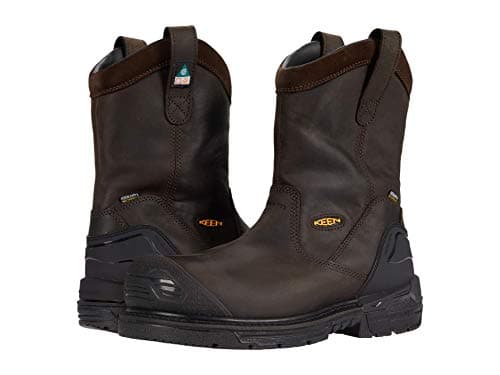 See price on AmazonAmazon
KEEN Utility Philadelphia Wellington, CSA and puncture resistant
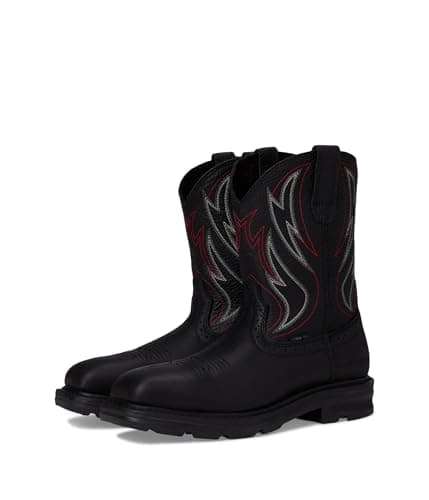 See price on AmazonAmazon
Sierra Shock Shield 10 in. steel toe, unlined
From Best steel toe work boots ranked on fit, build and resoleability