Explainer
Internal vs external metatarsal guards
Published
Short answer
An internal metatarsal guard is built into the boot under the upper leather, covering the top of the foot behind the toe cap. An external guard is a visible shield over the laces, either fixed to the boot or strapped on. A boot whose guard passed the ASTM F2413 metatarsal test shows Mt/75 on its label. Internal guards are neater and flex with the foot; external guards often cover more area and are easier to inspect.
Boots for this job
All 8 picks compared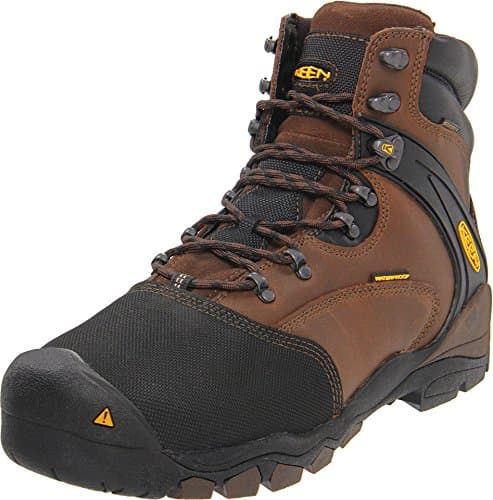
KEEN Utility Louisville 6 in. with Mt/75 internal met guard
See price on AmazonSee it on Amazon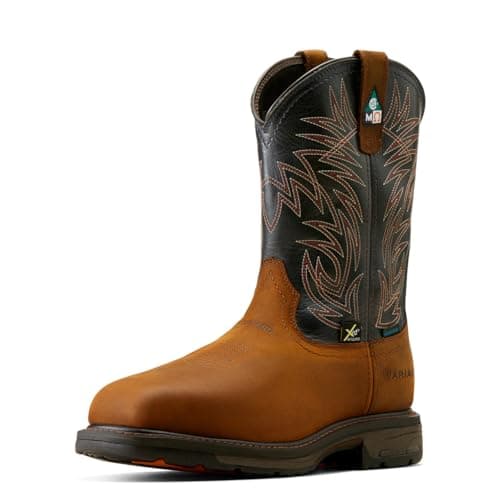
Ariat WorkHog MetGuard CSA with Mt, PR and EH ratings
See price on AmazonSee it on Amazon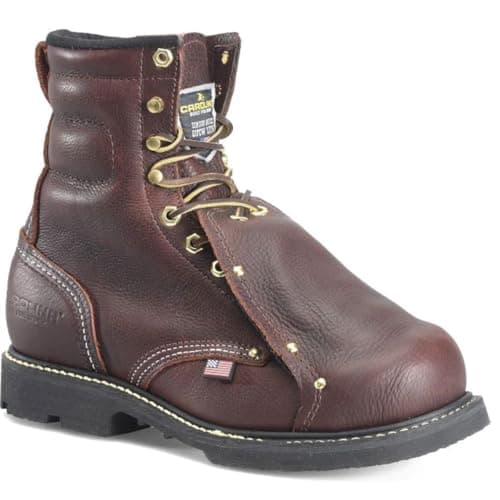
Carolina Foundry 8 in. with heat resistant Vibram sole
See price on AmazonSee it on Amazon
The toe cap protects your toes. It does nothing for the long bones on the top of your foot, the metatarsals, which are exposed to anything that drops past the cap. Metatarsal guards cover that area. This page explains the two main types, internal and external, how each appears on the ASTM label, where each works best and what to check before buying. If you already know what you need, see the best metatarsal guard boots.
What a metatarsal guard protects
The metatarsals are the five long bones between your toes and your ankle. On a work boot, they sit under the laces just behind the toe cap. A heavy object that falls point first, such as a steel bar, a pipe end or a casting, can miss the toe cap and land there. A metatarsal guard spreads that impact across a larger area and transfers some of it to the sole.
Metatarsal protection is common in foundries, steel mills, fabrication shops, pipe yards and heavy material handling. Whether you need it is set by your employer's hazard assessment, the same process behind safety toe requirements. See when are safety toe boots required.
- 1Upper: leather or synthetic shell and lacing
- 2Toe cap: steel, alloy or composite
- 3Metatarsal guard zone: top of the foot behind the cap
- 4Insole: the footbed under your foot
- 5Midsole: cushioning and structure
- 6Shank: stiffens the arch for ladders and pegs
- 7Puncture plate: in PR rated boots
- 8Welt: strip the sole is stitched to
- 9Outsole: the tread, where EH and slip ratings live
- 10Heel: defined heel for climbing
How internal metatarsal guards work
An internal guard is a shield built into the boot, sitting under the upper leather and over the top of the foot. It is often made of a flexible, impact-absorbing material that firms up on impact, though designs vary by brand. From the outside, the boot looks like a regular safety toe boot, sometimes with a slightly fuller instep.
The advantages are a clean look, nothing to snag on equipment or ladders, and a guard that moves with the foot. Because it is hidden, it is also easy to forget it is there, which many workers like. The downside is that the guard adds bulk inside the boot over the instep, so people with high insteps should check fit carefully. You also cannot see damage to an internal guard, so replace the boot after a significant hit to the top of the foot.
How external metatarsal guards work
An external guard is a visible shield on the outside of the boot, over the laces and the top of the foot, usually joined to the toe cap area. Some are fixed to the boot at the factory. Others are separate pieces that strap or clip on. They are typically made of a rigid or semi-rigid material, sometimes with metal or composite inside, and many also cover the laces.
Covering the laces is a real benefit for welders and foundry workers, because it keeps sparks and molten splatter out of the lacing. External guards also tend to cover a larger area. The trade-offs are bulk, a stiffer feel when kneeling or crouching, and the chance of catching on rungs or equipment. A strap-on guard can also be moved between boots, which is convenient but means the protection depends on how well it fits each boot.
How each type shows on the ASTM label
ASTM F2413 has a metatarsal impact test. A boot that passes shows Mt/75 on its label, alongside the toe ratings, for example "ASTM F2413-18 M I/75 C/75 Mt/75". The Mt rating belongs to the footwear as tested. An internal guard or a factory-fitted external guard that passed will appear on the boot's own label.
Separate strap-on guards are a different case. They are sold as their own product, and the boot you put them on was not tested with them unless the maker says so. If your site requires Mt-rated footwear, check exactly what the guard and the boot are labeled for, and ask your safety lead whether an add-on guard is acceptable. The ASTM F2413 label decoder explains the Mt line and the others.
Note.If your hazard assessment calls for metatarsal protection, a boot with Mt/75 on the label is the clearest way to show compliance. Confirm before relying on a separate add-on guard.
Internal vs external at a glance
Neither type is better for everyone. The best choice depends on the hazard, the rest of your PPE and how you move during the day.
Location
- Internal guard
- Under the upper leather
- External guard
- Outside, over laces and instep
Look
- Internal guard
- Like a standard boot
- External guard
- Visible shield
Lace protection
- Internal guard
- No
- External guard
- Often yes
Snag risk
- Internal guard
- Low
- External guard
- Higher
Kneeling and crouching
- Internal guard
- Usually easier
- External guard
- Can be stiffer
Damage inspection
- Internal guard
- Hidden
- External guard
- Visible
Label
- Internal guard
- Mt/75 on the boot
- External guard
- Mt/75 if factory fitted and tested; check add-ons
| Trait | Internal guard | External guard |
|---|---|---|
| Location | Under the upper leather | Outside, over laces and instep |
| Look | Like a standard boot | Visible shield |
| Lace protection | No | Often yes |
| Snag risk | Low | Higher |
| Kneeling and crouching | Usually easier | Can be stiffer |
| Damage inspection | Hidden | Visible |
| Label | Mt/75 on the boot | Mt/75 if factory fitted and tested; check add-ons |
Which one to choose
Steel toe with metatarsals is the most common pairing, but composite and alloy toe boots with Mt ratings exist too. The toe material and the met guard are rated separately.
- Welding, cutting, foundry and molten metal: an external guard that covers the laces often makes sense. See do you need steel toe boots for welding and the welding boots guide.
- Climbing ladders, working in tight spaces or kneeling a lot: an internal guard is less likely to catch or dig in.
- High insteps: try internal guard boots on before buying, since the guard takes up space over the instep.
- Shared or occasional use: strap-on guards add flexibility but confirm your site accepts them.
- Combined hazards: look for a label that covers all of them, such as I/75 C/75 Mt/75 plus EH or PR as needed.
Frequently asked questions
Are internal metatarsal boots as protective as external ones? Both can pass the same ASTM F2413 Mt/75 test. The label tells you whether a given boot passed. The types differ in coverage area, feel and lace protection, not in the rating class.
Can I add a metatarsal guard to my current boots? Strap-on guards exist, but the boot was not tested with them as a unit unless the maker states it. Ask your safety lead before relying on one where Mt-rated footwear is required.
Do metatarsal guard boots need to be replaced after an impact? Treat them like safety toes. After a significant hit, replace the boot, because damage may not be visible.
Who pays for metatarsal guard boots? OSHA's PPE payment rule treats metatarsal protection differently from basic safety toe footwear. See do employers have to pay for safety boots.
What you need for this
- See price on AmazonAmazon
KEEN Utility Louisville 6 in. with Mt/75 internal met guard
From Best metatarsal guard work boots: internal and external met guards
 See price on AmazonAmazon
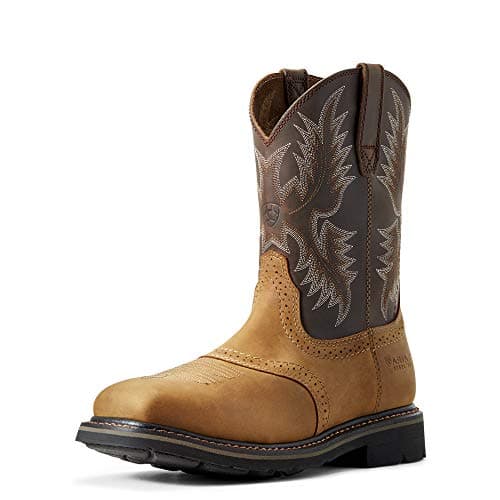
Ariat Sierra Wide Square Toe Steel: 300C hot contact heel
From Best welding boots: heat-resistant soles and met guards compared
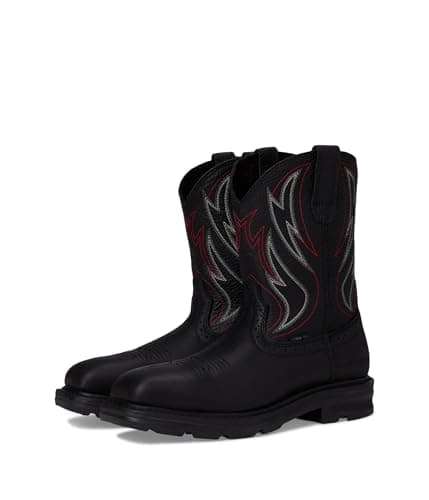 See price on AmazonAmazon
Sierra Shock Shield 10 in. steel toe, unlined
From Best steel toe work boots ranked on fit, build and resoleability