Explainer
Work boot insulation grams explained
Published
Short answer
The gram rating is the weight of insulation per square meter of material, not the weight of the boot. More grams means a thicker, warmer layer. As a common rule of thumb, 200g suits cool weather and active work, 400g is the all-round winter choice for people who keep moving, and 800g or 1000g and up suits deep cold or work where you stand still for long periods.
Boots for this job
All 8 picks compared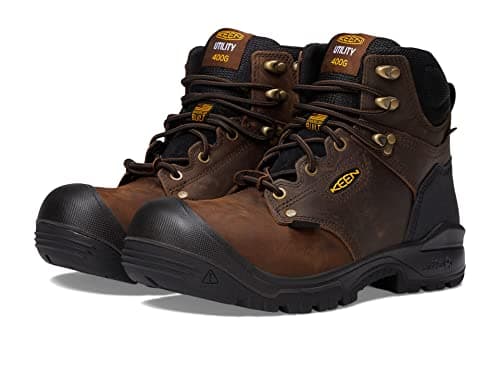
KEEN Utility Independence 6" 400G, rated to -40F
See price on AmazonSee it on Amazon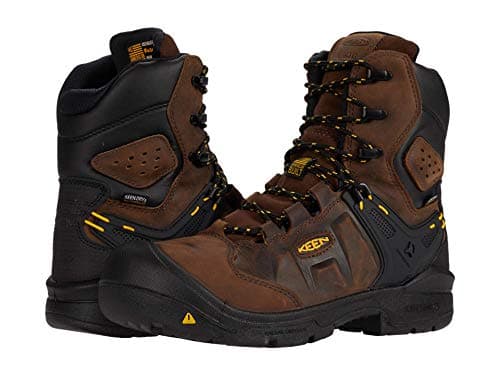
KEEN Utility Dover 8" 600g, carbon-fiber toe, EH
See price on AmazonSee it on Amazon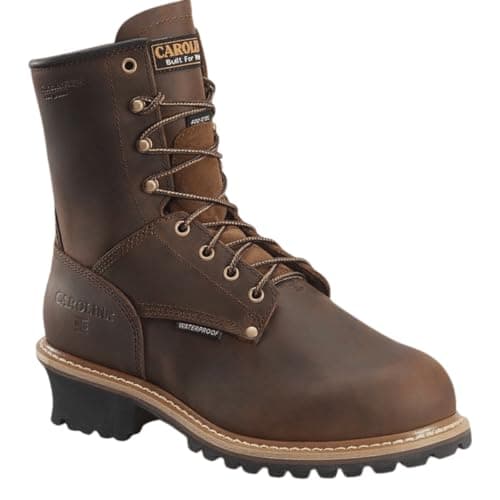
Carolina Elm 8" 600G Thinsulate, steel toe, internal met
See price on AmazonSee it on Amazon
Insulated work boot listings almost always lead with a number: 200g, 400g, 800g or more. That number is useful, but only if you know what it measures and how your workday changes what you need. This page explains the gram rating, how to choose by activity, why steel toes can feel colder and what else keeps feet warm. For specific boots, see our best insulated work boots for winter guide.
What the gram number measures
Synthetic boot insulation such as Thinsulate is sold by weight per area: grams of insulation per square meter. A 400g boot uses an insulation layer that weighs 400 grams per square meter, not 400 grams of insulation in the boot. A heavier layer is thicker and traps more air, and trapped air is what slows heat loss.
Because the number describes the material, it lets you compare boots from different brands on roughly equal terms. It does not include the leather, lining, footbed, sole or a waterproof membrane, all of which also affect warmth. Two 400g boots can feel different on the same day.
How to choose by grams and activity
Insulation makers and boot brands do not publish one official temperature for each rating, and how warm a boot feels depends heavily on how much you move. Your muscles make heat when you work, so an active worker needs less insulation than someone standing at a station or sitting in equipment. Use the table as a starting point, not a guarantee.
Uninsulated
- Typical use
- Mild weather, warm shops
- Best for
- Most of the year in warm climates
200g
- Typical use
- Cool weather, high activity
- Best for
- Walking job sites, active framing, cold mornings
400g
- Typical use
- Winter, moderate to high activity
- Best for
- General winter construction and outdoor work
600g to 800g
- Typical use
- Cold weather, lower activity
- Best for
- Standing work, equipment operators, slower jobs
1000g and up
- Typical use
- Very cold, little movement
- Best for
- Stationary work in deep cold, hunting stands
| Rating | Typical use | Best for |
|---|---|---|
| Uninsulated | Mild weather, warm shops | Most of the year in warm climates |
| 200g | Cool weather, high activity | Walking job sites, active framing, cold mornings |
| 400g | Winter, moderate to high activity | General winter construction and outdoor work |
| 600g to 800g | Cold weather, lower activity | Standing work, equipment operators, slower jobs |
| 1000g and up | Very cold, little movement | Stationary work in deep cold, hunting stands |
Note.Too much insulation for your activity makes feet sweat, and damp socks get cold fast. Many people do better with less insulation and a good wool sock than with the heaviest boot.
Are steel toe boots cold in winter?
Steel conducts heat more readily than composite materials, so a steel cap can feel colder in very low temperatures, especially when you are standing still on frozen ground or snow. Many boots put insulation around the cap and toe box to reduce this, but the toe is often the first place you feel cold.
If you work in sustained cold, a composite toe is a common choice because it conducts less cold while meeting the same ASTM F2413 ratings. Compare the materials in composite toe vs steel toe and shop our best composite toe work boots guide.
Other things that keep feet warm
Size is a common winter mistake. If you plan to wear thick socks, try boots on with them. Our should you size up in work boots article explains when a half size up helps and when a wider width is the better fix.
- Dry feet: a waterproof membrane keeps out snow and slush. Read waterproof vs water-resistant work boots.
- Socks: merino or wool blends hold warmth when damp better than cotton.
- Fit: a tight boot squeezes out the insulating air and cuts circulation. Leave room for winter socks.
- Sole: thick rubber and a solid insole board keep cold ground away from your feet.
- Drying: dry boots overnight so you start each day with dry insulation. See how to dry work boots.
Matching insulation to your job
A roofer or framer who is moving all day often stays comfortable in 200g or 400g. A heavy equipment operator who sits in a cab between short walks may want 400g or more for the time outside. A worker standing at a dock door or on a slab in winter, with little movement, is a candidate for 800g and up. Workers on concrete lose heat into the slab, so a thicker sole and insole matter as much as grams.
If you work in mixed conditions, it can make sense to own two pairs: an uninsulated boot for most of the year and an insulated boot for the coldest months. Rotating pairs also lets each one dry fully, which helps both warmth and boot life.
Frequently asked questions
Is 400g insulation warm enough for winter? For many active outdoor workers, yes. If you stand still for long periods in deep cold, consider 800g or more.
Is 800g too hot? It can be if you are very active or work indoors part of the day. Sweaty feet get cold, so match the rating to your activity.
Does more grams mean a heavier boot? A little. The insulation itself is light, but heavily insulated boots often have taller shafts and thicker builds.
Do insulated boots need to be waterproof? It helps a lot. Wet insulation loses much of its warmth, so most insulated work boots also have a waterproof membrane. See best waterproof work boots.
What you need for this
- See price on AmazonAmazon
KEEN Utility Independence 6" 400G, rated to -40F
From Best insulated work boots for winter, by insulation weight
 See price on AmazonAmazon
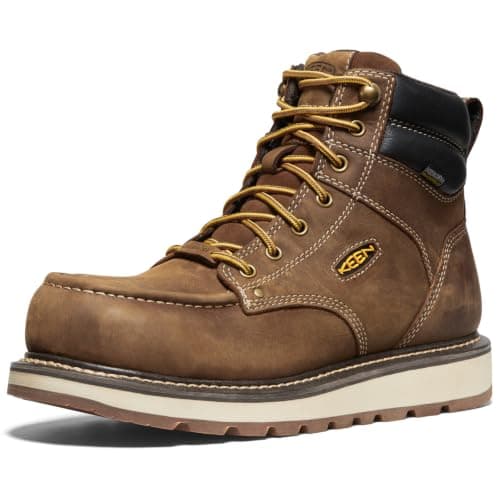
KEEN Utility Cincinnati 6-inch: carbon toe, Goodyear welt
From Best waterproof work boots for rain, mud and wet concrete
 See price on AmazonAmazon
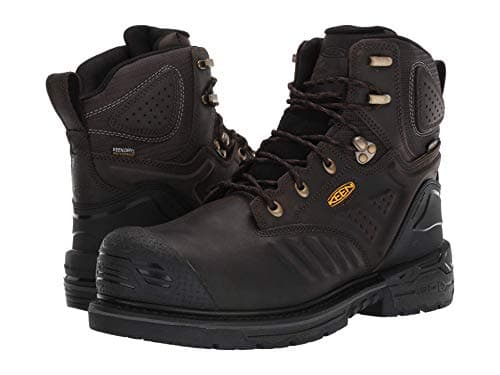
KEEN Utility Philadelphia 6-inch: carbon toe, 572 F outsole