Explainer
Are Red Wing work boots worth it?
Published
Short answer
Red Wing boots are worth it if you want a full-grain leather, Goodyear welted boot that can be resoled and will mold to your foot over years of wear. That is what the price pays for. They are not the best value if you need a safety toe and pick a Heritage model without one, want a light boot with no break-in, or will not keep them long enough to resole.
Boots for this job
All 6 picks compared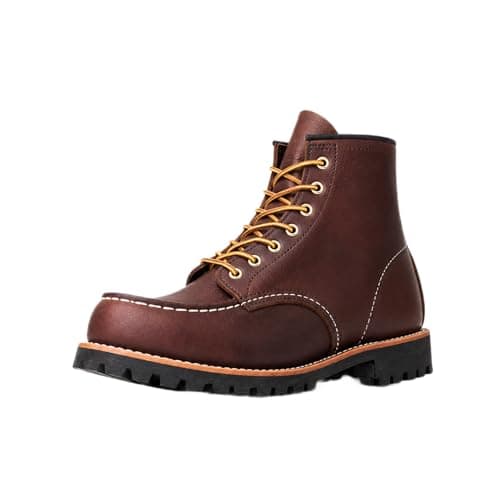
Red Wing Roughneck 8146: Vibram TC-4 lug, No. 23 last
See price on AmazonSee it on Amazon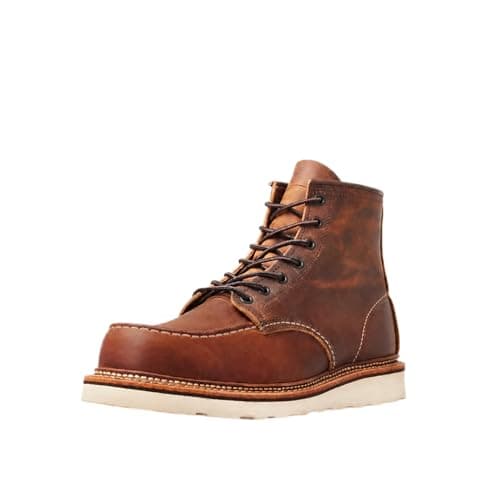
Red Wing Classic Moc 1907: Traction Tred wedge, No. 45 last, EE
See price on AmazonSee it on Amazon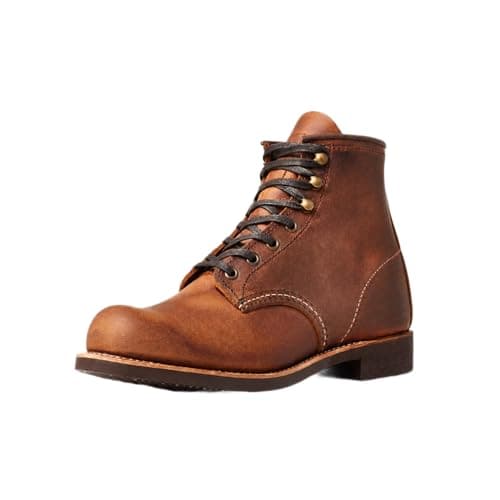
Red Wing Blacksmith 3343 EE: Vibram 430 Mini-Lug, No. 8 last
See price on AmazonSee it on Amazon

Red Wing is one of the best-known boot names in the US, and the Heritage models that dominate online listings, such as the Classic Moc, Iron Ranger and Blacksmith, sit well above the average work boot price. This page explains why they cost what they do, what makes them good, what they do not do, how comfortable they are and who should buy something else. It also clears up a common mix-up between Red Wing Heritage and Red Wing's safety-rated work lines.
Why Red Wing boots are so expensive
Red Wing Shoe Company was founded in 1905 in Red Wing, Minnesota, and many of its Heritage boots are still made in the USA. The price reflects a few things: thick full-grain leather, much of it from Red Wing's own tannery, Goodyear welt construction that allows resoling, and domestic manufacturing. Branded outsoles, such as Vibram lugs on some models and the Traction Tred wedge on the Classic Moc, add to it.
In the Red Wing listings our guide covers, the Heritage models such as the Classic Moc 875, Iron Ranger 8111, Roughneck 8146, Blacksmith 3343 and Logger 4585 list at roughly $330 to $370. Prices change, so check the current listing.
Goodyear welt
Upper and welt strip are stitched together and the sole is stitched to the welt. A cobbler can cut the stitch and fit a new sole.
Resoleable
Cemented
The sole is glued straight to the upper. Lighter, more flexible and cheaper to make, but usually replaced rather than resoled.
Usually not resoleable
Heritage vs safety work boots: know which you are buying
Red Wing makes two very different kinds of boots. The Heritage line comes from classic work boot patterns and is popular for both work and everyday wear. The Red Wing listings in our guide do not mention a safety toe, an EH rating or waterproofing. They are not a substitute for an ASTM F2413 rated boot on a site that requires one.
Red Wing also makes work lines built for job site rules, with safety toes and electrical hazard ratings, such as King Toe and SuperSole. Those are sold mainly through Red Wing stores and are a separate choice. The company also owns Irish Setter, whose work boots include steel, aluminum and non-metallic toe models at lower prices. If your job requires safety toes, read the label before you buy any boot. See when are safety toe boots required.
Note.A Red Wing Heritage boot without a safety toe label does not meet a safety toe requirement, no matter how sturdy it feels.
Lifespan and resoling: where the value comes from
The case for Red Wing rests on lifespan. A Goodyear welted boot can be resoled when the outsole wears out, and Red Wing stores offer resoling and repair for many of their boots. Independent cobblers work on them too. A well-cared-for upper can go through more than one sole, which spreads the purchase price over many years.
That only pays off if you keep the boots, clean and condition the leather, and resole before the welt is damaged. If you tend to replace boots every year regardless, the resoling advantage does not matter much and a cheaper boot may be better value. See can work boots be resoled and how to care for Red Wing and Thorogood boots.
Are Red Wing boots comfortable?
Out of the box, many Red Wing Heritage boots are stiff. The thick leather and leather insole with cork filler need time to soften and mold. After break-in, many owners find them very comfortable because the footbed has shaped to their foot. Before break-in, expect some rubbing at the heel and ankle. See how to break in Red Wing boots.
Fit matters as much as break-in. Red Wing builds on several lasts: the No. 23 last on the Classic Moc 875 and Roughneck gives extra forefoot and instep room, while the No. 8 last on the Iron Ranger and Blacksmith has a bump toe shape. Many people find Heritage models run large compared with sneakers. See are Red Wing boots true to size.
Strengths and weaknesses
Thick full-grain leather
- Weaknesses
- Long, sometimes uncomfortable break-in
Goodyear welted and resoleable
- Weaknesses
- Heavier than modern lightweight boots
Many models made in the USA
- Weaknesses
- Heritage listings show no safety toe or EH rating
Molds to the foot over time
- Weaknesses
- Price is high if you will not keep them for years
Repair support through Red Wing stores
- Weaknesses
- No waterproof membrane on the Heritage listings
| Strengths | Weaknesses |
|---|---|
| Thick full-grain leather | Long, sometimes uncomfortable break-in |
| Goodyear welted and resoleable | Heavier than modern lightweight boots |
| Many models made in the USA | Heritage listings show no safety toe or EH rating |
| Molds to the foot over time | Price is high if you will not keep them for years |
| Repair support through Red Wing stores | No waterproof membrane on the Heritage listings |
Who should buy Red Wing, and who should not
- Buy if you want a resoleable leather boot to wear for years, work where a safety toe is not required, and are willing to break it in.
- Buy the wedge sole Classic Moc if you stand on flat floors or concrete. See moc toe work boots.
- Skip Heritage if your site requires safety toes, EH or waterproofing. Look at Red Wing's safety lines or the steel toe and waterproof guides.
- Skip if you want a light boot that feels right on day one. See lightweight work boots.
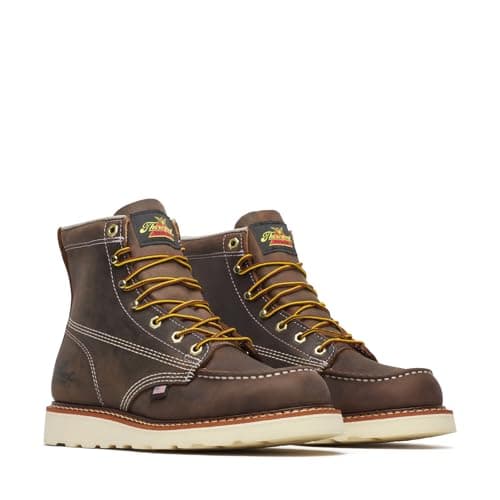
- Compare with Thorogood, which offers welted, US-made moc toe boots with safety toe options. See Thorogood vs Red Wing.
Frequently asked questions
Are Red Wing boots good for work? Heritage boots are tough leather work boots, but the ones in our guide do not list safety toes or EH ratings. For rated work, choose a Red Wing safety model or another brand's rated boot.
How long do Red Wing boots last? With care and resoling, the uppers can last many years. The exact lifespan depends on use and care.
Where can I get Red Wing boots resoled? Red Wing stores offer repair and resoling for many models, and independent cobblers resole them as well.
Are Red Wing boots worth it compared with Thorogood? Both make welted, resoleable boots. Thorogood offers more safety toe options in similar styles; Red Wing Heritage leans on leather and history. See Thorogood vs Red Wing.
What you need for this
- See price on AmazonAmazon
Red Wing Roughneck 8146: Vibram TC-4 lug, No. 23 last
From Best Red Wing work boots: Classic Moc, Iron Ranger, Roughneck and more
 See price on AmazonAmazon
Thorogood American Heritage 6 in. moc toe, soft toe
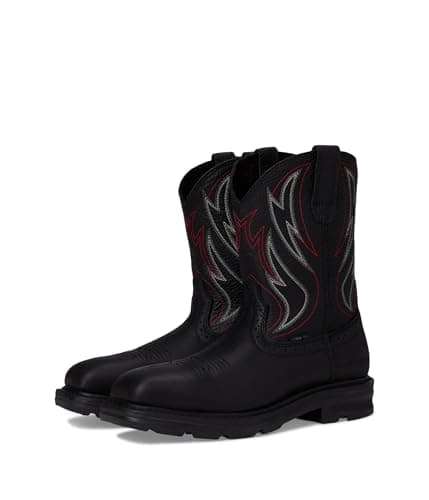 See price on AmazonAmazon
Sierra Shock Shield 10 in. steel toe, unlined
From Best steel toe work boots ranked on fit, build and resoleability